Hey there, if you’re running a plant that relies on spiral plate heat exchangers (SPHEs), you know how critical these bad boys are for keeping fluids at the right temp—whether that’s in food processing, chemical manufacturing, HVAC, or power generation. As a SPHE supplier, I’ve worked with tons of operators who wait until their exchanger starts spitting out uneven temperatures or pressure drops spike way too high, then scramble for fixes. Trust me, a little proactive maintenance goes way farther than reactive band-aids. I’m gonna break down exactly how to build a maintenance plan that keeps your SPHE running smooth, no guesswork involved. Spiral Plate Heat Exchanger

First, let’s cut to the chase: SPHEs are different from your standard plate-and-frame exchangers. They have that single, continuous spiral channel for each fluid, right? No gaskets between plates, no gaps that can shift if you overtighten bolts. That design means they’re great for viscous fluids, high-pressure applications, and even fluids with solids— but it also means any buildup or damage can clog that spiral channel way faster than a traditional exchanger. So your plan needs to be tailored to that unique setup, not just a copy-paste from a generic heat exchanger guide.
Let’s start with the basics you should do every single day (or every shift, depending on your run time). Wait, no— not every day, maybe daily checks make sense if your plant runs 24/7, but I’ll frame it for whatever your operating schedule is. First, monitor those two key metrics: inlet/outlet temperatures and pressure drop across the exchanger. If your outlet temp drops 5 degrees below what it should be, or the pressure difference between the two sides jumps more than 10% in a week? That’s a red flag. Most modern plants have SCADA systems that track this, so set alerts for that exact threshold. I’ve had customers brush off a 7-degree temp drop once—turns out the channel was 30% clogged with scale in a month, and they had to shut down for a full clean that cost them $12k in lost production. Don’t be that guy. Also, check for leaks at the pipe connections. SPHEs usually have flanged inlet/outlet pipes, so a little seepage might not seem like a big deal, but if it’s coming from the spiral housing seam, that’s a sign of warping or gasket failure (wait, no— SPHEs have a weld seam around the outer edge, right? Yep. So leaks there are rare, but pipe connections get shaken loose over time. Tighten those only if you catch them, don’t crank ’em down too hard—you can crack the flange.
Next, the weekly deep dive. Grab your operating log (or pull the data from that SCADA) and map pressure drop and temperature trends over the last 7 days. If the pressure’s been creeping up, that’s almost always fouling—buildup of scale, sludge, or even particulate matter from your fluids. Another check here: inspect the outer housing for any dents or warping. SPHEs are built to handle pressure, but if a forklift nicks the housing during a plant move, that can bend the spiral plates and narrow the channel, leading to uneven flow. If you spot a dent bigger than a quarter, take a minute to check pressure drop—if it’s already spiking, you might need a plate alignment tweak. Also, test the pressure relief valve (PRV) on the high-pressure side. SPHEs handle higher pressures than standard exchangers, so a faulty PRV can lead to a catastrophic rupture. We supply PRV calibration services for our clients, so don’t skip that part.
Now, the big stuff: monthly and quarterly maintenance. Let’s start with quarterly, since that’s where you get into hands-on checks. If you’re running a SPHE with clean fluids (like potable water or food-grade syrups), quarterly checks are enough. If your fluids have solids or high viscosity (like wastewater or heavy oil), bump that up to every 6 weeks. For quarterly, you should do a partial inspection of the plates. Wait—you don’t have to take the whole thing apart, right? Most SPHEs have a removable top cover. Pop that off, take a flashlight, and look into the spiral channel. Run a soft brush (plastic, not metal—you don’t wanna scratch the plates, that causes more fouling later) along the visible spiral turns. If you see a crusty buildup, note where it’s concentrated—if it’s near the inlet, that’s probably from particulate in your supply. Also, check the weld seams around the spiral edges. Look for any cracks or discoloration—those can develop from thermal cycling (heating and cooling too fast) over time. If a weld is small, you can get it repaired on-site; if it’s long, you might need to send the exchanger back to us for a full re-weld. Pro tip: don’t use a wire brush on the welds—you’ll scratch the surrounding plate, making it a magnet for more fouling.
Now the monthly tasks: this is where you get into prep for bigger cleanings. Track your fluid chemistry—if you’re using a cleaning solution for other equipment, note how it interacts with the SPHE’s plates. Most SPHEs are made of carbon steel, stainless steel, or titanium, so make sure your chemicals are compatible. I’ve had a customer try to use a strong acid to clean their SPHE, and it ate through a 1-inch section of the plate in 2 months. Oops. So keep a log of all chemicals that pass through the exchanger, and check with your SPHE supplier (that’s us, hint hint) before using any new cleaning agents. Also, lube any moving parts if your SPHE has expansion joints (some do, for thermal flexibility). Use a high-temperature, food-grade lube if you’re in the food industry—no cheap grease here, it can contaminate your product.
Then, the annual (or semi-annual) full clean and inspection. This is non-negotiable, especially if you’re running a heavy-duty application. Here’s the step-by-step we walk all our customers through: first, shut down the exchanger, drain both channels completely (don’t let leftover fluid sit, that dries into hard scale). Then, for the spiral channel: if it’s not too clogged, you can do a mechanical clean with a high-pressure washer—but keep it under 1500 PSI, because higher pressure can bend the plates. For heavy fouling, use a chemical clean: circulate a mild acid solution (like citric acid or phosphoric acid, for stainless steel) through one channel, neutralize it, then circulate water. Wait, never circulate acid through both channels— that can corrode both sides at once. And never use a chlorine-based cleaner— it will pit stainless steel, leading to leaks down the line. After cleaning, let the exchanger air dry completely before closing it back up—moisture trapped inside causes rust, even on stainless steel. Once it’s dry, pop the top cover off again, do a full visual inspection of all spiral plates, check the weld seams again, and test pressure by filling one channel with water at 1.5x your operating pressure to make sure no leaks.
Wait, what about common issues that pop up during maintenance? Let’s address those. First, uneven flow across the spiral channel. That’s usually from fouling or a bent plate. If it’s a bent plate, we can send a technician to straighten it on-site, no need to replace the whole exchanger. Second, thermal expansion issues. SPHEs have to handle different temps on each fluid side—if you heat one way more than the other, the plates expand at different rates, leading to leaks. We build our exchangers with expansion joints for that, but you have to check them regularly. Third, fouling that keeps coming back. If you clean it every year but it’s clogging in 6 months, that means your upstream filtration is bad. Add a 100-micron filter before the SPHE— that’ll catch most of the solids before they reach the spiral channel. I can’t tell you how many customers have skipped that filter, and ended up with $5k worth of cleaning every quarter.
Now, let’s talk about tailoring this plan to your specific use case. A food and beverage plant running milk will have way different needs than a chemical plant running sulfuric acid. For food, you need to make sure all cleanings are CIP (clean-in-place) compatible, so you don’t have to take the exchanger apart every time. We build CIP-ready SPHEs that let you circulate cleaning solution without disassembly— that saves you hours of downtime. For chemical plants, you’ll need more frequent weld inspections, since corrosive fluids can eat through seams. For HVAC, which uses clean water, you can stretch the annual clean to every 18 months, but still keep an eye on pressure drop.
One last thing: document everything. Keep a maintenance log that has every check, every cleaning, every repair. When you have to order a new part (or a whole exchanger) down the line, that log will tell us exactly what kind of SPHE you have, how it’s been used, and what issues you’ve had— so we can give you the right replacement or fix. A lot of customers skip this, and when they call us saying “my SPHE is leaking,” we have no idea if it’s a 5-year-old stainless steel unit with heavy fouling or a 10-year-old carbon steel one that got hit with acid. That delays everything, and costs you money.
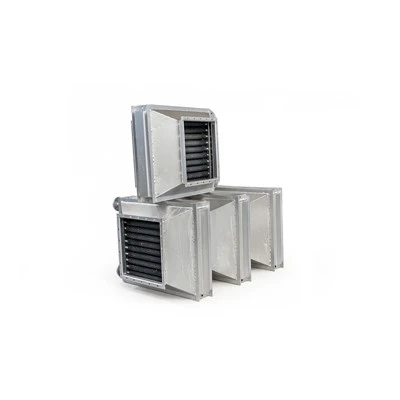
Look, as a SPHE supplier, my goal isn’t just to sell you an exchanger—it’s to make sure it lasts as long as it should (which is usually 10-15 years with proper maintenance). A maintenance plan isn’t just a list of tasks; it’s a way to avoid the big shutdowns that put your whole operation on hold. If you’re not sure how to adjust your current plan, or you need help setting up a custom one for your application, hit us up. We can walk you through the steps, even send a technician to do a walkaround of your current SPHE. Don’t wait until that pressure drop spikes or that outlet temp drops—small, regular checks save you a lot of hassle (and cash) in the long run.
Finned Heat Exchanger Reference: Heat Exchanger Maintenance Principles, Global Manufacturing & Packaging Association, 2022; Spiral Plate Heat Exchanger Operating and Maintenance Guide, Alfa Laval, 2021; Industrial Fluid Fouling and Mitigation, John Wiley & Sons, 2020.
Jiangsu Huanyang Equipment Technology Co., Ltd.
As one of the most professional spiral plate heat exchanger manufacturers and suppliers in China, we have world-leading production equipment and strong manufacturing capabilities. Please feel free to wholesale customized spiral plate heat exchanger made in China here from our factory. Contact us for pricelist.
Address: Room 20D, No.18 Dingxiang East Road, Wuxi City, Jiangsu Province, China
E-mail: myj-huanyang@126.com
WebSite: https://www.hy-equip.com/
