If you’ve ever stepped into a busy bar at 2 a.m., when every draft pour has to be cold and every bottled soda stays crisp, you’ve probably taken for granted the back bar cooler humming quietly behind the scenes. As a supplier who’s worked with bar owners, kitchen managers, and beverage directors for over a decade, I’ve seen firsthand how a cooler’s insulation quality can make or not just energy bills, but the entire reliability of a venue’s beverage service. Today, I want to break down what insulation actually means for a back bar cooler, why it matters more than you might think, and how our team builds insulation that stands up to the daily grind of commercial foodservice. Back Bar Cooler
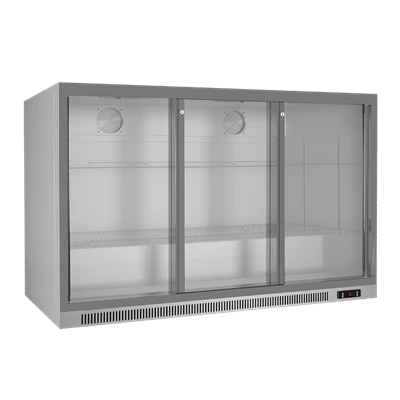
First, let’s get past the basic definition: insulation for a back bar cooler isn’t just a layer of foam slapped between walls. It’s the barrier that stops warm, humid air from the bar’s open space from seeping into the cold interior, and keeps the cool air the unit works hard to create from leaking out. Back bar coolers run 24/7, even during slow shifts, so every gap, thin spot, or low-quality insulation forces the compressor to work longer and harder to maintain the 34 to 38 degrees Fahrenheit (1 to 3 degrees Celsius) needed for draft lines, bottled beer, and mixers. Over time, that adds up to thousands of dollars in wasted energy costs, and even more costly breakdowns when the compressor burns out early.
A lot of people new to commercial equipment assume all insulation is the same. But there are two key factors that set insulation quality apart for back bar use: material type and density. Most modern back bar coolers use polyurethane (PUR) or polyisocyanurate (PIR) foam insulation, and we’ve tested both extensively over the years. Here’s the thing: PUR foam has a higher R-value per inch than PIR, which means it resists heat transfer better. For context, R-value is the standard measurement of thermal resistance—higher R-value means more effective insulation. A good quality back bar cooler will have a minimum R-25 to R-30 for the cabinet walls, which is far higher than the R-12 or R-15 you’d find in cheap, residential-style units.
But density matters too. If the foam is too light, it compresses over time, creating gaps that let heat in. Too dense, and you’re paying for extra weight and material that doesn’t add meaningful thermal performance. Our team calibrates every unit’s foam density to 2.2 pounds per cubic foot, a sweet spot we landed on after years of field testing. That density keeps the foam rigid, prevents compression when the unit is moved or adjusted, and maintains a consistent R-value across the entire cabinet, doors, and even the interior shelf supports.
Then there’s the seal around the doors. Even the best insulation is useless if a door’s gaskets are cracked, warped, or don’t close tightly. That’s why we use magnetic, closed-cell foam gaskets that form a tight, airtight seal every time the door shuts. We test each door repeatedly during manufacturing to make sure there are no gaps larger than a dime at any point—something a lot of budget-focused suppliers cut corners on. I’ve seen units from competitors that had gaskets made of cheap open-cell foam, which absorbs moisture over time, hardens, and loses its magnetic pull within 18 months. By contrast, our gaskets are designed to last 5 to 7 years with regular cleaning, and easy to replace on site without calling a technician.
Another often-overlooked part of insulation for back bar coolers is the “thermal bridge” – areas where metal parts (like the cabinet frame, door hinges, or interior shelving) pass through the insulation. Metal is a great conductor of heat, so if not insulated properly, it creates a path for warm air to seep directly into the cabinet, forcing the compressor to work overtime. We use polypropylene inserts around all metal frame connections to break those thermal bridges, and we line the inside of all door frames with a secondary foam liner that eliminates any heat transfer around the door edges. I remember a bar owner in Chicago who switched from a competitor’s cooler to ours two years ago; he told us his energy bill dropped by 22% in the first year, and his draft beer stayed consistently cold enough that he stopped having to dump full kegs that went warm mid-shift. That’s the real impact of good insulation—not just lower bills, but less product waste.
Now, let’s talk about how real-world use affects insulation quality. Back bar coolers don’t sit in a climate-controlled storage room—they’re right in the middle of the bar, where temperatures can swing 10 to 15 degrees depending on whether the front doors are open in winter, or the air conditioning is cranked in summer. Humidity is another big factor: a busy bar can have humidity levels up to 70% on a summer weekend, and moisture that gets into insulation can cause mold, mildew, and a drop in R-value of up to 30% within a few years. That’s why all the insulation we use is closed-cell, which is waterproof and vapor-resistant. Open-cell insulation, which some cheap suppliers use to cut costs, absorbs moisture easily, breaks down, and loses its insulating power over time. We’ve had customers tell us that their old units would start feeling warm to the touch on the outside after three years, a sure sign the insulation was compromised by trapped moisture.
I’ve also seen a lot of bar owners try to save money by buying used coolers or refurbished units, and while that can work for some parts, insulation is one area where it’s risky. Used units might look good on the outside, but over time, insulation can develop gaps from being dropped during moves, or moisture can get trapped and never dry out. A refurbished unit might repaint the outside, but they rarely remove and replace the foam insulation. We had a customer in Miami who bought a used cooler from an online marketplace, and within six months, his compressor was running every 10 minutes, and his beer was warmer than it should be. When we inspected it, we found the foam insulation had compressed so much in some areas that there was almost no barrier between the interior and the humid Miami air. He ended up replacing it with one of our units, and his energy usage dropped by almost half right away.
So, how do you know if your current back bar cooler’s insulation is working well? There are a few simple tests you can do at home. First, feel the outside of the cabinet and the doors after the unit has been running for at least an hour. If the outer surface is warm to the touch, that’s a red flag—it means heat is transferring through the insulation. A well-insulated cooler will have an outer cabinet that’s only slightly above room temperature, even in a warm bar. Second, check the gaskets: close a dollar bill between the door and the frame, and pull it out. If it slides easily, the gasket is worn and letting air in. Third, look for any condensation on the outside of the cabinet, especially around the bottom or the door edges. Condensation is a sign that warm air is meeting cold metal or weak insulation, leading to moisture buildup that can damage the unit over time.
For our part, we design every back bar cooler with long-term insulation performance in mind. We use high-density PUR foam injected in a closed-cell process, so there are no voids or gaps during manufacturing, and every unit goes through a thermal performance test before it leaves our warehouse. We also offer a 10-year warranty on the cabinet’s insulation, which is something most commercial cooler suppliers don’t provide. That’s not just a marketing gimmick—we stand behind the fact that our insulation will maintain its R-value for years, even in the harsh environment of a busy bar.
I also want to mention that good insulation doesn’t just save energy—it reduces noise, too. Compressors work less when the insulation is effective, so the hum from a well-insulated cooler is barely noticeable, which is a huge plus for bars where customers want to chat and not drown out a loud equipment noise. I’ve had multiple customers tell us that their patrons even mention how quiet their bar is, which they attribute directly to our cooler’s insulation.
At the end of the day, a back bar cooler is more than just a storage space for beer and mixers—it’s the backbone of a beverage service. A bar can have the best beer selection, the most skilled bartenders, and the perfect ambiance, but if the equipment that keeps drinks cold is poorly insulated, it will lead to higher costs, wasted product, and frustrated customers. That’s why we’ve spent years refining our insulation design, working directly with foodservice operators to understand the challenges they face, and building units that stand up to the daily demands of commercial use.
If you’re looking to upgrade your current back bar cooler, or you’re opening a new venue and want to make sure you get the insulation quality that will save you money and keep your service running smoothly, we’re here to help. Our team can walk you through the different options, explain how our insulation performs in real-world conditions, and help you find the right unit for your specific space and needs. Don’t let a poorly insulated cooler hold your bar back—reach out to our team to discuss your requirements and get a personalized recommendation for your venue.
Beverage Cooler References
ASHRAE Handbook – Refrigeration, Chapter 3: Thermal Insulation for Refrigerated Equipment.
Commercial Foodservice Equipment Association (CFEA) – Back Bar Cooler Performance Standards, 2021.
Polyurethane Foam Association (PFA) – Thermal Performance of Closed-Cell Insulation for Commercial Refrigeration, 2022.
Zhejiang Xingbao Electrical Appliances Co., Ltd.
As one of the most professional back bar cooler manufacturers and suppliers in China, we also support customized service. Welcome to wholesale bulk high quality back bar cooler in stock here from our factory. If you have any enquiry about pricelist, please feel free to email us.
Address: No. 10 Baisha Road, Lianhang Development Zone, Chang’an Town, Haining City, Jiaxing City, Zhejiang Province, China
E-mail: zjxingbao@gmail.com
WebSite: https://www.sunborncn.com/
