If you’ve ever stood on a manufacturing floor watching a custom, complex part take shape—whether it’s a specialized aerospace bracket, a high-precision medical implant mold insert, or a component for next-gen electric vehicle powertrains—you’ve probably glimpsed the unsung hero of that process: the special structure mold. These aren’t your off-the-shelf injection molds. Special structure molds are engineered for one-off parts, tight-tolerance geometries, and production runs that demand consistency that would make standard molds falter. Over 12 years as a special structure mold supplier, I’ve fielded dozens of calls from customers asking, “Why does my mold wear out so fast?” or “Why is this part’s dimensional stability all over the place?” Nine times out of ten, the answer traces back to one decision most people overlook at the start: mold material selection. Special Structure Mold
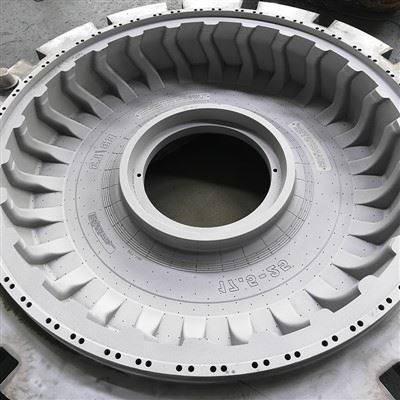
Too often, teams prioritize upfront cost or rush through material choices, treating them as a checkbox in the design phase instead of the foundational driver of mold performance. The right material doesn’t just make the mold last longer—it shapes cycle time, part quality, scrap rates, and even the total cost of ownership over a mold’s lifecycle. Let’s break down how material choices ripple through every layer of special structure mold performance, from surface finish to long-term durability, and what my team has learned working with hundreds of OEMs, from small medical device startups to large aerospace primes.
First, let’s ground this in what makes a mold “special structure.” Unlike simple two-part split molds, these designs have core pulls, slide mechanisms, conformal cooling channels, undercuts, or integrated inserts for complex part geometries. That means their internal stresses are higher, their surface areas are more intricate, and they often cycle with materials that are abrasive, corrosive, or require extreme temperature consistency. A mold made for a medical silicone implant, for example, has to hold tight tolerances on a part that will go inside the human body—any micro-variation in the mold surface can lead to part rejection. A mold for thermoplastic EV battery components has to withstand high temperatures and repeated injection pressures that would chew through a low-grade steel mold in a fraction of its lifecycle.
One of the most immediate effects of mold material selection is thermal stability. Special structure molds rely on consistent heat transfer to control shrinkage, warp, and dimensional accuracy—non-negotiables for parts with tight tolerances (often ±0.001 inches or less for medical and aerospace applications). Let’s talk tool steels, the workhorse of most high-performance molds. A common mistake I see is using a low-grade P20 steel for a mold that will run at over 300°C (572°F) for engineering thermoplastics. P20 is a pre-hardened steel, affordable, easy to machine, but it starts to soften at temperatures above 250°C. Over 10,000 cycles, the mold’s cavity walls deform slightly under pressure, leading to parts that are consistently oversized, which means hundreds of parts get scrapped. Last year, a medical device customer came to us with this exact problem: they’d run their custom insulin pen component mold with P20 and were seeing a 12% scrap rate after 8,000 cycles. We re-machined the core and cavity from H13 tool steel, which retains its hardness up to 550°C, and their scrap rate dropped to 1.8% after 15,000 cycles. That’s not just a better steel—it’s a material choice that cut their annual rework and scrap costs by $140,000.
But thermal stability isn’t just about hardness. For molds with conformal cooling channels (a special structure design that cuts cycle time by up to 30%), thermal conductivity is key. Aluminum molds have much higher thermal conductivity than steel—roughly three times higher. That means they cool parts faster, reducing cycle time per part and boosting production throughput. But aluminum has a downside: it’s softer than steel, so it wears out quickly when running abrasive plastics like glass-filled nylon. A customer making consumer electronics housings came to us wanting to switch to aluminum for their conformal cooling mold to cut cycle time. We worked with them to adjust the material for high-wear zones: we used a hardened aluminum bronze insert in the gate area (where plastic flow is most abrasive) and high-purity aluminum for the rest of the mold. They got 25% faster cycle times, and the mold lasted for 22,000 cycles before needing rework—double what a standard aluminum mold would have done for their abrasive resin. This tradeoff is exactly why material selection isn’t a one-size-fits-all: you have to match material properties to the specific stresses in different parts of a special mold, not just pick a material for the whole unit.
Next, surface finish and corrosion resistance, two make-or-break factors for parts that demand aesthetic quality or biocompatibility. Special structure molds often have complex, hard-to-reach surfaces—like internal undercuts or micro-textures for parts with cosmetic or functional details. When you machine these surfaces, the material’s micro-structure determines how smooth you can get it, and how well that finish holds up over cycles. A common material here is 420 stainless steel, which is highly corrosion-resistant, perfect for molds running corrosive materials like PVC or for applications that require sterilization (medical devices, for example). But 420 comes in two grades: 420 soft and 420 hardened. Soft 420 is easy to machine for intricate micro-structures, but if you run it with PVC, which releases hydrochloric acid during injection, the surface will pit after a few thousand cycles. Hardened 420 has higher wear resistance, but it’s more brittle, so it can crack in the tight radii of complex core pulls. Last quarter, a startup making orthopedic implants came to us with a mold for a custom knee component that required a smooth, sterile surface. They’d tried soft 420, but after 5,000 cycles, the mold’s cavity had corrosion pitting that was transferring to the part, leading to failed sterile testing. We switched their mold to a pre-hardened 420 stainless with a polished surface grade (called “electropolishable” 420) that resisted acid attack, and also added a thin chrome plating on the high-stress gate area to further block corrosion. Now their mold runs for 18,000 cycles without surface degradation, and their parts pass all biocompatibility tests on the first try. That’s another lesson: material properties interact. Corrosion resistance and hardness don’t exist in a vacuum—they have to align with the mold’s operating environment.
Wear resistance is the third big pillar of mold performance, especially for special structure molds with moving parts like slides, lifters, and core pins. These parts rub against each other hundreds of thousands of times over a mold’s lifecycle, so material choice here determines how long the moving parts stay dimensionally accurate. I’ve seen customers use plain steel for slide mechanisms, only to have the slides wear down 0.002 inches after 10,000 cycles, which makes the part’s undercut shift and leads to assembly failures. The fix? Using a tool steel with high vanadium content, like S7 or D2, for these moving components. Vanadium forms hard carbide particles in the steel’s micro-structure that resist abrasive and adhesive wear. A construction equipment parts customer we work with has a mold for a hydraulic valve component with three core slides. They originally used P20 for the slides, and the mold needed rework after 12,000 cycles. We swapped the slides for S7 tool steel, and now after 35,000 cycles, the slides have less than 0.0005 inches of wear—well within their tolerance window. The total cost of replacing the slides was 15% higher upfront, but they’ve saved over $210,000 in rework and scrapped parts over the last two years.
Beyond these mechanical properties, there’s a hidden factor I’ve only really grasped after working with 200+ special mold projects: material machinability. Special structure molds require intricate, tight-tolerance machining—deep cores, fine undercuts, micro-channels. If a material is too hard or too abrasive, it can add 20-30% to machining time and increase tool wear, which drives up costs and delays delivery. Last year, a customer came to us with a rush order for a custom satellite component mold. They tried a premium powdered metal tool steel for the entire mold to get maximum durability, but that steel is extremely abrasive—our machining time was 40% over what we quoted, and we had to replace cutting tools three times faster than normal. We worked with them to adjust the material selection: we used powdered metal steel for the high-wear core and cavity surfaces, which gave them the durability they needed, and a machinable pre-hardened steel for the structural base and mounting plates. That cut our machining time by 18%, kept delivery on schedule, and saved the customer $35,000 in unnecessary material costs for areas that didn’t need the premium steel.
This all brings me back to the biggest misconception I hear from customers: that higher-grade materials always equal better performance. It’s not true. A $20,000 mold made with a premium powdered metal steel will underperform a $15,000 mold that’s carefully matched to its specific requirements—because the premium steel wastes properties the mold never uses, while the properly matched material optimizes every part of the mold’s function. For example, a mold for a low-volume, custom prototype part (run just 500 times) doesn’t need a hardened tool steel. A pre-hardened 4140 steel is more than enough, and it’s half the cost, which keeps the prototype budget in check. On the flip side, a mold for a high-volume EV component (run 1 million times over its lifecycle) needs the highest-grade steel with maximum wear and thermal stability to avoid downtime and part quality issues.
So what does this mean for you, if you’re designing a special structure mold? The first step is to stop treating material selection as an afterthought. Start by mapping out every demand your mold will face: what plastic or material will you be injecting? What’s your required cycle time and production volume? What tolerances does the part need, and what surface finish or regulatory requirements apply (like biocompatibility for medical parts, or flame resistance for automotive)? Then, for each component of your special mold—core, cavity, slides, cooling channels, gate inserts—match the material properties to that component’s specific stress. Don’t pick a generic “good mold steel” for the whole unit.
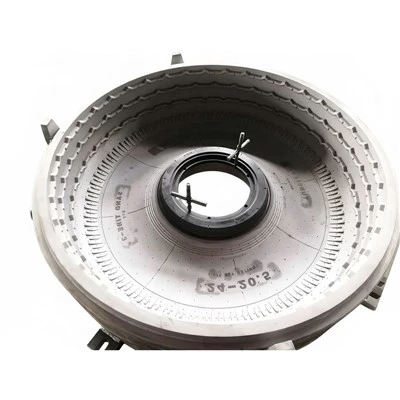
If you’re struggling with inconsistent part quality, short mold lifecycles, or unexpected scrap rates that are eating into your profit, let’s talk. As a special structure mold supplier, we’ve helped dozens of customers reverse engineer underperforming molds by adjusting material selections, and we can work with you to design a mold that’s optimized for your exact production needs, not one that’s built on generic assumptions. We don’t just sell molds—we solve problems, and material selection is the foundation of every solution.
Special Structure Mold REFERENCES
- ASP Corporation. (2021). Powdered Metal Tool Steels for High-Performance Molds: Properties and Application Guidelines.
- Tool Steel Institute. (2020). Thermal Stability and Wear Resistance in Hot-Work Tool Steels: A Practical Guide for Molding Applications.
- International Organization for Standardization. (2018). ISO 10993, Biological Evaluation of Medical Devices – Part 1: Evaluation and Testing Within the Risk Management Process.
- Plastics Technology Association. (2022). Conformal Cooling Molds: Material Selection for Thermal Efficiency and Durability.
Anhui Varon Mould Co., Ltd.
We are one of the most professional special structure mold manufacturers and suppliers in China, also support customized service. We warmly welcome you to wholesale premium special structure mold made in China here from our factory. If you have any enquiry about cooperation, please feel free to email us.
Address: Anhui Province, Ningguo City, Economic and Technological Development Zone, Heli Industrial Park, Dongcheng Avenue
E-mail: admin@varonmould.com.cn
WebSite: https://www.wanlongmold.com/
