Hey everyone, if you’ve ever worked in electronics manufacturing, especially around PCBs or advanced tech gadgets, you probably know how finicky high-precision RA copper foil is. I’m part of a supplier that specializes in this stuff—we get tons of questions about how we package it, and honestly, it’s not just throwing a roll in a box. Bad packaging can ruin weeks of precision production, so getting it right is non-negotiable. Today I’m breaking down the packaging methods we swear by, why they matter, and how we make sure your RA copper foil arrives exactly as it should. High-Precision RA Copper Foil
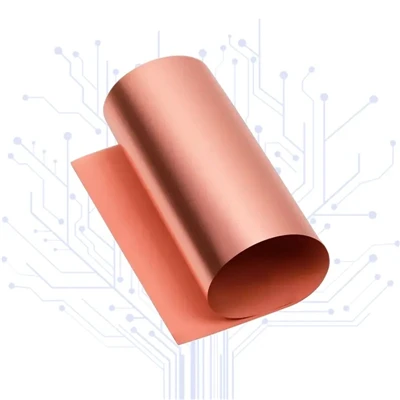
First, let’s keep it simple: RA copper foil stands for Rolled Annealed copper foil, right? It’s way thinner, smoother, and more dimensionally stable than other types like electrodeposited (ED) foil—so it’s used for high-stakes stuff: smartphone PCBs, flexible circuits, 5G components, even aerospace wiring. If a single crease, scratch, or temperature spike messes it up, that’s a whole batch of parts wasted, which is why packaging isn’t an afterthought here.
Let’s start with the base packaging for actual foil rolls. We don’t just leave the foil on its core exposed. First, every roll gets wrapped in a food-grade, static-dissipative (ESD) poly film. Wait, why food-grade? It’s not for eating—food-grade plastic has fewer additives that can leach onto the foil’s ultra-smooth surface. RA foil’s matte side (the rougher one) is for bonding to substrates, and the shiny side is for fine circuitry; even a tiny chemical residue from cheap plastic can mess with adhesion or circuit trace accuracy. That poly film also blocks ambient moisture—copper oxidizes super fast, and oxidized foil can’t bond properly, which is a big no-no for precision electronics.
Next, the core the foil’s wound around. We use heavy-duty, acid-free cardboard cores, not cheap thin ones. Why acid-free? Regular cardboard has trace acids that can corrode the foil over time, especially during long shipping or storage. The core is also fitted with two ESD plastic end caps that snap on tight—these cover the flat ends of the foil roll, so when we stack rolls, they don’t scratch the edge of the foil, which would create defects later on. A lot of suppliers skip end caps, but we’ve seen what happens: a 2-inch scratch on a 1,000-foot foil roll? Total waste. So we never skip that step.
Now, for bulk packaging when we’re sending multiple rolls to a customer. We don’t just toss a bunch of foil rolls into a cardboard box. First, each individual foil roll (after the poly film and end caps) goes into a separate ESD bubble wrap sleeve. The bubble wrap isn’t just regular bubbly stuff—it’s static-shielding, so it prevents static discharge that could damage the foil’s surface or even any protective coatings we might apply (more on that in a sec). Then, we line the outer shipping box with a layer of closed-cell foam padding, which is denser than regular packing peanuts. Peanuts can shift during shipping, and that movement can rub rolls together, causing scratches. Closed-cell foam stays in place, and it also adds a thermal barrier—copper is a great conductor, so extreme temperatures (like sitting in a shipping truck in 100°F heat) can make the foil expand or contract, throwing off its dimensional accuracy. That thermal layer keeps temperatures stable during transit.
Wait, some customers need extra protection for super thin RA foil—like the 12-micron or 8-micron stuff used in flexible PCBs. For those, we add a thin layer of release paper between the foil and the poly film? No, wait—release paper can leave lint, right? Instead, we use a very low-tack, ESD-safe adhesive film that’s applied to the outer edge of the foil when it’s wound. This keeps the outermost layer from shifting or sticking to anything during handling. It peels off super easy when the customer unrolls the foil, no residue left behind. We tested a bunch of adhesives, and the cheap ones leave gunk, so we only use the premium stuff that’s specific to high-precision copper foil.
Another big thing: humidity control. RA copper foil is sensitive to moisture, especially when it’s stored for more than a month. So for long-haul shipments or storage for customers that hold inventory, we put a desiccant pack specifically designed for metals inside each outer shipping box. Not regular desiccant—the little orange ones you get with shoes? Those are too weak. We use molecular sieve desiccants that absorb way more moisture, and they’re labeled “non-corrosive” so they don’t react with copper. We also seal the outer shipping box with a water-resistant tape, not regular packing tape. Regular tape can peel off in high humidity, leaving the box open. Our tape has a rubber adhesive that sticks even if it gets damp, and it’s ESD-safe too—no static buildup when the box is opened.
Wait, let’s talk about storage packaging for customers that keep foil on-site. A lot of our clients have climate-controlled warehouses, but we still provide reusable ESD storage containers for them. These containers are hard plastic, stackable, and have individual slots for foil rolls, so they don’t rub against each other. We also include a data sheet inside each container that tells customers the ideal storage conditions: 60-70°F temperature, 40-50% humidity, and no direct sunlight. Sunlight can break down the poly film and cause discoloration on the foil’s shiny side, which is a problem for circuitry where color consistency matters for photoresist processing.
Oh, and custom packaging for specific needs. Some customers work with ultra-large format RA foil, like rolls that are 60 inches wide for large-area PCBs. Those need different packaging—we don’t use standard cardboard cores for those; we use heavy-duty steel cores that won’t bend, because a bent core would make the foil have waves, which are impossible to work with. Those large rolls get wrapped in a double layer of woven polyethylene fabric before going into a reinforced wooden crate. The crate has custom foam inserts that cradle the roll, so it doesn’t shift during shipping via freight. We also label those crates “FRAGILE: PRECISION COPPER FOIL” and add a handle on each side for easy lifting—no dragging, which can damage the edges.
Wait, let’s address a common mistake we see from other suppliers: over-packaging or under-packaging. Some suppliers use so much bubble wrap that the roll gets crushed, especially thin ones. We calculate the exact amount of padding based on the foil’s thickness and roll diameter. For thin, small diameter rolls, we use 1/2-inch foam; for thick, large diameter rolls, we use 1-inch foam. No wasted space, no risk of crushing. Under-packaging? That’s how rolls get scratched or oxidized, which costs customers time and money. We test every packaging method we use—we ship test rolls across the country (even internationally) and inspect them for defects when they arrive to make sure our methods hold up.
Now, let’s get to why this matters for our customers. We’re not just selling packaging—we’re selling peace of mind. A few months back, one of our clients had a bad experience with a different supplier: their RA foil arrived with 12 scratches per roll, and they had to scrap a whole order of 5G modules that were already being assembled. We sent them a test roll, and we packaged it with the ESD film, end caps, and thermal padding. They got it a week later, no scratches, perfect condition. That’s the difference.
We also make sure every packaging step is documented. Each roll has a batch number printed on the outer box, which matches the batch number of the foil inside. That way, if there’s ever a defect (even though we test every batch), customers can trace exactly where it came from, no guesswork. It’s a small thing, but it’s important for precision manufacturing where traceability is everything.
Wait, do we ever adjust packaging for shipping routes? Yeah, absolutely. If a customer is in a humid area like Singapore, we add an extra desiccant pack and a moisture-barrier outer layer. If they’re shipping to a cold place like Norway in winter, we make sure the thermal padding is thicker to prevent the cardboard core from getting brittle and cracking. We don’t use a one-size-fits-all approach—we tailor packaging to the customer’s location and needs.
Now, if you’re reading this and you work in electronics manufacturing, and you need high-precision RA copper foil, the last thing you want is to waste time and money on defective material. Our packaging methods are designed to keep your foil in the exact condition it was when it left our facility. We’ve been refining these methods for years, testing with every type of RA foil we make, and tweaking based on customer feedback.
If you’re looking to order, or you have questions about specific packaging for your project (like ultra-thin foil, large format rolls, or long-haul shipments), hit us up to chat. We’re happy to walk you through exactly what we use, answer any questions, and make sure your order arrives perfectly.

So, that’s the lowdown on how we package high-precision RA copper foil. It’s not just about wrapping stuff up—it’s about protecting a product that’s critical to the tech you use every day. If you need reliable, well-packaged RA copper foil, we’re here for you.
Ed Copper Foils References
- Electronics Materials Packaging Association. (2022). Best Practices for Packaging Precision Metal Foil.
- International Electrotechnical Commission (IEC). (2021). Standard for ESD Protection in Electronic Component Packaging.
- Copper Development Association. (2020). Storage and Shipping Guidelines for Rolled Annealed Copper Foil.
Civen Metal Material (Shanghai) Co., Ltd.
Address: Workshop 2-2, No.1888 Xiechun Road, Jiading District, Shanghai, 201804, P.R.China
E-mail: sales@civen.cn
WebSite: https://www.civenmetal.com/
