Hey there, fellow workshop managers, maintenance techs, and business owners who rely on Ruiqi air compressors to keep operations running smoothly. If you’re reading this, chances are you know that a Ruiqi compressor isn’t just a piece of equipment—it’s the quiet workhorse powering your pneumatic tools, spray paint lines, sandblasting rigs, or whatever keeps your team meeting deadlines. I’ve been a Ruiqi Air Compressor supplier for 12 years now, and let me tell you, the number one question I get from customers isn’t about pricing or lead times. It’s: “How do I keep my Ruiqi compressor running like new, so I don’t end up with a costly breakdown mid-job?” Ruiqi Air Compressor
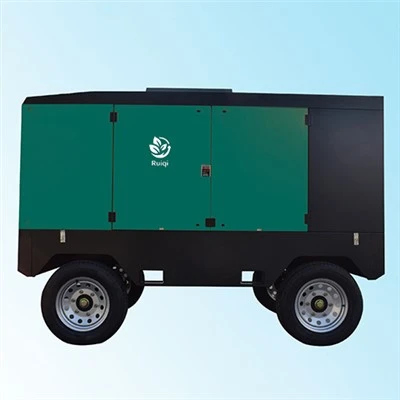
I see it all the time. A shop will buy a top-of-the-line Ruiqi screw compressor, pat themselves on the back for a smart investment, and then ignore it until the pressure drops or a weird knocking sound starts. By then, they’re looking at a $2,000 repair bill or a week of downtime that costs them twice that in lost work. The good news is that maintaining a Ruiqi compressor isn’t rocket science. It’s about sticking to a consistent schedule, paying attention to the little details, and knowing what’s normal vs. what’s a red flag. As someone who’s installed dozens of Ruiqi units and helped troubleshoot hundreds more, I’m going to walk you through the exact steps I share with every customer that signs with me—no fluff, just practical stuff that works.
First, let’s start with the basics: you can’t maintain something if you don’t know its parts. Ruiqi makes a range of compressors, from portable reciprocating models for small garages to large screw units for manufacturing plants, but their core maintenance needs are universal. The engine (or air end, for screw models), the air filter, the oil system, the separator, and the electrical components are the five big ones. I always tell new customers to keep their Ruiqi manual in a labeled binder near the compressor. Not the digital one—something you can flip through when the shop floor is loud, and you don’t want to mess with your phone. The manual has model-specific specs, like exact oil viscosity and filter replacement intervals, that can vary even between similar units. Don’t skip that step. It’s saved more than one customer from accidentally putting the wrong oil in their compressor, which would’ve ruined the air end within months.
Let’s break down maintenance into two categories: daily checks and scheduled maintenance (weekly, monthly, quarterly, and annual). This is the routine that prevents 80% of common issues.
Daily checks take less than five minutes, and I make sure every new customer knows this because it’s non-negotiable. First, check the pressure gauge. Your Ruiqi compressor has a set pressure cut-off—let’s say 125 PSI for most models. If it’s running at 10 PSI below that consistently, that’s a sign something’s off, not just normal wear. Next, listen. A Ruiqi compressor should have a steady, low hum. If it’s rattling, hissing loudly, or making a grinding noise, stop the unit and investigate. Rattling often means a loose part, while hissing could be a leak in the air line or a faulty valve. Grinding is a red flag for the air end, and you don’t want to wait on that. Finally, check for visible leaks, oil puddles, or abnormal heat. The compressor’s surface should be warm, not so hot you can’t rest your hand on it for 10 seconds. Oil puddles mean a seal is failing, and air leaks will make the compressor run longer than it needs to, wasting electricity and wearing out parts faster. I once had a customer who skipped daily checks for three months and ended up with a 15 PSI leak in his air line—his electric bill went up by $300 that quarter, all because he didn’t spend two minutes each morning looking over his unit.
Weekly maintenance is a little more involved, but still manageable with your team’s regular routine. Start with draining the air tank. Condensation builds up inside the tank every time the compressor runs, and if you leave it, it causes rust. That rust can get into the air line and damage your tools, or even clog the compressor’s internal components. Ruiqi recommends draining the tank after every 8 hours of operation, but if your shop runs two shifts, that’s twice a day. I tell customers to make it part of the end-of-shift routine, so no one forgets. For screw compressors, also check the air intake filter weekly. The filter keeps dust, dirt, and debris out of the air end. If it’s clogged, the compressor has to work harder to pull in air, which increases temperature and wears out parts. To check it, simply remove the outer cover and look at the filter element. If it’s dark and caked with dust, it’s time to clean or replace it. For most Ruiqi models, you can blow out a reusable filter with compressed air (from a separate, filtered compressor, obviously) if it’s not too dirty. But if it’s torn or heavily soiled, don’t risk it—replace it. A $20 filter is way cheaper than a $5,000 air end.
Monthly maintenance gets into the fluid systems, which are the heart of your Ruiqi compressor. First, check the oil level. For reciprocating models, this is usually a sight glass on the side of the crankcase. For screw models, it’s a similar sight glass on the oil reservoir. The level should be between the “MIN” and “MAX” marks. Never add oil beyond MAX, and never run it below MIN. Use only Ruiqi-approved compressor oil, by the way. I can’t stress that enough. Some customers try to use motor oil or cheaper generic oil to save a few bucks, and that’s a disaster waiting to happen. Ruiqi’s oil is formulated to handle the high temperatures and pressure inside their compressors, so using anything else will break down faster, causing sludge buildup that clogs valves and ruins the air end. Next, check the oil filter. The oil filter keeps contaminants out of the lubrication system, and it should be replaced every 500 hours for most models. Monthly is a good time to keep track of that interval, since most shops do around 500 hours in a month or two of heavy use. Also, inspect the electrical connections monthly. Vibration from the compressor can loosen bolts and wires over time. Make sure all terminals are tight, and look for frayed wires or signs of burning. If you notice any damage, turn off the power to the compressor and call a qualified electrician—don’t try to fix electrical stuff on your own. It’s not worth the risk of a fire or injury.
Quarterly maintenance is where you dive into more detailed checks that keep your compressor running efficiently. For screw models, this is when you replace the air-oil separator element. The separator removes oil from the compressed air, so if it’s clogged or failing, you’ll get oil carryover in your air lines, which can damage your pneumatic tools or ruin paint jobs if you’re doing finishing work. Ruiqi recommends replacing the separator every 2,000 hours, so quarterly is a good milestone to mark that. Also, during quarterly checks, inspect the belt (for belt-driven models) or coupling (for direct drive) that connects the motor to the air end. Belts should be tight enough that you can press them down about half an inch with your finger—if they’re loose, they’ll slip and wear out quickly. If you see cracks or fraying on the belt, replace it immediately. Tightening a loose belt or replacing a worn one takes 15 minutes, and avoids a breakdown that would shut down your entire operation. Finally, check the pressure relief valve. This is a safety component that releases pressure if the compressor overpressurizes, and it should be tested quarterly. To test it, turn on the compressor and let it build up pressure, then gently lift the release lever. It should release a steady stream of air, and when you let go, it should close properly. If it sticks or leaks after releasing, replace it right away. That valve is your compressor’s safety net, and you can’t afford for it to fail.
Annual maintenance is the big one, the end-of-year check that sets you up for another 12 months of reliable operation. This is when you should have a qualified Ruiqi technician come out, even if you do most of the in-house maintenance yourself. I always advise customers to schedule their annual service during a slow period, so you don’t have downtime when you’re busy. What does that annual service include? First, a full oil and filter change, using Ruiqi’s exact specs, even if you changed the oil at the 500-hour interval. The technician will also flush the oil reservoir to remove any sludge that built up over the year. Next, a thorough inspection of the air end. The air end is the most expensive part of the compressor, and Ruiqi’s technicians can measure the clearance between rotors to make sure they’re within factory specs. If the clearance is off, they can adjust or repair it before it causes major damage. They’ll also check the valves, seals, and gaskets for wear, and replace any parts that are starting to fail. For reciprocating models, the technician will inspect the piston rings and cylinder walls, which can wear over time if not lubricated properly. Also, the annual service includes a calibration check for the pressure gauge and any other sensors on the compressor. If the gauge is off by even 10 PSI, you could be running the compressor too hard, wasting electricity or risking pressure-related damage.
Now, I want to talk about common mistakes I see customers make, because these are the things that lead to avoidable breakdowns. First, not keeping the compressor in a clean, well-ventilated space. If your Ruiqi compressor is sitting in a dusty workshop, or in a corner where air can’t circulate, the filter will clog faster, and the compressor will overheat. The ideal space is a dry, temperature-controlled room with at least 12 inches of clearance around the unit for air flow. Second, skipping oil changes because the compressor seems to be running fine. I’ve had customers tell me, “My pressure is good, so why change the oil?” But oil breaks down over time, even if it looks clean. After 2,000 hours, it’s lost its lubricating properties, and running on old oil will wear out the air end 3 times faster. Third, using cheap aftermarket parts instead of genuine Ruiqi parts. I know aftermarket filters and oil might cost a third of the price, but they’re not designed for Ruiqi’s precision engineering. A cheap filter might let small particles through, which scratch the air end’s rotors, leading to a $5,000 repair. Genuine Ruiqi parts are built to last, and they come with a warranty, so you’re not taking a risk.
Another thing: keeping maintenance records. It might seem tedious, but writing down every oil change, filter replacement, and checkup will help you spot patterns. If you notice that your air filter is getting dirty every two weeks, instead of four, that means your shop has extra dust or debris, and you might need a pre-filter or a more efficient filter element. If your electric bill spikes every time you skip an oil change, that’s a sign the compressor is working harder than it needs to, so you can adjust your schedule to stay on top of maintenance.
Let me give you a real example to drive this home. A customer of mine in the automotive repair industry bought a 20 HP Ruiqi screw compressor five years ago. For the first three years, he stuck to the schedule I laid out: daily checks, weekly drain, monthly oil checks, quarterly filter and separator changes, annual service. Last year, when he decided to cut costs, he skipped the annual service, used a generic oil, and replaced his air filter with an aftermarket one. Within six months, his compressor started making a grinding noise. When his technician came out, he found that the air end was severely damaged by sludge from the generic oil and debris that got through the cheap filter. The repair cost him $4,800, and he was without his compressor for three days, which meant he couldn’t take on three big jobs that week. He called me after it was fixed, apologized for not listening, and now he’s back to using genuine Ruiqi parts and sticking to the schedule. That’s the kind of story that makes me passionate about sharing these tips—because it’s not just about saving money, it’s about keeping your business running.

At the end of the day, maintaining a Ruiqi air compressor is about consistency and attention to detail. It’s not hard, and it doesn’t take a lot of time, but it makes all the difference between a reliable workhorse and a costly headache. I’ve seen Ruiqi compressors run for 15 years with proper maintenance, and I’ve seen ones die in two years from neglect. The choice is yours.
Air Treatment Equipment If you’re not sure where to start with your Ruiqi compressor, or if you need help setting up a maintenance schedule, or if you’re looking to replace an old unit with a new Ruiqi model that fits your shop’s needs, don’t hesitate to reach out. I’ve worked with thousands of businesses, from small garages to large manufacturing facilities, and I’m here to help you keep your compressor running at peak performance.
References
- Ruiqi Air Compressor Technical Manual, Model Range: Reciprocating and Screw Compressors, 2021 Edition
- Industrial Maintenance Standards for Rotary Screw Air Compressors, Compressed Air and Gas Institute (CAGI), 2020
- “Preventive Maintenance Best Practices for Stationary Compressors,” Plant Engineering Magazine, Vol. 74, No. 5, 2019
- “Lubrication Requirements for Rotary Screw Compressors,” Journal of Manufacturing Systems, Vol. 38, No. 2, 2016
Suzhou Ruiqi Intelligent Equipment Co., Ltd.
As one of the most professional ruiqi air compressor manufacturers and suppliers in China, we also support custom service. As we have world-leading production equipment and strong manufacturing capabilities, we warmly welcome you to buy high quality ruiqi air compressor made in China here from our factory. Contact us for pricelist.
Address: No. 1729, Zhongshan South Road, Wujiang District, Suzhou City, Jiangsu Province, China, 16th Floor
E-mail: wts476626494@126.com
WebSite: https://www.ruiqicomp.com/
