Hey folks, if you’re in the shotcrete game, you know there’s nothing more frustrating than rolling up to a job site, firing up your machine, and it just won’t spray. I’ve been around shotcrete machines for over 12 years—first as a tech on job sites, now as part of the team supplying these bad boys, and I’ve seen every kind of headache a shotcrete machine can throw at you. Today, I’m breaking down the step-by-step troubleshooting I actually use out in the field, no fancy jargon, no BS, just stuff that works. Shotcrete Machine
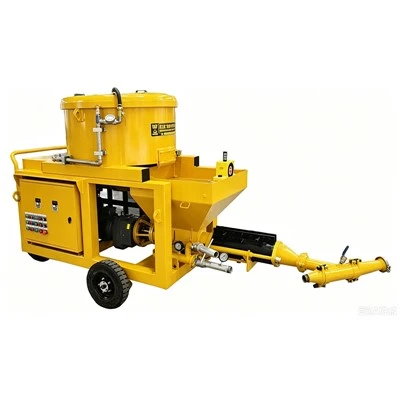
First, let’s cut to the chase: when a shotcrete machine won’t spray, 9 times out of 10 it’s not some magic mechanical gremlin—it’s a small, fixable issue you skipped because you were in a rush. I see this all the time with new operators who skip pre-checks, or even old heads who’ve seen one too many machines and start tinkering before they rule out the obvious. Let’s start with the quick, no-tools checks you can do in 2 minutes flat, before you start tearing hoses apart.
Step 1: Check the Air Supply (Duh, But It’s So Easy to Blink This)
Most shotcrete machines rely on compressed air to push the mix out, right? If your air compressor is on fritz, you’re not going to get spray. Wait—how many times have you looked at the compressor’s pressure gauge and just glanced at it instead of reading the number? Your machine needs a consistent air pressure, usually between 80 and 120 PSI depending on the model, but if your compressor’s dropping below 70 PSI mid-run, that’s your first problem.
I had a guy last month at a concrete repair job. He showed up, turned on the machine, nothing came out, and spent 45 minutes taking the nozzle apart. Turns out his compressor’s air filter was clogged—he’d skipped replacing it after the last job, so airflow was way down. The fix? A 10-minute filter swap, back to spraying. Also, don’t forget the air line connections. Loose fittings mean air leaks, same problem. Grab a soapy spray bottle (you can even use dish soap) and spray it on every air joint when the compressor’s running. If you see bubbles, you’ve got a leak. Tighten that fitting, or if it’s cracked, replace the hose section. Simple.
Step 2: The Mix Is Messed Up (Way More Common Than You Think)
Okay, so air’s good—no leaks, pressure’s steady. Next, your shotcrete mix. Shotcrete is finicky: too wet, too dry, too much aggregate, or not enough accelerator, and it won’t spray right. If your mix is too soupy, it’ll clog the hose. Too crumbly, it’ll just fall apart before it gets to the nozzle. Wait, did you add accelerator? So many new operators forget that accelerator is non-negotiable for shotcrete. It sets the concrete fast so it sticks to the surface. No accelerator, or too little, and the mix will slump before it sprays.
I once watched a crew mix their shotcrete with way too much water because they thought it’d flow easier through the hose. Nope—ended up with a massive clog in the 2-inch hose, and they had to cut 10 feet of it out to fix it. Rule of thumb for mix consistency: if you grab a handful, it should hold its shape when you squeeze, but a little water drips out. No water streaming, no rock falling off when you open your hand. If it’s too dry, add a splash of water (not a bucket full) and mix it again. Too wet, add a little extra dry aggregate or sand until it firms up. Also, if you’re using a bag mix, make sure it’s not expired—old mix loses its cement bind, so it won’t hold together for spraying.
Step 3: Hose Clogs Are Your Public Enemy #1
Let’s be real—clogs in the hose are the most common reason a shotcrete machine won’t spray. How do you know if it’s a clog? Turn on the air, hold the nozzle away from you, and trigger the machine. If no mix comes out, even after you reverse the machine (wait, yes, most modern shotcrete machines let you reverse the auger to clear small clogs), you’ve got a clog.
First, don’t crank up the air to blast it out—that’ll just blow the hose off or send a chunk of concrete flying at someone. Instead, turn the machine off, disconnect the nozzle, and pull back on the hose a little so the end’s free. Then, reverse the auger for 5 seconds—sometimes that’ll pull the clog back into the machine so you can clear it. If that doesn’t work, you’ll have to cut a section of hose out where the clog is. Pro tip: mark your hose with spray paint every 10 feet so you can find the clog fast. I’ve seen guys trace a clog back 20 feet because they didn’t mark it—total waste of time.
Also, why do clogs happen? Usually because the mix was wrong, or you left the machine running with a half-empty mix for too long, or you didn’t clean the hose after the last job. Speaking of cleaning—if you skip cleaning the hose, even a small piece of leftover concrete from last week can turn into a hard clog overnight. That’s why every job ends with a “flush”: run a small amount of water and dry aggregate through the hose to clear any leftover mix. Trust me, 5 minutes of flushing saves you hours of unclogging.
Step 4: Check the Auger and Rotor (The Heart of the Machine)
If air’s good, mix is good, no clogs in the hose, next step is your machine’s inner workings. For most pneumatic shotcrete machines, the rotor (the round part that holds the mix chambers) and the auger (the screw that feeds mix into the rotor) are the ones that can go wrong. First, make sure the auger’s turning when you trigger the machine. If it’s not, that means a loose belt, a tripped overload switch, or a broken gear.
Overload switches are your safety net—they trip when the machine is working too hard, so it doesn’t burn out the motor. If your auger stops turning, check the control panel for a red reset button. Press that, wait 30 seconds, then try again. If it trips again right away, don’t keep pressing it—you’ve got a bigger issue, like a clogged rotor chamber or a misaligned auger.
Another thing: the rotor seals. Old, worn seals can let air leak into the mix, so it doesn’t feed properly into the hose. If you’ve had your machine more than 100 jobs, those seals are probably due for a swap. I see a lot of guys run machines with bad seals because they don’t notice the gradual drop in spray pressure. Eventually, it stops spraying at all. Seals are cheap, and swapping them takes 20 minutes—way faster than troubleshooting a whole machine.
Step 5: Nozzle Issues (The Final Stop)
Wait, before you write off the whole machine—check the nozzle. Nozzles get worn out, or clogged with concrete, or the accelerator line gets blocked. If the accelerator line is clogged, it won’t mix with the shotcrete at the nozzle, so the mix won’t set. For wet-mix shotcrete (a lot of newer machines use this), the nozzle has a mixing chamber where water is added—if that’s clogged, you’ll get dry mix that won’t spray.
Take the nozzle apart (most are just hand-tight, no tools needed) and clean it out. Use a soft brush or a rag to get rid of any concrete buildup. Also, make sure the accelerator nozzle is aligned right when you put it back—if it’s crooked, it won’t mix properly, even if it’s clean. I once had a nozzle that looked fine, but the accelerator line was pinched when I tightened it. Fixed the pinch, and it sprayed again. Easy.
Now, let’s talk about when you should stop troubleshooting and call the pros. If you’ve done all these steps, and your machine still won’t spray, it could be something deeper: like a damaged air motor, a cracked rotor, or electrical issues with the control panel. Don’t keep tinkering—you’ll make it worse.
If you’re in the market for a reliable shotcrete machine, or you need replacement parts (I see a lot of guys trying to fix seals with wrong size parts, which causes more issues), reach out to our team. We supply heavy-duty shotcrete machines built for job sites—no cheap junk that breaks after 10 jobs. Our techs can even walk you through troubleshooting over the phone, if you’re stuck mid-job.
Before we wrap up, a quick note: pre-checks save you so much time. Spend 5 minutes every morning before firing up the machine: check air pressure, test the mix (squeeze test!), inspect hoses for leaks, and wipe down the nozzle. That small routine prevents 90% of the issues I talked about today.
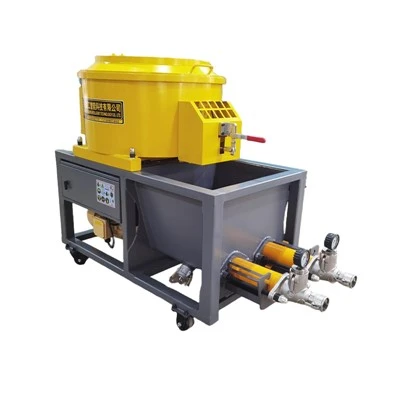
When I started in this industry, I thought fixing a shotcrete machine meant being a mechanic. Turns out, most of the time it’s just paying attention to the small stuff. If you have questions about your machine, need parts, or want to upgrade to a model that’s easier to troubleshoot, don’t hesitate to connect with us. We’re here to keep your job moving, not stuck on a machine that won’t spray.
Manhole Sprayer References
- American Concrete Institute. (2020). Guide to Shotcrete. ACI 506R-20.
- Shotcrete Machinery Association. (2022). Field Troubleshooting Guide for Pneumatic Shotcrete Machines.
- OSHA. (2021). Safety Guidelines for Concrete Construction: Shotcrete Operations.
Zhejiang Wengong Intelligent Technology Co., Ltd.
Zhejiang Wengong Intelligent Technology Co., Ltd. is one of the most professional shotcrete machine manufacturers and suppliers in China. With abundant experience, we warmly welcome you to buy durable shotcrete machine made in China here and get quotation from our factory. Quality products and reasonable price are available.
Address: No.111 Huakang Road, Liuao Village, Qiaoxia Town, Yongjia County, Wenzhou City, Zhejiang Province, China
E-mail: sales007@cngcjx.com
WebSite: https://www.wallgoe.com/
