If you’ve ever watched rainwater neatly channeled away from a commercial building’s roofline or seen a residential gutter system roll smoothly into place on a new home, you’ve likely witnessed the work of a downspout roll forming machine. As someone who’s spent 12 years supplying these machines to gutter and metal fabrication shops across North America, I’ve talked to hundreds of operators who swear by their equipment—and just as many who’ve learned the hard way that understanding every component of your machine is the difference between a smooth production run and a costly breakdown mid-job. Downspout Roll Forming Machine

I still remember the first time I walked a new customer through his brand-new machine in a shop outside Indianapolis. He’d bought it sight-unseen, focused only on the speed and maximum length it promised, and skipped the deep dive into how each part worked. By week three, he was calling me at 2 a.m., panicking because his roll forming head had jammed and he couldn’t figure out why. Turned out, a tiny, overlooked guide roller had worn down, and without knowing how the forming system’s parts worked together, he couldn’t identify the issue in time to deliver a 500-foot downspout order for a local apartment complex. That call stuck with me: good equipment isn’t just about the big numbers—it’s about the components that keep it running reliably, job after job.
So let’s break down what makes a downspout roll forming machine tick, from the part that loads the raw metal to the one that cuts the finished downspout to exact length, and why each part matters for your bottom line.
The first and most foundational component is the uncoiler, or decoiler. This is where your raw material starts—most downspouts are made from galvanized steel, aluminum, or sometimes copper, supplied in large coils weighing anywhere from 2,000 to 10,000 pounds. The uncoiler’s job is to hold that coil steady, unwind it at a consistent speed, and feed it straight into the rest of the machine without tangles or warps. Cheap uncoilers often skimp on the tension control, which lets the coil spin too fast or unevenly, leading to wavy metal that can’t be formed into straight downspouts. We supply hydraulic uncoilers as standard on our machines because they let operators adjust tension with a simple dial, even for different metal gauges—thin aluminum needs lighter tension than thick steel, and being able to adjust on the fly cuts down on startup waste. I’ve seen small shops with manual uncoilers waste 20 to 30 feet of metal per run just getting the coil aligned right; that’s hundreds of dollars in lost material every month, just from one component.
Next, right after the uncoiler, is the entry guide system. This might look like a set of simple metal rails, but it’s actually one of the most precision-critical parts of the whole machine. Its job is to guide the flat, unformed metal strip straight into the roll forming head, keeping it centered and at a consistent height. A misaligned entry guide will cause the metal to veer to one side as it moves through the forming rolls, resulting in downspouts that are lopsided or have uneven bends. We design our entry guides with adjustable side rollers and a leveling bar that operators can tweak without tools, which is a lifesaver when switching between producing 3-inch residential downspouts and 6-inch commercial ones. Most entry guides are made from hardened steel, too—because even a tiny burr on the guide can scratch the finish of expensive copper downspouts, ruining a customer’s order before it even starts.
Once the metal is aligned and fed correctly, it moves into the roll forming system, the heart of the entire machine. This is where the flat strip is bent into the cylindrical or rectangular shape that becomes a downspout. The roll forming system is made up of multiple sets of precision-machined roll dies, arranged in a line, each set bending the metal a little more until it reaches the final shape. For example, a typical downspout machine has 8 to 12 roll stations, each with two opposing dies (one on top, one on bottom) that grip the metal as it passes through. The die surfaces are usually coated in chrome or tool steel to reduce friction, prevent scratching, and last longer—cheap dies will wear out in 6 to 12 months, while ours hold up for 5 to 7 years, even with daily 10-hour runs.
A common question I get from new operators is: do all downspout machines use the same number of stations? The answer depends on the profile. Round downspouts only need about 8 stations, while rectangular downspouts with crimped seams (the kind that lock together for extra durability) need 10 to 12. It’s also important that the roll forming system has adjustable dies, so you can switch between different downspout sizes without swapping out the entire set of dies. Some lower-end machines use fixed dies, which means you have to order a whole new set every time you want to make a different size—costing thousands of dollars and a lot of downtime. That’s why we make our roll dies interchangeable, letting operators change sizes in less than an hour, no special tools required.
After the roll forming system shapes the metal into a continuous downspout, the next step is the standing seam or locking mechanism. This is what gives the downspout its structural integrity, the part that holds the two edges together so it doesn’t leak when rainwater flows through. For round downspouts, this is usually a crimping roller that squeezes the overlapping edges of the metal. For rectangular ones, it’s a seaming head that bends the edges into a lock that snaps together tightly. This part is often overlooked, but a bad locking mechanism is a headache waiting to happen. I once had a customer who bought a machine from a competitor that used a cheap pneumatic seaming head; in humid weather, the air lines would stick, leading to seams that didn’t close all the way. He spent a whole rainy weekend re-seaming 200 feet of downspouts, costing him overtime and a lot of frustrated clients. Our machines use electric-driven seaming heads with adjustable pressure, so they work consistently no matter the weather, and operators can tweak the tightness for thin aluminum or thick galvanized steel in seconds.
Once the downspout is fully shaped and seamed, it moves into the cutting system, the final component that cuts the continuous length into individual pieces to the customer’s required size. There are two main types of cutting systems on downspout machines: cut-to-length, which uses a flying shear that cuts the metal as it moves, and post-cut, which cuts it after it’s exited the machine. Flying shears are more popular for high-volume production because they let the machine run at full speed without stopping to cut, but they require precise alignment to ensure the cut is square—no jagged edges, no angled cuts that make it hard to join downspouts together. Post-cut machines are cheaper, but they’re slower and require more operator intervention. We recommend flying shears for any shop producing more than 5,000 feet of downspouts a month, because the speed difference adds up fast. The cutting blades themselves matter too; we use high-speed steel blades that stay sharp for thousands of cuts, while cheap blades will dull in a few hundred, leading to rough cuts that need extra finishing work.
But a downspout roll forming machine isn’t just a collection of these parts—there are two supporting components that keep everything running smoothly: the control system and the material handling system. The control system is the brain of the machine, usually a digital PLC (programmable logic controller) that lets operators input the desired downspout length, number of pieces, and speed. It automatically adjusts the speed of the roll forming system, the position of the cutting shear, and even the tension on the uncoiler. Modern control systems also have a memory function, so you can save settings for different downspout sizes, so you don’t have to re-calibrate every time you switch between jobs. We’ve had customers with older machines that use analog controls, which require adjusting dials and guessing the speed—they’re often the ones who come to us for an upgrade after missing a delivery because the settings were off.
The material handling system, meanwhile, takes the finished downspouts as they come off the machine and stacks them neatly, so you don’t have workers bending down to pick up each piece or leaving them lying on the floor where they get scratched or dented. Many operators think this is an optional add-on, but it’s a waste of labor to have two workers standing by the machine to stack downspouts. Our standard machines come with a simple roller conveyor that moves finished pieces to a stack, and we offer automatic stackers for high-volume shops that can stack 50 pieces at a time, cutting labor time by 70%.
I’ve spent 12 years in this industry, and one thing I’ve learned is that no two shops need the exact same machine. A small residential gutter installer making 100-foot downspouts a week doesn’t need the same heavy-duty hydraulic uncoiler as a commercial fabricator producing 10,000 feet a month. That’s why I always walk potential customers through their specific needs, not just list specs. For example, a customer in Dallas came to me last year, having had two bad experiences with machines that couldn’t handle the hot, humid Texas weather—their seaming heads would seize up, and their roll dies would corrode. We adjusted the sealing components on our machine to have weather-resistant bearings and coated the dies with a corrosion-resistant layer, and within six months, he’d cut his downtime by 40%.
At the end of the day, a downspout roll forming machine is a big investment—for most shops, it’s one of the largest pieces of equipment they’ll buy. Understanding each component isn’t just about fixing issues when they break; it’s about getting the most out of your machine, reducing waste, meeting delivery times, and keeping your customers happy. If you’re in the market for a new downspout roll forming machine, don’t just look at the speed or the price tag. Ask about the uncoiler’s tension control, the material of the roll dies, the type of cutting system, and how easy it is to switch between different downspout sizes. Those are the details that will make your machine a reliable part of your business for years, not just a shiny new toy that breaks down when you need it most.
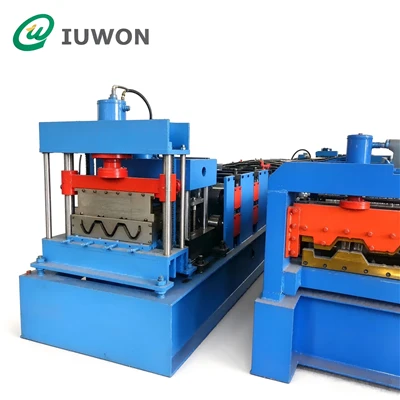
If you’re ready to talk through your production needs, whether you’re a small shop looking for your first machine or a large fabricator upgrading to a higher-volume model, I’m here to help. We can walk through component options, talk about customization for your specific jobs, and make sure you get a machine that fits your budget and your workflow. Contact our team today to learn more.
Wire Mesh Cable Tray Roll Forming Machine References
- "Roll Forming: Technology and Applications." Society of Manufacturing Engineers, 2019.
- "Metal Roofing and Gutter Equipment: A Buyer’s Guide." National Gutter Association, 2021.
- "Hydraulic Uncoiler Systems for Metal Fabrication." Industrial Machinery Digest, 2020.
Hanghzou IUWON Technology Co., Ltd.
Hangzhou IUWON Technology Co., Ltd. is one of the most professional downspout roll forming machine manufacturers and suppliers in China. Please feel free to buy custom made downspout roll forming machine made in China here from our factory. For price consultation, contact us.
Address: No.755, Xintangtou Village, Xinjie Street, Xiaoshan District, Hangzhou, Zhejiang
E-mail: sales@iuwon.com
WebSite: https://www.iuwonforming.com/
