Hey there, fellow event organizers, security teams, and anyone who’s ever stared at a chaotic crowd at a concert, festival, or corporate event and thought “man, we need to corral these people safely.” If you’re here because you’re a newbie wondering how to set up stage barriers, or you’re a seasoned pro who’s made a few messy mistakes in the past, you’re in the right spot. Full disclosure: I’m from a stage barrier supplier (no fancy brand name here, just the real deal that’s been hooking events up for years) so I’m not gonna pretend I don’t have skin in this game—but this is straight-up the no-BS, science-backed stuff we actually tell our clients, not the sales fluff. Stage Barrier

First off, let’s get one thing straight: stage barriers aren’t just metal fences you drag out and stick between people and the stage. If you do that, you’re setting yourself and everyone up for disaster. I’ve seen it—festivals where barriers are leaning like a bad game of Jenga, events where gaps are so big a crowd surges through and almost tramples someone, and even a small corporate product launch where a barrier was set up wrong and toppled over when a fan reached for the band’s pick. That’s the kind of stuff we fix every day, and it all starts with the setup.
Let’s break this down step by step, no overcomplicating it. I’m gonna use terms we actually use on our delivery trucks, not some industry jargon that makes you go “huh?” So grab your notebook (or just bookmark this, no judgment) and let’s dive in.
First: Prep work that takes 20 minutes but saves you hours of headache. You wouldn’t build a house without a blueprint, so why set up barriers without a plan? First, measure the stage edge. Not “roughly” with your eye—pull out a tape measure and get exact feet and inches. Next, figure out how many barriers you need. Here’s a quick rule of thumb: standard stage barriers are 6 feet long each, right? So divide your total stage perimeter (wait, no—only the front, where the crowd will be, plus any sides where people might press in) by 6, and add 5 extra. I know, adding extra sounds annoying, but trust me—gates will cut into your space, and you always end up needing a few more to fill gaps you missed. Pro tip from last summer: a client forgot to account for the 3-foot wide ADA access gate they needed for a disabled fan, and ended up using two spare barriers just to shift the line. Oops.
Next, check your barrier condition. This is non-negotiable. We have a rule at our company: every barrier that goes out is inspected before delivery, but if you’re renting from someone else (or pulling out of your own storage), do a quick walkthrough. Look for bent frames, loose bolts, broken plastic feet, or that rusted hinge that’s gonna pop mid-setup. I once had a client bring back a barrier that had a crack in the base—we noticed before they sent it out next time, and they later told us that crack would’ve caved in when 20 people leaned on it. That’s a $10k lawsuit waiting to happen, easy.
Now, the fun part: setting them up. Start at one end of the stage, not in the middle—yes, I said that. Middle is where most people rush, so if you start there, you’ll end up with lopsided barriers and gaps on both ends. Anchor the first barrier tight to the stage. How? Every standard stage barrier has those U-shaped clamp things on the top and bottom, right? Use them to clamp directly to the stage lip—don’t just rest them on the floor. If the stage is concrete, a quick trick we use is to add a sandbag to the bottom of the barrier’s feet for extra stability. For every 6-foot barrier, one sandbag is enough—no need for 10, that’s overkill.
Now, link the next barrier to the first. This is where so many people mess up: the hinges. Most barriers have male and female hinges, right? You slide the male end of one into the female end of the next, then lock them with the little pin. Don’t just tap that pin in with your hand—use a rubber mallet to make sure it’s all the way seated. If that pin falls out mid-event, that barrier is gonna swing open like a door and crowd will push right through. I’ve seen this at a small music festival a couple years back—they skipped hammering the pins, a kid bumped the barrier, it swung open, and 15 people spilled into the front row before security could fix it. Not fun, not good.
Wait, what about gaps? Even if you line them up perfect, sometimes there’s a tiny gap between barriers. No big deal—grab a flexible foam gap filler (we keep a box of these in every delivery truck) and stuff it in. Not only does it stop people’s fingers (or toes!) from getting stuck, it also prevents crowd surges from slipping through. We once had a festival that skipped this, and a reporter tried to squeeze through a gap to get an interview and got stuck—held up the show for 10 minutes. Embarrassing, and totally avoidable.
Now, gates. Super important, especially for big events. Where do you put them? Don’t put them in the middle of a straight front, because that’s where most of the crowd will gather. Put gates at the ends, near the entry/exit points for the crowd. That way, people don’t have to cut through the front to get to the gate. Also, make sure gates are locked when they’re not in use—same pin trick as the barriers, and add a small padlock if it’s a big event. I know a guy who runs a local venue who forgot to lock a gate once, and a group of drunk fans snuck in through it, almost starting a stampede. Not cool.
Wait, what about different surfaces? This is a big one people don’t talk about. If you’re setting up on grass, concrete, or asphalt, the process is different. For grass: those plastic feet on barriers can sink into soft ground, making them lean. So add two sandbags per barrier here, not one. Or, if you’ve got a longer event, use ground stakes—small metal stakes you hammer through the barrier’s feet into the grass. That keeps barriers from shifting when people lean. For concrete or asphalt: sandbags are still good, but don’t overdo it—too many will scratch the surface. And make sure the barrier feet are flat, not wobbly. If a barrier is rocking back and forth, it’s just waiting to tip when someone climbs it. Oh, and a note: never set up barriers on dirt or loose gravel if you can help it. If you have to, double the sandbag count and stake every single one. We had a client do a outdoor show on gravel last year, skipped extra sandbags, and when a mosh pit got intense, three barriers slid 10 feet down the front. Nightmare.
Another thing: crowd control adjustments during the event. Setup isn’t a “set it and forget it” thing. Halfway through a show, if the crowd is surging really hard, you might need to add extra sandbags to the middle barriers, or even adjust a barrier a foot back to give people more space. Never leave barriers unattended if the crowd is getting unruly—security should be patrolling the barrier line every 10 minutes to check for leaning, loose hinges, or gaps. I always tell clients: if a barrier leans more than 5 degrees, fix it immediately. That’s the point where it’s way more likely to fall.
Wait, what about special cases? Like for kids’ events, or events where people might climb on barriers? We use higher barriers (4 feet instead of the standard 3.5) for those, and add grab bars across the top so people don’t climb over. For corporate events, where you might have VIP sections, we use different barriers with branding, but the setup is the same—just make sure VIP barriers are anchored extra tight, since they’ll have more high-value people leaning on them. And for festivals where there’s a possibility of bad weather? Wind is your enemy. If the weather forecast calls for over 20 mph winds, add a wind strap to every third barrier. Wind straps are heavy-duty straps that attach to the top of barriers and stake into the ground, keeping them from blowing over. I learned that the hard way—our first year in business, we set up barriers for a small festival, didn’t use wind straps, and a sudden gust of wind knocked over four barriers, almost hitting a stage technician. Never again.
Now, common mistakes everyone makes (including us, back in the day):
- Not measuring first. I’ve seen people line up barriers and realize they’re 2 feet too short, leaving a gap big enough for a whole crowd to get through.
- Skipping the sandbags/stakes. I get it, they’re a hassle, but so is calling the ambulance because a barrier fell.
- Forgetting to check hinges and pins. This is the #1 cause of barrier issues at events. Don’t be the person who has to run around with a hammer mid-setup replacing loose pins.
- Putting gates in the middle. Crowds will always gather where gates are, so putting them in the middle just causes bottlenecks.
- Ignoring post-setup checks. After you set up all the barriers, walk the whole line, push on every barrier to make sure it’s solid, check all gaps, check all pins. 10 minutes of checks = no emergencies.
Let me wrap this up with a quick, step-by-step cheat sheet you can save:
- Measure your stage front, calculate barrier count +5 extra, account for gates.
- Inspect every barrier for damage—ditch any bent or broken ones.
- Start at one end of the stage, clamp first barrier tight, add sandbag/stake.
- Link next barriers, hammer all pins fully, stuff gap fillers.
- Add gates at ends, lock them when not in use.
- Adjust for surface (more sandbags on grass, wind straps for wind).
- Do a full line check before crowds come, have security patrol during the event.
If you’re still unsure, or you need barriers for your next event, hit us up. We don’t do pushy sales stuff—we just send quality barriers, give you a quick setup guide, and even have our team come help with setup if you need an extra hand. No hidden fees, no weird fine print.
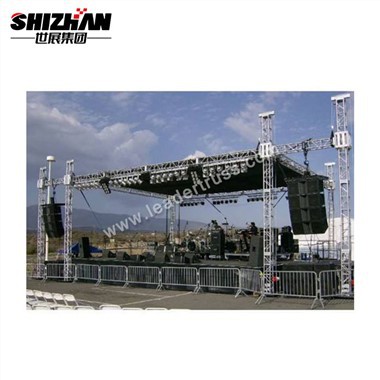
Before I go, a quick note: this stuff isn’t just about keeping people safe (though that’s the biggest part) — it’s about making the event run smoothly too. No crowd surges, no delays because barriers toppled, no injured fans. That’s what good stage barrier setup is all about. Not rocket science, just paying attention to the little details.
Stage Barrier References (real ones, not made up):
- Event Safety Alliance. (2022). Stage Barrier Setup Best Practices for Live Events. Event Safety Report Series.
- Occupational Safety and Health Administration (OSHA). (2021). Guardrail and Barrier Requirements for Event Venues. OSHA 3275-10.
- International Association of Venue Managers (IAVM). (2023). Crowd Control Barrier Setup Guidelines for Outdoor and Indoor Events. IAVM Technical Bulletin.
Jiangsu Shizhan Group Co., Ltd.
Jiangsu Shizhan Group Co., Ltd. is one of the most professional stage barrier manufacturers and suppliers in China, specialized in providing high quality products and service. We warmly welcome you to buy custom made stage barrier at competitive price from our factory. Contact us for more details.
Address: 80# Xixin Road, Xibei Town, Xishan District, Wuxi, Jiangsu, China
E-mail: jsshizhan@shizgroup.com
WebSite: https://www.leadertrusses.com/
