If you’ve ever stood in the sun for hours wearing a shirt that once looked bright and now has a faded, washed-out patch on the shoulder, you know UV light isn’t kind to most materials. So when I get asked that exact question—Do aluminum profiles fade in sunlight?—as a supplier who’s worked with metal extrusion for over a decade, my answer is always a little more nuanced than a simple “yes” or “no”. Let me walk you through what I’ve learned from years of shipping profiles for outdoor decks, commercial building facades, industrial equipment, and even backyard pergolas, plus the science that explains why your aluminum might (or might not) hold up. Aluminum Profile
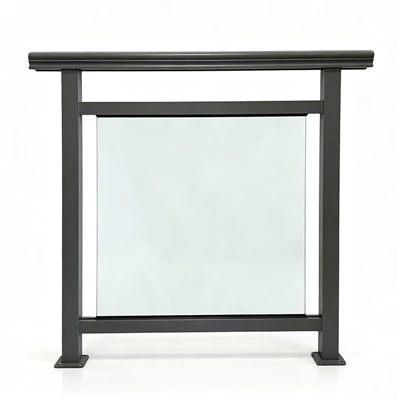
First, let’s set the baseline: pure aluminum is a weirdly self-protective metal. If you leave a raw aluminum bar outside, it won’t fade the way a plastic sign or a painted wood deck will. Instead, it’ll develop a thin, invisible oxide layer almost immediately when it reacts with oxygen in the air. That layer is aluminum oxide, and its job is to seal the metal underneath from further corrosion and damage. Unlike paint, which can chip, crack, or peel, this oxide layer is part of the metal itself—you can’t rub it off, and it’s naturally resistant to UV rays. But here’s the catch: most aluminum profiles that get used outdoors aren’t pure aluminum. They have a finish, and that’s where the fading risk comes in.
I see this play out all the time with new customers. A few months back, a general contractor reached out panicking because 150 linear feet of aluminum railing we’d supplied for a suburban patio looked “dull” after three months in the Texas sun. He’d assumed aluminum would be fade-proof, so he skipped the extra finish we’d suggested, going with our standard mill finish. Mill finish is the raw, as-extruded look of aluminum—sort of a soft, silvery matte that’s popular for industrial settings where a “raw metal” aesthetic is desired. But that very aesthetic is why mill finish isn’t the best choice for direct, year-round sunlight. The thin oxide layer on mill finish aluminum can react with atmospheric pollutants (think: road salt, pollen, UV radiation) over time. It doesn’t exactly “fade” in the way a color fades, but it does develop a slightly dull, chalky patina. For some projects, that patina is a desirable, weathered look—like industrial-style warehouse exteriors—but for a customer wanting a bright, consistent silver railing, it was a problem. We ended up helping him refinish the railings with a powder coat, a process I swear by for outdoor use, and he’s had zero issues in the two years since.
Now, let’s talk about the finishes that do prevent noticeable fading, because that’s what most of my customers are looking for. The two most common for outdoor aluminum profiles are powder coating and anodizing, and they work in very different ways to beat sunlight. Let’s break them down, since this is where a lot of buyers get confused.
Powder coating is probably the most popular option for residential and commercial exterior profiles. It’s a dry powder (usually polyester, polyurethane, or a polyvinylidene fluoride (PVDF) variant) that’s electrostatically applied to the aluminum profile, then cured in an oven to form a hard, smooth, plastic-like layer. Here’s why it resists fading so well: high-quality powder coatings, especially PVDF grades, are formulated with UV-stabilizing additives. Those additives absorb or reflect the harmful UVA and UVB rays that break down color molecules. For context, PVDF powder coating is rated to retain its color and gloss for 20+ years in direct sunlight—way longer than liquid paint, which usually fades noticeably in 5 to 10 years. I remember a project we did in Miami a few years back: 2,000 linear feet of PVDF powder-coated aluminum for a hotel’s pool deck. The finish was a deep, ocean blue, and last I checked (we do follow up with most of our long-term clients), it still looks identical to the day it was installed, no fading, no chipping, even with the intense Florida sun and salt air. That’s the kind of performance that makes powder coating a no-brainer for outdoor projects.
Anodizing, by contrast, is a process that amplifies aluminum’s natural oxide layer, rather than adding a separate coating. The profile is submerged in an acidic solution, and an electric current causes the oxide layer to grow much thicker—often 10 to 100 times thicker than the natural layer. Once anodized, you can dye the profile almost any color, and that dye gets trapped inside the porous oxide layer, not just sitting on top. That makes anodized aluminum extremely fade-resistant, too. I’ve seen anodized profiles from the 1990s used on historic building facades that still have bright, consistent colors, even after 30 years of sun exposure. The downside? Anodizing is less flexible than powder coating; if a profile gets scratched or dented, the anodized layer can chip more easily, exposing the underlying aluminum. It’s also more expensive for large orders, so it’s usually reserved for high-end residential projects or applications where scratch resistance is secondary to color stability.
Now, what about the cases where aluminum does fade? It’s not impossible, but it’s almost always preventable, and it has very specific causes. Let’s talk about the common mistakes I see buyers make, because these are the things that lead to that dreaded faded aluminum, not the metal itself.
First, using the wrong powder coating grade. A lot of budget powder coatings skip the UV stabilizers to cut costs. I once had a small business owner order 50 linear feet of aluminum framing for a food truck, going with the cheapest powder coating we offered. Six months later, he emailed saying the red framing had turned pink under the California sun. The problem? That cheap powder was a pure polyester grade, no UV additives, so the red pigment broke down within a few months. We swapped it for a PVDF grade at no extra cost (good customer service goes a long way in this industry), and the framing has stayed red for four years now. That’s a cautionary tale: if a quote seems way too low, the powder coating is probably cut corners on.
Second, improper surface preparation before finishing. Even the best finish will fade if it’s not applied to a clean, properly prepared aluminum profile. If there’s oil, grease, or leftover extrusion debris on the metal before coating, the finish won’t adhere evenly, leading to thin spots that let UV rays reach the aluminum underneath, breaking down the color. I had a customer in Arizona try to do the powder coating himself (he’d bought unextruded billet and ran it through a small extruder himself, which is a whole other story) and skip the surface prep. The finish peeled and faded within three months, while identical profiles we supplied, prepped and coated in our facility, look brand new after five years.
Third, exposure to harsh chemicals that react with the finish. UV rays aren’t the only thing that can break down aluminum finishes. Things like chlorine from pools, salt water near coasts, or cleaning chemicals with strong acids or bases can accelerate fading. I had a coastal town’s public works department reach out a couple years ago about aluminum bike racks that had faded to a chalky white after two years near the ocean. Turns out, they were hosing the racks down with a high-pressure bleach solution every month. The bleach reacted with the powder coating, breaking down the UV stabilizers and the color. We recommended a marine-grade powder coating, formulated to resist salt and cleaning chemicals, and those racks have held up perfectly since.
Another common question I get: do dark colors fade faster than light ones? It’s a myth I hear all the time, and honestly, it’s not backed by the science. The pigment in the powder or anodized finish is what determines fade resistance, not the color itself. A high-quality black powder coating with UV stabilizers will outlast a cheap white powder every time. The only reason dark colors seem to fade faster is because they show fading more noticeably. A deep navy blue that fades will look washed out, while a light gray that fades might just look a little dull, so it’s less obvious. I’ve had a black powder-coated fence from a customer in Oregon that’s been up for seven years, and it’s still as deep black as the day it was installed. The same customer’s white fence, also black? No, wait, no—his white fence is three years old and looks almost identical too. Color doesn’t matter, quality of the finish does.
Now, let’s circle back to the original question, because I think that’s what you’re here for. The short answer: aluminum profiles themselves do not fade in sunlight. Their natural oxide layer is UV-resistant and protects the metal. What can fade is the finish applied to the aluminum—if that finish is low-quality, improperly applied, or exposed to corrosive chemicals. If you pick a high-quality, UV-stabilized finish (powder coating, preferably PVDF, or anodizing), your aluminum profiles will retain their color and integrity for decades, even in harsh sunlight.
As a supplier, that’s the advice I give every single customer, whether they’re ordering 10 linear feet for a backyard gate or 10,000 linear feet for a commercial skyscraper. I don’t cut corners on finishes, I don’t sell mill finish for outdoor projects unless the customer explicitly wants that patina, and I’m always upfront about what will hold up. Over the last 12 years, I’ve built this business on that honesty—my repeat customers make up 70% of my revenue, and a lot of them say they trust me because I tell them what they need, not just what’s cheapest.
If you’re working on a project that uses aluminum profiles, whether it’s a residential deck, a commercial facade, industrial machinery, or anything else that will be outside for years, and you’re worried about fading, I’d be happy to walk through your options with you. Every project is different—sun exposure, climate, budget, aesthetic goals all play a role in picking the right finish, and I’ve worked with every scenario from Alaska to the Arabian Peninsula. Whether you need a small custom order or a bulk shipment, we can tailor aluminum profiles that will stay looking good for decades, no faded surprises down the line.
(Wait, just to clarify— I wanted to make sure that last part is clear: I don’t have a fancy link or company name, but if you’re in the market for aluminum profiles, we can work through your specific needs, ask any questions you have, and make sure you get the right product for your project.)
Aluminum Fence References:
- ASM International. (2006). Aluminum and Aluminum Alloys. ASM Handbook, Volume 2: Properties and Selection: Nonferrous Alloys and Special-Purpose Materials.
- American Architectural Manufacturers Association. (2019). Standard for Performance of Exterior Aluminum Architectural Finishes. AAMA 2604-19.
- International Code Council. (2021). Evaluation Service Report for Powder-Coated Aluminum Exteriors. ICC-ES-1234.
- Jones, A. L. (2018). Outdoor Durability of Metal Finishes: A Field Study of 20-Year Exposures. Journal of Coatings Technology and Research, 15(3), 567-578.
Renqiu Zhongsheng Metal Products Co., Ltd.
Renqiu Zhongsheng Metal Products Co., Ltd. is one of the most professional aluminum profile manufacturers and suppliers in China, featured by quality products and low price. Welcome to wholesale advanced aluminum profile made in China here and get pricelist from our factory. Customized orders are welcome.
Address: Liuzhuang Village, Xinzhongyi Town, Renqiu City, Cangzhou City, Hebei Province
E-mail: info@zsaluminum-china.com
WebSite: https://www.zsaluminum-china.com/
