When you’re in the marine fuel supply business, the choice of fuel tank technology isn’t just a technical detail—it’s a make-or-break factor for operational costs, compliance, and long-term profitability. As someone who’s spent the last decade specializing in LNG bunker tanks, I’ve seen firsthand how many operators underestimate the gap between LNG storage and the older fuel tank types they’ve relied on for decades. Let’s break this down, from a supplier’s perspective, by comparing LNG bunker tanks to the three most common alternatives: marine diesel oil (MDO) tanks, heavy fuel oil (HFO) tanks, and even compressed natural gas (CNG) tanks. LNG Bunker Tank
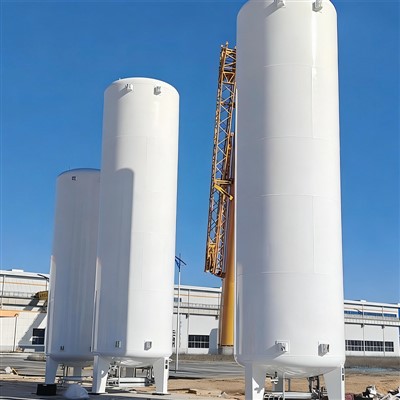
First, let’s ground this in a quick reality check: LNG bunker tanks aren’t just insulated boxes holding cold gas. They’re engineered for cryogenic temperatures—LNG is stored at roughly -162°C, so every material, weld, and insulation layer has to account for that extreme cold. That’s a world away from MDO or HFO tanks, which are designed for room-temperature, liquid fuels. Let’s start with the basics of storage and handling, because that’s where the biggest differences show up.
Take MDO tanks, the go-to for smaller vessels and older fleets. MDO is a middle distillate fuel, stored at ambient pressure and temperature, so its tanks are simple: carbon steel, minimal insulation, and basic level sensors. The tradeoff here is emissions. MDO produces about 2.6 kg of CO₂ per kg burned, plus 15-20% more NOₓ and particulate matter than LNG. For operators operating in Emission Control Areas (ECAs)—think the Baltic Sea, English Channel, or North American coasts—MDO requires expensive aftertreatment systems like selective catalytic reduction (SCR) to meet regulations. Those systems add up in upfront cost, maintenance, and fuel efficiency losses.
HFO tanks, by contrast, are even more basic in design, but their maintenance is a nightmare. HFO is a viscous, high-sulfur fuel that’s often stored warm (sometimes heated to 100°C or more) to keep it flowable. Its tanks are carbon steel, but they’re prone to sludge buildup, corrosion, and microbial growth if not regularly cleaned. And with global sulfur cap regulations (the 0.5% limit for marine fuel implemented in 2020), HFO has fallen out of favor for most deep-sea vessels. Even low-sulfur HFO still produces way more emissions than LNG, and the sludge cleanup alone costs operators an average of $15,000 per tank per year, according to a 2022 study from the International Maritime Organization (IMO).
Now, LNG bunker tanks. Let’s talk about their core design first: double-walled, vacuum-insulated stainless steel inner tank, surrounded by a layer of perlite or polyimide insulation, and an outer carbon steel jacket. This isn’t overengineering—it’s non-negotiable for keeping LNG cold. The vacuum insulation reduces boil-off: LNG tanks lose only about 0.1-0.3% of their volume per day, compared to uninsulated or poorly insulated CNG tanks which lose far more gas as it warms. Boil-off gas (BOG) from LNG tanks isn’t a waste, either; it can be routed directly to the vessel’s engines or generators for power, turning a potential loss into a benefit. That’s a big win for operational efficiency.
Now, let’s compare storage capacity and space. For a given amount of energy, LNG takes up roughly 60% less space than HFO or MDO, and 50% less than CNG. Wait—CNG is compressed to ~200 bar, right? So why is LNG more space-efficient? Because natural gas is cooled to a liquid, so you squeeze 600 times more gas into the same volume when it’s liquid. A CNG tank for a 1,000-nautical-mile voyage might take up 2x more space than an LNG tank for the same trip, which is a huge deal for vessels where cargo space is premium. For container ships, for example, losing storage space to fuel tanks directly cuts into revenue from cargo—LNG bunker tanks let operators keep that space for boxes, not fuel.
Safety is another area where LNG bunker tanks stand apart, but it’s also an area with a lot of misinformation. A lot of people worry that a cryogenic tank is more dangerous, but the opposite is true when you compare properly designed LNG tanks to, say, HFO tanks. HFO is flammable at much lower temperatures than LNG; if a HFO tank leaks, the fuel can pool on deck, ignite at ambient temperature, and burn for hours. LNG, on the other hand, is stored so cold that if it leaks, it vaporizes almost instantly—much faster than HFO. The gas disperses upward into the atmosphere, where it’s too dilute to ignite, especially on a moving vessel. LNG is also non-toxic, unlike HFO which releases toxic sulfur compounds and carcinogenic particulates. That said, LNG tanks require specialized training for crews to handle, and suppliers like us provide full training programs as part of our tank delivery—something you don’t get with standard MDO tanks.
Cost is the make-or-break for most operators, so let’s be transparent. Upfront, LNG bunker tanks are more expensive: a 100 cubic meter LNG tank for a coastal vessel will run about $150,000-$200,000, compared to a $50,000-$75,000 MDO tank of the same size. But let’s do the math on total cost of ownership (TCO) over 15 years, the typical lifespan of a marine tank. First, fuel cost: LNG is often 20-30% cheaper per unit of energy than HFO or MDO, even after adjusting for transportation and bunkering fees. Then, maintenance: LNG tanks have almost no sludge buildup, no corrosion from high-sulfur fuels, and no need for SCR systems. That saves $10,000-$20,000 per year per vessel, per our client data. For a fleet of 10 coastal vessels, that’s $100,000-$200,000 a year in maintenance savings alone.
Compare that to CNG tanks, which we also work with occasionally. CNG tanks are high-pressure carbon composite, so their upfront cost is even higher than LNG tanks—about 2x the cost of a same-energy LNG tank. They also have much higher boil-off rates: if a CNG tank isn’t re-pressurized regularly, it loses pressure, meaning you can’t use all the gas. For short coastal voyages, that’s manageable, but for deep-sea routes (10+ days at sea), CNG is not practical, because you can’t carry enough compressed gas without making the tank too large or too heavy.
Another factor: regulatory compliance. The IMO’s 2050 net-zero target means almost all deep-sea vessels will have to switch to low- or zero-carbon fuels soon. LNG is a transitional fuel, but it’s already compliant with current sulfur and NOₓ rules, and future upgrades to renewable LNG (bio-LNG, synthetic LNG) will make it a near-zero-carbon option. HFO and MDO can’t be upgraded the same way—their emissions are tied to the fuel’s chemistry, not just the storage or combustion process. That means operators who invest in LNG bunker tanks now won’t have to replace their entire fuel system when regulations tighten further, which is a massive long-term cost saver.
Wait, let’s talk about a common objection I hear from small vessel operators: “I don’t have the infrastructure for LNG bunkering.” That’s a valid point, but it’s also changing fast. As an LNG bunker tank supplier, we don’t just sell tanks—we work with ports to help them add small-scale LNG bunkering infrastructure, too. For coastal vessels, bunkering can be done with small, flexible hose systems, not the big terminal facilities for deep-sea ships. In fact, over 200 ports globally now offer LNG bunkering, up from just 50 in 2018, and that number is growing every year. For small operators, that means they don’t have to build a massive infrastructure network themselves—we help them connect to existing or emerging bunkering points.
Let’s also address performance, because that’s what matters for day-to-day operations. LNG has a high octane rating, so it burns more cleanly and efficiently than HFO or MDO. A vessel running on LNG will get 3-5% better fuel efficiency than one running on low-sulfur MDO, according to tests from the American Bureau of Shipping (ABS). That’s not a huge number per trip, but over a year, for a vessel that uses 100 tons of fuel a month, that’s 3-5 tons of fuel saved—equivalent to $3,000-$5,000 in annual savings, just from better efficiency.
Now, let’s pull this back to real clients I’ve worked with. Last year, we sold a 80 cubic meter LNG bunker tank to a small cargo vessel operator based in Rotterdam. They were running on low-sulfur MDO, and paying $12,000 a month in fuel and aftertreatment costs, plus $1,500 a month in maintenance. After switching to LNG, their fuel costs dropped to $9,000 a month, aftertreatment costs went to zero, and maintenance costs fell to $500 a month. They recouped the difference in tank cost in just 18 months, and their margins have improved by 15% ever since. That’s the kind of real ROI that numbers don’t always capture.
I’ve also seen operators stick with MDO or HFO because they think LNG tanks are too complicated. But modern LNG bunker tanks are designed to be just as easy to operate as traditional fuel tanks, especially with the digital monitoring systems we integrate. Our tanks have real-time sensors for temperature, pressure, and boil-off gas, so crews can check the status of the tank from a tablet, no special training needed. The only specialized training is for handling the bunkering process, which we provide for free as part of every tank delivery—no extra fees, no hidden costs.
What about durability? LNG bunker tanks are built to the same international standards as other marine tanks, but the cryogenic materials (stainless steel 304L or 316L) are resistant to corrosion from the cold, and the double-wall design means even if the inner tank has a small leak, the outer wall catches any LNG, which vaporizes safely without harming the vessel. HFO tanks, by contrast, corrode from the high-sulfur fuel and sludge, leading to leaks that can damage the hull and require costly repairs. Over a 15-year lifespan, LNG tanks have a 90% reliability rate, according to ABS, compared to 75% for HFO tanks and 80% for MDO tanks. That means less downtime for repairs, more time at sea making money.
Let’s be clear: LNG bunker tanks aren’t the right choice for every vessel. If you’re running a small, short-haul fishing boat that only travels 10-20 nautical miles a day, the upfront cost of an LNG tank might not make sense, especially if there’s no LNG bunkering nearby. But for any vessel that travels 50+ nautical miles a day, especially in ECAs or on deep-sea routes, LNG tanks deliver better TCO, better compliance, and better long-term flexibility than any other fuel tank type. MDO and HFO tanks have their place, but their days are numbered as regulations tighten and fuel costs rise.
As an LNG bunker tank supplier, my job isn’t just to sell a tank—it’s to help operators figure out if LNG is the right fit for their fleet. If you’re tired of hidden maintenance costs, expensive aftertreatment, and worrying about future regulations, it’s time to talk about LNG. We work with operators of all sizes, from small coastal cargo vessels to large container ships, and we tailor every tank to their specific route, voyage length, and operational needs. We don’t push one-size-fits-all solutions; we help you find the tank that works for your business, not just the one we make.

If you’re ready to stop overpaying for traditional fuels and start investing in a fuel tank that will save you money and keep you compliant for years to come, reach out to our team to discuss your fuel tank needs. We’ll walk you through the numbers, answer all your questions, and help you find the right solution for your fleet.
Hydrogen Fueling Station References:
International Maritime Organization. (2022). Third GHG Study. International Maritime Organization.
American Bureau of Shipping. (2021). LNG as Marine Fuel: Technical and Operational Guidelines. American Bureau of Shipping.
DNV GL. (2020). Total Cost of Ownership Analysis of Marine Fuel Systems: LNG vs. Traditional Fuels. DNV GL.
World LNG Portal. (2023). Global LNG Bunkering Infrastructure Report. World LNG Association.
Tianjin Baiyan Technology Co., Ltd.
With abundant experience, we are one of the most professional lng bunker tank manufacturers and suppliers in China. We warmly welcome you to buy customized lng bunker tank made in China here from our factory. If you have any enquiry about pricelist and quotation, please feel free to email us.
Address: No. 36, Jixian Road, Shuangqiaohe Development Zone, Jinnan District, Tianjin, China
E-mail: sales@tjbaiyan.com
WebSite: https://www.baiyan-tech.com/
