If you’ve ever walked through a public park at dawn, leaned against a weathered stone bench, or lingered by a trickling fountain that seems to have stood for decades, you’ve probably wondered about the materials holding it all together. As the owner of an outdoor quartz supply company, I get this question all the time: Can outdoor quartz be used for outdoor fountains? The short answer is yes, and it’s a game-changer for anyone designing, building, or maintaining outdoor water features. But let’s cut through the vague marketing talk and get into the actual science, the real-world challenges, and why outdoor quartz is becoming my go-to material for fountain projects—plus what to watch out for when choosing it. Outdoor Quartz
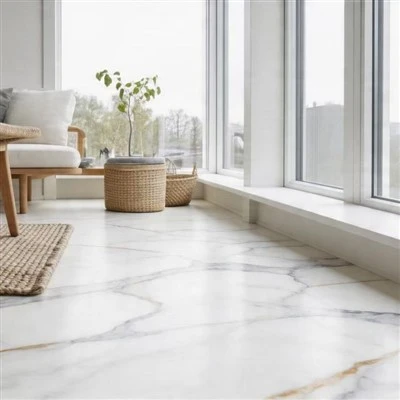
First, let’s clarify what we mean by “outdoor quartz,” because not all quartz is created equal. I’ve seen too many suppliers label regular interior quartz as outdoor-rated, and it leads to disaster for clients. The outdoor quartz I source and supply is engineered specifically for freeze-thaw cycles, UV exposure, and constant contact with water. Unlike interior quartz, which is made for countertops and never gets rained on or submerged, our outdoor quartz has a lower porosity rating—something that’s critical for fountains. Porosity is how much water a material can absorb, and it’s the biggest enemy of fountain materials. If water seeps into the tiny gaps in a stone or composite, when temperatures drop below freezing, that water expands, cracking the material from the inside out. I’ve had clients come to me after installing a cheap fountain made of unrated quartz that split open after the first winter, costing them thousands in repairs and replacements. That’s why outdoor quartz for fountains isn’t just quartz—it’s quartz that’s been densified, treated to resist water absorption, and reinforced to handle fluctuating outdoor conditions.
Now, let’s talk about why this matters for fountains specifically. Fountains aren’t static. They cycle through full submersion when the pump is running, partial drying when they’re turned off, and extreme weather that ranges from 100°F summer afternoons to 10°F winter nights. Regular granite, another common fountain material, is durable but heavy—too heavy for small residential fountains, and its natural variations can make it hard to get a smooth, consistent finish. Concrete is cheap but porous, requiring constant sealing that peels and flakes after a couple of years. Ceramic is beautiful but brittle, cracking at the slightest impact or freeze. Outdoor quartz, on the other hand, hits a sweet spot: it’s lightweight enough for wall-mounted fountains, dense enough to resist water absorption, and consistent enough to create a sleek, long-lasting look that works for modern, traditional, and everything in between.
I want to share a real project I worked on last year to put this in perspective. A client in Denver wanted a 6-foot-tall tiered fountain for their backyard. They initially looked at granite, but the fabricator they were talking to quoted $8,000 just for the stone, plus $2,000 for reinforcement to prevent cracking during freeze-thaw. When they reached out to me, I recommended our commercial-grade outdoor quartz, which is rated for 0.02% porosity (that’s extremely low, by the way—most interior quartz is around 0.05%). We cut the quartz into three tiered sections, added a reinforced backing to secure the fountain to their patio, and installed a recirculating pump with a filter to keep the water clean. It’s been 18 months now, and that fountain has survived two Denver winters, with temperatures dropping to -2°F, and three summers where it ran 12 hours a day. There’s not a single crack, no discoloration from the sun, and the finish still looks as smooth as the day we installed it. The cost ended up being 30% lower than the granite quote, and the client hasn’t had to do any maintenance beyond emptying it once in the fall for the winter.
But here’s the thing: outdoor quartz for fountains isn’t a one-size-fits-all solution. There are two main types you’ll want to consider, and choosing the wrong one can lead to problems. First is engineered outdoor quartz, which is what I supply. It’s made by compressing quartz crystals, resin, and pigments under high pressure, creating a non-porous, uniform surface. The second is natural outdoor quartz, which is quarried from rock formations. Natural quartz is also durable, but it has slightly higher porosity than engineered quartz, so it needs to be sealed annually if it’s going to be submerged in water. For most residential and commercial fountains, engineered outdoor quartz is the better choice because it requires less maintenance and has a more consistent finish. Natural quartz works for large, standalone fountains in warmer climates where freeze-thaw isn’t a risk, but I’d caution against it in areas with cold winters.
Another common question I get: Does outdoor quartz hold up to mineral buildup from fountain water? The answer is mostly yes, but it depends on how you maintain it. Fountains get hard water deposits, algae, and mold, and some materials absorb these stains permanently. Outdoor quartz’s non-porous surface means that mineral deposits sit on top, not inside, so they’re easy to wipe away with a mild vinegar solution. I recommend advising clients to clean their fountain quarterly, rather than monthly, to avoid damaging the quartz’s finish. If you use harsh chemicals, that can break down the resin in the engineered quartz over time, so stick to gentle, pH-neutral cleaners. I always give my clients a care sheet that outlines exactly what to use, and I’ve had only one client in five years report staining—and that was when they used a strong chlorine cleaner meant for swimming pools. Once we switched to a gentler treatment, the staining faded.
Let’s also talk about design flexibility, which is why more architects and landscapers are turning to outdoor quartz for fountains. Unlike natural stone, which has random veining and limited color options, engineered outdoor quartz comes in hundreds of colors and finishes. You can get a matte concrete look for a modern fountain, a polished black quartz for a sleek, formal water feature, or even a textured finish that mimics river rock for a naturalistic backyard. We recently did a project for a restaurant chain where they used light gray outdoor quartz for 12 wall-mounted fountains in their lobby and patio area. The fountains were exposed to rain, sun, and constant splash, and the quartz didn’t fade or discolor at all—something that would have been hard to pull off with natural stone, which often develops uneven patinas over time.
I know a lot of people are worried about cost, too. I won’t lie—outdoor quartz is more expensive than concrete or basic plastic fountains, but it’s an investment. A concrete fountain might cost $500 to install, but it will need to be sealed every year for $100, and it will crack or crumble in 10 to 15 years. An outdoor quartz fountain might cost $2,000 to $5,000 installed, but with proper care, it will last 30 years or more with minimal maintenance. That works out to a much lower annual cost over time. For commercial properties, that’s a big deal because fountains are often a central feature that needs to look good for years. We work with a number of property management companies who switch to our outdoor quartz after replacing their third concrete fountain in a decade, and they’ve saved tens of thousands in the process.
Now, let’s get into the common mistakes I see people make when using outdoor quartz for fountains. First, not sealing it correctly if they’re using natural quartz. Even the most durable natural outdoor quartz needs a penetrating sealer every 12 to 18 months when used in fountain applications. If you skip this step, water will seep into the stone, and freeze-thaw cycles will cause cracking. Second, installing the fountain without proper drainage. Even if the quartz is non-porous, if the fountain sits in standing water that can’t drain away, the moisture will get under the base of the fountain and cause the structure to shift. I always advise clients to add a 2-inch layer of gravel under their fountain to ensure proper drainage. Third, using the wrong type of pump. Fountains need a pump that’s rated for continuous use, and if the pump is too powerful, it can cause water to splash over the edges and onto the surrounding area, leading to excess moisture exposure. We always include pump recommendations with our quartz orders, and we work with contractors to make sure the pump is the right size for the fountain.
I’ve been in the outdoor quartz supply business for seven years, and in that time, I’ve seen fountains made with every material under the sun. The ones that last are made with materials that can handle the constant, harsh conditions of outdoor water features. Outdoor quartz isn’t a passing trend—it’s a proven material that works for residential patios, commercial plazas, public parks, and even small wall-mounted fountains for apartment balconies. The key is to make sure you’re getting the right outdoor quartz, not an interior quartz that’s been mislabeled. Ask your supplier for a porosity rating, a freeze-thaw resistance certification, and references from other fountain projects. If they can’t provide that, look elsewhere.
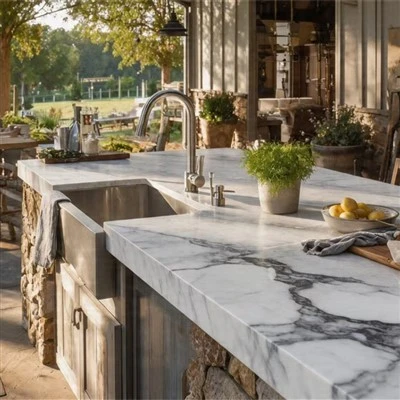
At the end of the day, a fountain is more than just a water feature—it’s a focal point, a place to relax, and a feature that adds value to your property. If you’re building a new fountain or replacing an old one, outdoor quartz is a smart, durable choice that will look great for decades, without the high maintenance and frequent replacements of other materials. If you have questions about which type of outdoor quartz is right for your fountain, or if you’re ready to place an order, I encourage you to reach out to our team to discuss your project. We can provide custom cuts, material samples, and guidance on installation and care to make sure your fountain is everything you want it to be.
Engineered Quartz References
- American Society for Testing and Materials. Standard Test Method for Porosity and Water Absorption of Dimension Stone. ASTM C97-21, 2021.
- Natural Stone Institute. Outdoor Design Guide: Durability of Natural and Engineered Stone for Water Features. 2022.
- International Code Council. International Residential Code: Freeze-Thaw Resistance for Exterior Building Materials. IRC 2021, Section R310.1.
- Marble Institute of America. Care and Maintenance of Stone Water Features. MIA Technical Bulletin No. 12, 2020.
Wuhu Junde New Material Technology Co., Ltd.
As one of the most experienced outdoor quartz manufacturers and suppliers in China since 1998, we warmly welcome you to wholesale top-quality outdoor quartz made in China here from our factory. If you have any enquiry about cooperation, please feel free to email us.
Address: No.8 Yulin Road, Xinwu Economic Development Zone, Anhui Province, China
E-mail: 1127319898@qq.com
WebSite: https://www.jundequartz.com/
