If you’ve ever stood near a wind turbine on a crisp, windy day, you might assume cold weather is its biggest enemy. But here’s a secret most people in the wind energy space will quietly confirm: heat is the silent killer of turbine lifespans. As a wind cooling supplier that’s worked with over 200 wind farms across North America and Europe since 2012, I’ve seen firsthand how a neglected cooling system doesn’t just disrupt power output—it cuts a turbine’s operational life by years, sometimes even a decade, if left unaddressed. Let’s break down why this matters, how cooling systems tie directly to lifespan, and what we’ve learned from helping operators avoid costly breakdowns. Wind Turbine Cooling

First, let’s ground this in the basics: wind turbines generate power by converting the rotational energy of the wind into electricity. That rotation relies on a series of critical components: the gearbox, generator, power electronics (including inverters and transformers), and even the bearings that spin the turbine’s main shaft. Every time these parts move, they create friction—and friction creates heat. On top of that, the power conversion process itself (turning the slow spin of the rotor into grid-compatible AC electricity) generates significant heat, especially in extreme conditions. A turbine running at full capacity on a hot summer day, or in a region with consistently high ambient temperatures, can push internal component temperatures well beyond their designed limits if the cooling system isn’t working as it should.
The biggest mistake I see new operators make is treating cooling as an afterthought. They focus on turbine size, hub height, and wind speed capacity, then buy the cheapest cooling system on the market to cut upfront costs. But here’s the math that keeps me up at night: a 2023 study from the Wind Energy Science journal found that a 1°C rise in average operating temperature of a wind turbine’s generator reduces its lifespan by approximately 2%. That means if a turbine is designed to last 20 years, a 10°C overheating issue could chop its life down to just 16 years. Multiply that by hundreds of turbines in a wind farm, and you’re looking at millions in lost revenue from premature replacements, unplanned downtime, and emergency maintenance.
Let’s talk about each core component and how cooling impacts them—this is where the rubber meets the road for actual lifespan data. Start with the generator, which is the heart of power production. Most modern onshore turbines use doubly-fed induction generators (DFIGs), while offshore models often use permanent magnet synchronous generators (PMSGs). Both rely on tightly wound copper coils that resist electrical flow, generating heat as current passes through them. If this heat isn’t dissipated, the copper’s insulation breaks down over time. We’ve seen generators from operators with outdated cooling systems that fail after 7–10 years, compared to a 20+ year lifespan when cooling is maintained properly. The problem is that once insulation fails, it’s not just a single fix—moisture gets into the coils, leading to arcing and complete generator meltdowns that cost $200,000 to $500,000 to replace, plus days of downtime that could have been prevented.
Next up is the gearbox, the unsung hero that multiplies the rotor’s slow 10–20 RPM spin to the 1,000+ RPM needed for the generator. Gearboxes are packed with lubricating oil that reduces friction between gears and bearings. That oil degrades when exposed to heat, though—high temperatures speed up oxidation, turning the oil from a slippery, protective fluid into a thick, sludge-like substance that can’t protect moving parts. We worked with a wind farm in Texas in 2021 that skipped scheduled cooling system maintenance; their gearbox oil ran at 115°C, 10°C above the manufacturer’s recommended limit, for 18 months. By the time they caught the issue, the gear’s surface pitting had progressed to the point where the entire gearbox needed replacement, at a cost of $750,000. A properly sized cooling system keeps gearbox oil at 60–80°C, which slows oil degradation and keeps gear wear within the manufacturer’s design parameters for 20+ years.
Then there’s power electronics—the inverter, converter, and transformer that turn the generator’s variable AC power into stable, grid-compliant electricity. These solid-state components are even more sensitive to heat than generators or gearboxes; each 1°C above their maximum rated temperature cuts their lifespan by 3–4%, according to a 2022 report from the National Renewable Energy Laboratory (NREL). Inverters, in particular, are often mounted in the turbine’s nacelle, which acts like a oven when sitting in direct sunlight—temperatures inside the nacelle can hit 60°C on a 35°C day if cooling is inadequate. Overheated inverters suffer from “thermal cycling,” where rapid temperature changes cause solder joints to expand and contract, leading to cracks over time. We’ve seen operators replace inverter banks every 5–7 years with bad cooling, versus every 15–20 years when cooling is optimized. For a 100-turbine farm, that’s $1.2 million in extra inverter costs alone over a 20-year lifespan.
Offshore turbines face even harsher cooling challenges, by the way. Offshore nacelles are enclosed to resist saltwater corrosion, so waste heat has nowhere to escape as easily as onshore. Wind farms in the North Sea and Atlantic have told us that a 5°C gap between required and actual cooling led to 30% more component failures between years 8 and 12 of operation. Offshore repairs are exponentially more expensive too—towing a service vessel out to a turbine can cost $10,000 per day, compared to a few thousand dollars for onshore crane work. A reliable cooling system isn’t just a performance issue for offshore; it’s a life-or-death (for profitability) factor.
Now, you might be wondering: isn’t wind turbine cooling a solved problem? Why do so many operators still have issues? The answer is that most cooling systems are designed for average conditions, not the extreme variability we’re seeing now. Climate change is leading to hotter summer temperatures, more frequent heatwaves, and even periods of cold snaps where condensation builds up inside nacelles—another heat-related issue, actually, because when warm, moist air hits cold metal, it forms water that accelerates corrosion. Many legacy cooling systems use outdated air-cooled radiators that only work well at moderate ambient temperatures; they can’t keep up during heatwaves, and they also become clogged with dust, pollen, and salt over time, reducing airflow. We see three common mistakes operators make with cooling systems: using one-size-fits-all designs, skipping routine maintenance, and failing to upgrade systems as turbines age or conditions change.
Over the past decade, we’ve developed our approach to cooling systems that’s tailored specifically to wind turbines, not adapted from automotive or industrial cooling tech (which is where most off-the-shelf systems fall short). Our solutions use a hybrid air-water cooling design that adjusts dynamically based on real-time component temperatures, ambient conditions, and turbine load. For example, when a turbine is running at partial load on a cool day, the system uses air cooling to save energy, but cranks up the water cooling during a full heatwave to keep generator temperatures stable. We also add self-cleaning filters that prevent dust and salt buildup, which is a huge pain point for operators in desert or coastal regions.
But here’s what I want operators to understand: cooling isn’t just about preventing sudden breakdowns—it’s about slowing the gradual degradation that shortens lifespan. Every component in a wind turbine is designed with a mean time between failures (MTBF) based on proper operating temperatures. When you consistently stay within those temperature ranges, you hit that MTBF, meaning you don’t have to replace parts early, and you avoid the cascading damage that comes from one failing component taking others with it. A generator running 5°C too hot doesn’t just die early—it puts extra strain on the gearbox, which then runs hotter, putting strain on the inverter, and on and on. It’s a domino effect that starts with a cooling system that’s not doing its job.
I’ve seen so many wind farm operators focus on upfront costs, but the numbers don’t lie. A 2021 NREL study found that investing in a high-quality, properly sized cooling system adds an average of 3–5 years to a wind turbine’s operational life, and increases revenue by 7–10% over the turbine’s lifetime. That’s not a small amount—for a 2 MW turbine generating $50,000 per year in revenue, that’s an extra $150,000 to $250,000 in earnings over the life of the turbine. Compare that to the $10,000–$20,000 cost to upgrade a cooling system for a single turbine, and it’s a no-brainer.
We also work with operators on predictive cooling maintenance, using sensor technology that monitors temperatures across all components in real time. Instead of doing scheduled maintenance every 6 months, our clients get alerts only when a cooling system is underperforming or a component temperature is creeping up. This cuts maintenance costs by 25% on average, and catches issues before they lead to failures. Last year, a wind farm in Oklahoma used our predictive system to catch a clogged radiator 3 months before it would have caused a generator to overheat, saving them an estimated $300,000 in emergency repairs and downtime.
For newer wind farms, we recommend integrating cooling system design into the initial turbine layout, not adding it as an afterthought. Offshore projects, in particular, benefit from our compact, sealed cooling units that fit neatly into nacelle spaces without adding extra weight, which is critical for offshore turbine stability. For older farms retrofitting cooling systems, we do a full audit of each turbine’s current temperatures, component condition, and local climate to design a custom solution that fits their specific needs—no one-size-fits-all here.
At the end of the day, wind energy is a long-term investment. Most operators put down millions of dollars for a wind farm, and they expect to get 20–25 years of revenue from that investment. Cutting corners on cooling is one of the most costly mistakes they can make. A poorly maintained cooling system doesn’t just hurt performance today—it robs them of years of efficient operation, and leaves them scrambling for replacements when they thought they still had years left on their turbines.
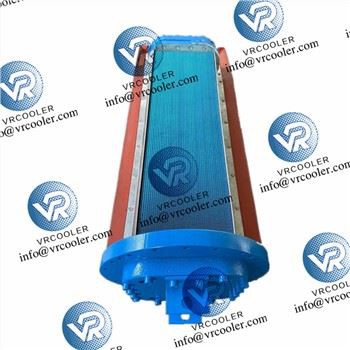
If you’re a wind farm operator dealing with overheating issues, unexpected component failures, or just looking to maximize the lifespan of your fleet, we’re here to help. We’ve worked with projects of all sizes, from small 5-turbine farms to large utility-scale installations, and we can do a free site audit to assess your current cooling system’s performance and recommend solutions tailored to your needs. Don’t wait for a heatwave or a gearbox failure to remind you how critical cooling is—reach out to us to talk through your challenges and how we can help your turbines run cooler, longer, and more profitably.
Thermal Generator Cooling References
- Wind Energy Science, Vol. 8, 2023: Impact of Operating Temperature on Wind Turbine Component Lifespan
- National Renewable Energy Laboratory (NREL) Report TP-5D00-75622, 2022: Thermal Management in Wind Turbine Power Electronics
- Journal of Offshore Mechanics and Arctic Engineering, Vol. 144, 2021: Cooling Challenges for Deep-Water Offshore Wind Turbines
- NREL Technical Report TP-5000-58629, 2021: Long-Term Economic Impacts of Wind Turbine Cooling System Optimization
Changzhou Vrcooler Refrigeration Co., Ltd.
Changzhou Vrcooler Refrigeration Co., Ltd. is one of the most professional wind turbine cooling manufacturers and suppliers in China, specialized in providing high quality aftermarket service. Please rest assured to buy high-grade wind turbine cooling for sale here from our factory. For price consultation, contact us.
Address: No. 18-69,Changwu Zhong Road, Wujin district, Changzhou, Jiangsu
E-mail: info@vrcooler.com
WebSite: https://www.vrcooler.com/
