If you’ve ever walked across a factory floor, a warehouse mezzanine, a bridge catwalk, or a drainage cover on a city street, chances are you’ve stepped on steel grating. It’s one of those workhorse products that most people don’t notice until it’s missing, worn out, or sized wrong. As a steel grating supplier who’s been in this game for over 12 years, I get asked this question every single day: “What’s the standard size of steel grating?” The short answer is that there isn’t one universal global standard, but there are industry norms and widely accepted specs that keep projects moving, prevent delays, and save clients a lot of money. Let’s break this down the way I do with every new client, no fluff, no jargon, just the hard facts you need to know. Steel Grating
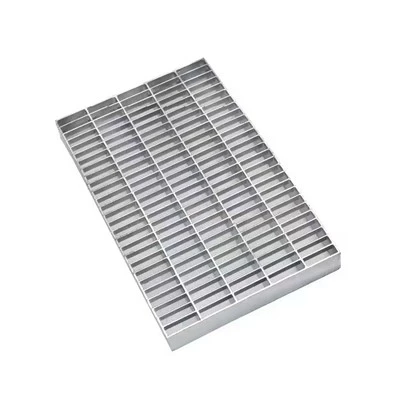
First, let’s clarify what we mean by “steel grating” to avoid confusion. We’re talking about bar grating, the most common type, made of load-bearing flat steel bars (called bearing bars) running perpendicular to shorter cross bars that hold them in place. Sometimes people mix in other types like welded, pressure-locked, or riveted, but the sizing basics apply across all those variants. The core specs that define a standard steel grating are usually two things: the grating panel’s overall dimensions (length and width) and the spacing between bearing bars, which is the biggest driver of a grating’s load capacity.
Let’s start with spacing, because that’s the non-negotiable industry standard that most codes reference. The two most common standard spacings are 1 inch and 2 1/4 inches between adjacent bearing bars. Wait, why those two? Let’s talk practicality. A 2 1/4 inch spacing is the workhorse for heavy industrial applications: factory catwalks, mezzanines, truck loading ramps, anywhere you need to support heavy loads, and you don’t want small tools or debris falling through. This spacing meets OSHA slip-resistance guidelines for most industrial work, and it’s the default I suggest for 90% of new industrial projects because it balances strength, weight, and cost. The 1 inch spacing is for lighter-duty or specialty use: pedestrian walkways, decorative applications, areas where you have small parts that could slip through a wider gap, or areas where extra slip resistance is needed for foot traffic. It’s a tighter, sturdier option, but it’s heavier and more expensive, so I only recommend it when a project’s specific needs call for it.
Now, moving to panel dimensions, which is where “standard” gets a little flexible, because it ties to how grating is manufactured and shipped. Most steel grating is produced in bulk at our facilities, so it makes sense to cut it to sizes that minimize waste, which keeps costs down for everyone. The most common standard panel sizes we stock for quick delivery are 4 feet wide by 8 feet long (that’s a standard 4×8 sheet, basically) and 3 feet wide by 10 feet long. These sizes are perfect because they fit on standard flatbed trucks for shipping without requiring special permits, they’re light enough for a single person to handle when installing (for smaller projects), and they cut easily in the field to fit custom openings without too much extra work. For reference, a 4×8 2 1/4 inch spacing steel grating panel typically weighs around 75 pounds, which is manageable for two installers on a catwalk, no heavy machinery needed.
But wait, I have to be clear: there’s no hard global rule for panel size, because standards vary a bit by region. In North America, where my primary clients are, those 4×8 and 3×10 sizes are king. In Europe, the most common standard dimensions are 1 meter wide by 2 meters long, or 1.25 meters by 2.5 meters, which translates to roughly 3.28ft x 6.56ft and 4.1ft x 8.2ft. That’s why when I work with international clients, I always start by asking where their project is based, so I can pull the right stock or specify the right sizes to meet local codes.
A lot of new clients come to me asking for “custom sizes” as if that’s the opposite of standard, but here’s the thing: almost no project uses grating that’s 100% stock size. Buildings have weird corners, drains have odd shapes, equipment foundations have irregular cutouts, so cutting grating to fit is part of the process. The standard sizes I mentioned are the base from which we start. For example, if you need a panel that’s 4 feet wide by 7 feet 6 inches long, we can cut a standard 4×8 panel down to that, no extra charge for most small cuts. If you need something larger than the stock sizes, like 5 feet wide by 12 feet long, that’s also doable, but that’s considered a custom size because it’s not our regular stock, so lead times go up a couple days, and we have to factor in extra shipping because that size might need a special flatbed.
Another key spec that’s often tied to “standard size” is the bearing bar thickness, right? Because a 1/4 inch thick bearing bar is for light pedestrian use, a 3/8 inch is for medium, and 1/2 inch or thicker is for heavy industrial. Most standard grating uses either 3/8 inch or 1/2 inch bearing bars, paired with 1/4 inch cross bars spaced every 4 inches or so for stability. I always tell clients to match the bearing bar thickness to the load rating of their project, not just a generic size. A 2 1/4 inch spaced grating with 3/8 inch bearing bars has a load rating of around 100 pounds per square foot for uniform loads, while the same spacing with 1/2 inch bars can hold 200 pounds per square foot. That’s not a size thing, but it’s closely tied to the specs that define a standard grating’s suitability for a job, so it’s worth mentioning.
I’ve seen a lot of mistakes made here, especially with new contractors who try to save money by buying the lightest “standard” grating they can find, only to have it buckle under the weight of heavy equipment or a crowd of workers. Last year, I had a client who was building a warehouse mezzanine, and he ordered the 3/8 inch bar, 2 1/4 inch spacing standard grating because it was cheaper, and by the time his racking was installed and he had 5 tons of inventory on the floor, the grating was sagging 2 inches in the middle. That’s the difference between picking a size based on industry norms and picking a size based on your project’s actual needs. So when I talk about standard size, I emphasize that it’s a starting point, not a one-size-fits-all solution.
Let’s also touch on surface treatment, because that affects how the grating performs, which is a big part of what clients care about. Standard grating is available in hot-dip galvanized, which is the most common and the standard for outdoor or high-moisture applications, or mill steel (uncoated) for indoor, low-moisture projects. The surface treatment doesn’t change the dimensions of the grating, but it does affect its weight slightly, usually by less than 5%, so when you’re ordering to fit a precise opening, that’s a small detail but worth noting.
Another common question I get: what about round or custom-shaped grating? The short answer is that those are not standard size, obviously, since they’re cut to fit a specific round opening for a drain or a stair tread. But even stair treads, which are a type of steel grating, have standard sizes: 7 inches deep (the depth of the step) and lengths from 2 feet to 4 feet, which aligns with the standard panel sizes I mentioned earlier. That’s why we can easily cut a 3 foot long stair tread from a standard 3×10 panel, no extra work.
I should also mention codes, because they’re the backbone of what’s considered “standard” for industrial and commercial projects. In the US, OSHA and the American Iron and Steel Institute (AISI) set the standards for grating sizing, spacing, and load ratings. For example, OSHA requires that the gap between bearing bars for walkways can’t be more than 1 inch for areas where a 1/2 inch diameter ball could pass through, to prevent people from falling through. Wait, that’s where the confusion between 1 inch and 2 1/4 inch spacing comes in: OSHA’s 1 inch ball rule means that if you have a gap larger than 1 inch, a 1 inch ball would pass through, so for areas where pedestrians are walking, that’s a safety issue, but for industrial areas where people are wearing heavy work boots, the 2 1/4 inch gap is allowed because it’s wide enough for debris to drain, but not wide enough to let a boot or a person’s foot slip through. That’s why the 1 inch spacing is standard for pedestrian walkways and the 2 1/4 inch is standard for industrial floor grating. That’s a key point I make to clients all the time: the “standard size” isn’t random, it’s set by safety codes to prevent accidents.
As a supplier, I also think it’s important to mention how we work with clients to adjust standard sizes to their needs. We keep our stock of standard sizes in 10,000 square feet of warehouse space, so most orders of standard size grating ship within 24 hours, which is a huge benefit for projects on tight deadlines. If a client needs a size that’s a little outside the standard, like 4 feet 2 inches wide by 8 feet long, we can cut that from a 4×8 panel easily, no extra lead time. If they need something bigger, like 6 feet wide by 10 feet long, we can produce that in 3 to 5 days, at a fair cost. I never push custom sizes when a standard one will work, because I know that standard sizes mean lower cost and faster delivery, which is what every project manager wants.
Wait, let’s address a common misconception: some people think “standard size” refers to the thickness of the bearing bar, but that’s actually part of the load rating, not just the size. For example, a “standard 1/4 inch grating” refers to the bearing bar thickness, but the overall panel size and spacing still follow the industry norms. So when someone asks me for “standard size 1/4 inch grating,” I clarify: what spacing do you need, and what overall dimensions do you require, so I can get them exactly what they need without any mistakes.
I also want to talk about the practical side of installing standard vs custom sized grating. When you use standard panels, installation is faster. Workers don’t have to spend time measuring and cutting multiple pieces, they can just line up the panels, weld or bolt them in place, and move on. I’ve installed grating on projects where we used all standard 4×8 panels, and the crew was able to lay 1,000 square feet in a single day, whereas custom sized pieces would have taken twice as long, not to mention the risk of cutting mistakes that lead to wasted material. That’s another reason standard sizes are so widely used: they save time and money on installation, which is a huge part of a project’s total cost.
Let me give you an example from a recent project I worked on. A client in Texas was building a new food processing plant, and they needed grating for walkways, processing floors, and drainage covers. For the walkways, we used 1 inch spaced grating, 3 feet wide by 10 feet long, which fit their bay openings perfectly, and they were able to install each panel in 10 minutes or less. For the heavy processing floors, we used 2 1/4 inch spaced grating, 4 feet wide by 8 feet long, with 1/2 inch bearing bars, which met their load requirement for forklifts and heavy machinery. For the drainage covers, we cut 2 foot wide by 4 foot long panels from standard 4×8 pieces, which fit their drain openings exactly, with minimal welding needed. It all came together on time, under budget, and they haven’t had any issues with the grating sagging or failing, which is exactly what we aim for as a supplier.
Of course, there are exceptions. Marine applications need corrosion-resistant sizes and materials, which might have slightly different spacing to handle saltwater exposure, and stair treads for specific stair pitches might have custom depths, but even those are based on standard sizing norms. When I work with clients on specialty projects, I start by walking them through the standard sizes, explaining why they work, and then adjust as needed based on their unique requirements. The last thing I want is for a client to order the wrong size, because that means delays, extra costs, and a project that doesn’t meet safety codes.
At the end of the day, the “standard size of steel grating” isn’t a static number etched in stone. It’s a set of widely accepted dimensions, spacing, and specs that have been refined over decades by manufacturers, contractors, and safety regulators to meet common project needs. It balances cost, strength, ease of installation, and compliance with safety standards. As a steel grating supplier with years of experience, my job isn’t just to sell you a panel that matches a generic size—it’s to help you pick the right standard size for your project, adjust it if needed, and make sure it fits perfectly, meets all your load and safety requirements, and arrives on time.
If you’re working on a new project, whether it’s a warehouse, a bridge, a food processing plant, a drainage system, or anything that needs steel grating, don’t guess at sizes. Reach out, tell me about your project needs, and I’ll walk you through the right standard and custom options, answer any questions you have, and make sure you get the grating that works for you. No hidden fees, no fine print, just honest advice and high-quality steel grating.
Gabion Mesh References:
- American Iron and Steel Institute. (2022). Steel Bar Grating Specifications and Load Ratings. AISI Publications.
- Occupational Safety and Health Administration (OSHA). (2023). Standard 1910.22: Walking-Working Surfaces. U.S. Department of Labor.
- Steel Grating Manufacturers Association (SGMA). (2021). Industry Standards for Steel Bar Grating Sizing and Spacing. SGMA Technical Bulletin.
Hebei Shenyi Metal Products Co., Ltd.
Hebei Shenyi Metal Products Co., Ltd. is one of the most professional steel grating manufacturers and suppliers in China, featured by quality products and good service. Please rest assured to wholesale durable steel grating in stock here and get free sample from our factory. Customized orders are welcome.
Address: Gengtun Industrial Zone, Gengtun Village, Xiliangwa Township, Anping County, Hengshui City, Hebei Province
E-mail: HBshenyi@outlook.com
WebSite: https://www.shenyimetal.com/
