If you’ve ever looked into setting up or expanding a waste processing operation, you’ve almost certainly run into batch pyrolysis plants. As a supplier who’s worked with dozens of operators across North America and Europe over the past eight years, one of the first questions I get from every prospect is the same: “How much does it cost to run one of these per month?” The answer isn’t a flat number — it depends on plant size, feedstock, site location, and a handful of small, easy-to-overlook factors. But I’ll break it down based on real-world data from the plants we’ve installed, so you can plan your budget accurately. Batch Pyrolysis Plant
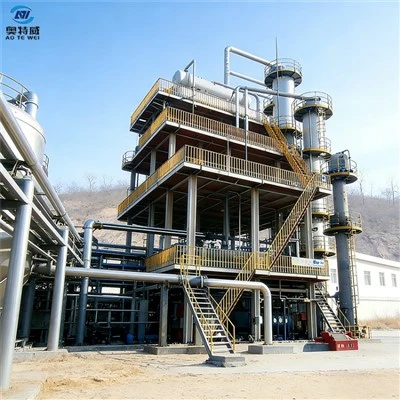
First, let’s define what we’re talking about here. A batch pyrolysis plant processes organic waste — plastic, rubber, agricultural residues, municipal solid waste fractions — in an oxygen-free, high-temperature chamber to break it down into fuel oil, carbon black, and syngas. Unlike continuous plants that run 24/7, batch plants operate in cycles: load waste, heat it, cool it, then unload. That cycle length, usually 8 to 12 hours, directly impacts monthly operating costs. I’ll focus on three common plant sizes that our clients use regularly: 1-ton-per-day (TPD), 5-TPD, and 10-TPD capacities. These are the sweet spots for small to mid-scale operations, so they’re the ones most people inquire about.
The biggest line item is utility costs, specifically fuel for the heating system and electricity for motors, pumps, and control panels. For the 1-TPD plant, we typically see monthly utility costs sitting between $1,200 and $1,800. That’s based on natural gas prices in the U.S. Midwest, where most of our smaller clients are based, and local electricity rates. For the 5-TPD plant, that jumps to $4,800 to $6,500, and for the 10-TPD, $9,500 to $12,000. The range comes down to feedstock type, too: plastic is denser and requires slightly more heat to process than agricultural wood waste, so operators working with plastic will be on the higher end of that scale. It’s also worth noting that operators who generate their own syngas from the process to power their plant can cut utility costs by 30 to 40%, which is a huge long-term saving — that’s why many of our clients with larger plants opt for that setup.
Next, labor. Batch plants aren’t fully automated yet, so you’ll need dedicated staff to load, monitor, and unload each batch. For a 1-TPD plant, you can get by with one full-time operator who also handles maintenance, putting monthly labor costs at roughly $3,200 to $3,800 (based on 2024 U.S. average hourly wages for industrial operators). The 5-TPD plant usually needs two full-time operators, one on each shift, so monthly labor runs $6,500 to $7,800. The 10-TPD plant is even more straightforward: we recommend three operators, with one on each shift plus a part-time maintenance lead, bringing monthly labor costs to $10,000 to $12,500. A common mistake new operators make is trying to run a larger plant with fewer staff — that leads to missed cycles, safety issues, and unplanned downtime, so it’s not worth the small initial savings.
Then there’s feedstock handling and preparation costs. This is often the most underestimated expense for new operators. You can’t just toss raw, dirty plastic or rubber into a batch pyrolysis chamber; it needs to be sorted, cleaned, and shredded into uniform pieces between 2 and 5 centimeters to process efficiently. For a 1-TPD plant, that means you’ll need a small shredder, sorting bins, and time to prep your feedstock, adding $1,500 to $2,200 a month for labor and maintenance of prep equipment. For the 5-TPD plant, prep scale up accordingly, coming in at $6,000 to $8,000 monthly, and for 10-TPD, $12,000 to $15,000. Again, feedstock type changes this: if you’re using clean agricultural waste that doesn’t need much sorting, you can cut these costs by 50% or more. If you’re working with mixed municipal plastic waste that requires manual sorting, you’ll be on the higher end.
Maintenance is another recurring cost that’s easy to overlook. Batch plants have moving parts, heating elements, and condensation systems that need regular upkeep to avoid breakdowns. For our 1-TPD plants, we quote monthly maintenance costs at $800 to $1,200, which includes routine filter changes, lubrication of motors, and annual calibration of temperature sensors. For the 5-TPD, that’s $3,000 to $4,200 a month, and for the 10-TPD, $6,000 to $8,500. It’s important to budget for this: we’ve had clients who skipped maintenance to save a few dollars end up with a broken heating chamber that cost $20,000 to repair, which is way more than they saved on monthly maintenance. Many of our suppliers also offer annual maintenance contracts that can lock these costs in, which is often a good deal for operators who don’t have in-house maintenance teams.
Regulatory and environmental costs round out the list. Almost every region has rules about waste processing, emissions, and waste disposal of byproducts. Most batch plants we sell come with basic emission control systems (like gas scrubbers and dust collectors), but you’ll still need permits from local environmental agencies, and sometimes annual compliance testing. For small plants (1-TPD), these costs are usually $500 to $1,000 a month, depending on location. If you’re in an area with strict air quality rules, that can jump to $1,500 or more. For larger plants, regulatory costs are proportional: $2,000 to $3,500 for 5-TPD, $4,000 to $6,000 for 10-TPD. Don’t forget about waste disposal: the process creates small amounts of non-condensable gas that isn’t used, and any leftover carbon black that’s too contaminated to sell. Most operators either burn the excess gas for heat or pay a small fee to dispose of solid byproducts, which adds another $300 to $700 a month across all plant sizes.
Let’s add these up for each size to give you a clear picture. For a 1-TPD batch pyrolysis plant, total monthly operating costs average $7,500 to $10,000. For 5-TPD, that’s $21,800 to $29,700. For 10-TPD, $41,800 to $52,700. Now, that’s just the operating cost — not the initial plant purchase, installation, or feedstock procurement — so you’ll also need to consider revenue from the byproducts to make this worth it. Fuel oil, which is the main product, sells for between $400 and $550 per metric ton, carbon black is $300 to $450 per metric ton, and some operators sell steel or other metal residues from the feedstock. A 1-TPD plant can produce roughly 0.5 tons of fuel oil a day, so that’s 15 tons a month, or $6,000 to $8,250 just from fuel oil — meaning if you’re operating at full capacity, you can cover most of your monthly costs and turn a small profit. Larger plants scale even better: a 10-TPD plant can produce 5 tons of fuel oil a day, or 150 tons a month, for $60,000 to $82,500 in revenue, which makes the operating costs look minor in comparison.
I’ve seen operators get tripped up by variable costs, too. If you’re located in a remote area where natural gas is expensive, your utility costs will be 20% higher than the averages I mentioned. If feedstock is scarce and you have to buy waste from haulers, that adds another $1,000 to $3,000 a month, depending on how much you need. On the flip side, if you’re working with local waste management companies that give you free or low-cost feedstock, that can cut your total monthly costs by 10 to 15%. The key is to do a site-specific audit before you buy a plant — that’s why most of our clients meet with our team in person, so we can go through their local energy costs, feedstock availability, and labor rates to give them an accurate number tailored to their operation.
One last thing I’ll mention: long-term savings that most new operators don’t think about. Many modern batch plants are designed with energy recovery systems that use the syngas produced during processing to power the plant itself, which can eliminate utility costs entirely. That’s a big reason why more mid-sized operations are switching to these setups — the upfront cost is a bit higher, but you’ll recoup that in 18 to 24 months in lower monthly bills. We also plants with modular designs that make maintenance and cycle adjustments easier, which reduces downtime and adds up to thousands in savings a year.
If you’re planning to install a batch pyrolysis plant, getting the cost right is the difference between a profitable operation and one that drains your budget month after month. The numbers I’ve shared here are based on real plants we’ve commissioned across North America and Europe over the past decade, so they’re not theoretical estimates — they’re what operators actually spend. Every operation is a little different, though, so the best way to get an exact breakdown for your site is to talk through your needs with someone who knows the industry.
To learn more about customizing a batch pyrolysis plant for your operation, and to get a detailed, site-specific breakdown of monthly operating costs for your location, reach out to start a conversation.
Batch Pyrolysis Plant References
- International Renewable Energy Agency. (2021). Pyrolysis of Plastic Waste: Technology Brief.
- U.S. Environmental Protection Agency. (2023). Costs and Benefits of Commercial Waste Processing Facilities.
- European Chemical Industry Council. (2022). Batch Pyrolysis Operational Cost Benchmarks.
- Industrial Energy Consumers of America. (2024). Utility Cost Trends for Mid-Sized Industrial Processing Plants.
Shangqiu Aotewei Environmental Protection Equipment Co., Ltd.
Shangqiu Aotewei Environmental Protection Equipment Co., Ltd. is one of the most professional batch pyrolysis plant manufacturers and suppliers in China, also supports customized service. Please feel free to buy CE approved batch pyrolysis plant at competitive price from our factory. Welcome to contact us for pricelist.
Address: No.88 Longhai Road, Liangyuan District, Shangqiu City, Henan Province, China
E-mail: colin@henanpower.com.cn
WebSite: https://www.aoteweitech.com/
