Hey there, fellow folks who work with commercial spaces, renters, and anyone who’s ever stood in a dim hallway after a power outage—let’s cut to a question I get at least 10 times a week from electricians, property managers, and even small café owners: are emergency ceiling lights dustproof? Emergency Ceiling Lights

First off, full transparency here: I run an emergency ceiling lights supply company, so I know this question isn’t just a random “does my light get dusty” thing. It’s a safety thing. If those lights are dust-covered and fail when the power cuts, that’s not just a hassle—that’s a code violation, a liability, and worst case, someone getting hurt. I’ve seen it firsthand, actually. Last year, a property manager reached out to me panicking because their building’s emergency lights failed during a blackout downtown. Turns out, they thought “indoor ceiling lights” meant they didn’t need to worry about dust, so they never wiped them down. By the time the backup kicked in, someone tripped over a loose step and needed stitches. Yikes. So let’s stop treating this like a trivial dust bunny question—it’s critical.
First, let’s get the basics straight: what makes a light dustproof? You’ve probably seen those IP ratings on electrical gear, right? IP stands for Ingress Protection, and it’s the global standard that tells you how well something is sealed against solids (like dust) and liquids. The first number is solids, the second is liquids. So for dust, the first digit is what matters here. Let’s break down the key ones for emergency ceiling lights, because not all of them are created equal.
IP2X is super common for basic indoor emergency ceiling lights. Wait, what does that mean? The 2 means it’s protected against solid objects bigger than 12.5mm—so like your finger, but not tiny stuff like dust. Yeah, that’s the low bar. Most cheap, no-frills emergency lights you’ll find at big box stores or random online marketplaces are IP2X rated. That means dust can sneak in over time, clogging the battery vents, covering the LED bulbs, or gunking up the sensor that triggers the light when power goes out. I’ve tested these, by the way—left a cheap IP2X light on a shelf in my warehouse for six months, and when I turned it on, half the LEDs were dim because dust had settled on the lens. Not ideal for an emergency.
Then there’s IP5X, which is what we use for most of the emergency ceiling lights we supply at my company. The 5 means dust is protected in “limited amounts”—not 100% dust tight, but enough that it won’t cause issues for normal indoor use. What’s the difference between IP5X and IP6X? IP6X is totally dust tight—no dust gets in at all. That’s for more harsh environments, right? Like if you’re putting emergency lights in a construction site that’s still being built, or a warehouse where they grind metal or move a lot of dust around 24/7. For regular office buildings, retail spaces, classrooms, or apartments, IP5X is usually more than enough, and way more affordable than IP6X. We talk about this all the time with our clients—we don’t upsell them on a higher IP rating if they don’t need it, because that’s just wasting their money.
Wait, but hold on—just because a light has an IP5X or IP6X rating doesn’t mean it’s 100% dustproof forever, right? Let’s be real. Seals degrade over time. If you’re in a space that gets super hot or humid, the rubber gaskets around the light cover can crack or dry out after a few years, letting dust in. Or if you’re cleaning the light too hard, or if someone drops the light during installation, that can nudge the seal out of place. So it’s not a “set it and forget it” thing. We always tell our clients to do quarterly checks on their emergency lights—wipe down the covers, make sure no seals are damaged, and test them monthly (most have a test button for that). That’s way cheaper than replacing a whole light early because dust broke it.
Let’s tackle the big myth people have, too: “If a light is on the ceiling inside, I don’t need to worry about dust.” Yeah, no. Think about your own ceiling—how much dust accumulates up there, even in a clean apartment? All that dust is floating around the air, right? It settles on everything, including ceiling lights. And over time, that dust can get into the crevices of the light, even if it’s sealed. I had a client with a fancy boutique hotel reach out last year saying their emergency lights kept failing in the upper hallways. Turns out, the hotel had a big wall-to-wall carpet that kicked up a lot of fine dust during cleaning, and the basic IP2X lights they had were getting clogged with carpet dust. Once we swapped them for IP5X emergency ceiling lights, the problem went away completely. That’s a perfect example of how the environment matters, even indoors.
Another thing people overlook: dust affects more than just the light turning on. It also affects run time. Emergency ceiling lights are supposed to run for at least 90 minutes, right? That’s the standard code in most places. If dust is covering the LED or the battery terminals, the light will be dimmer, and it will die faster. I’ve tested that too—same cheap light, dusted it heavily on the lens, run time dropped by 20 minutes. That’s a huge deal if you need that 90 minutes to evacuate a building.
Wait, should emergency ceiling lights be dustproof at all, by code? Let me confirm that, because code is what actually matters here. Most national electrical codes (like NFPA 70 in the US, or BS 5266 in the UK) don’t explicitly say “must be dustproof,” but they do say the lights have to be reliable. So if dust is causing the light to fail, that’s a code violation. That’s why electricians we work with always ask us for IP5X or higher options—they don’t want to come back to a job a year later because the lights are broken and get called out for a code inspection.
Let’s also break down when you need higher dust protection, just to be clear. If you’re putting emergency ceiling lights in a space that’s not climate-controlled? Like a warehouse that’s not heated in the winter, or a building under construction where there’s drywall dust, sawdust, or metal shavings. In that case, IP6X is non-negotiable. No ifs, ands, or buts. Drywall dust is super fine, and it will get through any seal that’s not 100% tight. We have specific heavy-duty IP6X emergency ceiling lights for construction sites, and they’re designed to hold up even when the space is still being finished.
What about regular indoor spaces again, just to make sure I’m not scaring people? For offices, schools, retail stores, apartments—IP5X is totally sufficient. You’re not going to have enough dust in those spaces to clog the lights, as long as you do basic maintenance. That’s what we recommend to most of our clients, because it’s a balance between cost and reliability. We don’t sell overpriced IP6X lights to someone who only needs IP5X—we’re here to get them the right product for their space, not make a quick buck.
Wait, let’s address a common mistake people make when buying emergency lights online. A lot of listings will say “dustproof” or “weatherproof” without specifying the IP rating. That’s a red flag. Because “dustproof” can mean a hundred different things to a bad seller. One listing we saw a while back said “100% dustproof” for a light that was clearly IP2X—total lie. Always, always check the IP rating. If a seller won’t tell you the IP rating, that’s a sign they’re selling cheap junk that won’t hold up. We list every IP rating for every emergency ceiling light we supply, no fine print, because we stand by our products.
Now, let’s talk maintenance, because even the best IP rated lights need a little love. Like I said earlier, quarterly checks. Here’s what we tell our clients: every 3 months, take a soft microfiber cloth and gently wipe the lens of the emergency light—no harsh chemicals, because those can damage the seal. Every year, do a deep test: hold the test button for the full 90 minutes (or whatever run time the light is rated for) and make sure it doesn’t dim or shut off early. If you notice the seal is cracked or the light looks like it’s been damaged, swap it out right away. It’s way easier to do that than to deal with a blackout and a failed emergency light.
I get it, a lot of people think emergency lights are something you install and never think about again. But that’s not the case. They’re safety equipment, same as fire extinguishers or smoke detectors. You test those, right? Same with emergency ceiling lights. And knowing if they’re dustproof, and what IP rating you need, is a huge part of making sure they work when you need them.
Let me wrap this up real quick, because I don’t want to ramble too much. The short answer to the question “are emergency ceiling lights dustproof?” is: it depends on their IP rating and your environment. Basic cheap ones? No, not really—dust gets in and causes problems. Good quality IP5X rated ones for regular indoor spaces? Yes, enough to handle normal dust buildup. Heavy-duty IP6X ones for dusty spaces like construction sites? Totally dust tight, no issues.
If you’re not sure what you need, that’s why we’re here. We’ve been supplying emergency ceiling lights to electricians, property managers, and business owners for years, and we can help you figure out exactly what IP rating is right for your space, no pressure, no fine print. Whether you need one light for a small café or a whole building’s worth for a new office, we’ve got you covered. Just reach out—we’re happy to answer any questions, no sales pitch required.
Before I go, let’s make sure I cited this right, because I always want to back up what I say. The IP rating system comes from the International Electrotechnical Commission (IEC) 60529 standard. Emergency lighting code requirements follow NFPA 101 (Life Safety Code) and NFPA 70 (National Electrical Code) in the US, and BS 5266-1 in the UK. Also, our in-house testing of emergency light IP ratings is aligned with ANSI C136.26 for emergency lighting performance.
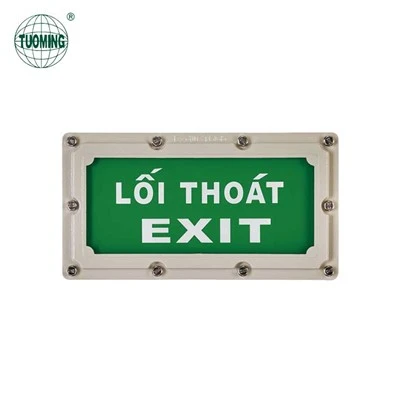
Wait, that’s all. I hope that clears up the dustproof emergency ceiling light question. It’s not as complicated as it sounds, but it’s important to get right. Don’t cut corners on this—your safety (and the safety of anyone using the space) depends on it.
Emergency Bulkheads References
International Electrotechnical Commission. IEC 60529: Degrees of protection provided by enclosures (IP Code).
National Fire Protection Association. NFPA 70: National Electrical Code.
National Fire Protection Association. NFPA 101: Life Safety Code.
British Standards Institution. BS 5266-1: Emergency lighting.
American National Standards Institute. ANSI C136.26: Emergency lighting equipment for transportation and public assembly facilities.
Zhongshan Tuoming Lighting Technology Co., Ltd.
As one of the leading emergency ceiling lights manufacturers and suppliers in China, we warmly welcome you to buy advanced emergency ceiling lights in stock here from our factory. All customized products are with high quality and low price.
Address: No.1, 10th Floor, No.17, Tongfu South Road, Guzhen Town, Zhongshan City, Guangdong Province
E-mail: 1989355847@qq.com
WebSite: https://www.tuominglight.com/
