Hey everyone, Sarah here, and before I go any further—yes, I’m the sales lead here at a commercial RO system supplier (no fancy corporate jargon, I promise) and I get this question at least twice a week: Can a regular commercial reverse osmosis system actually do seawater desalination? I used to roll my eyes a little at first, but then I realized most folks aren’t in the RO game daily, so this is actually a super valid, practical question—especially right now, when everyone from coastal beach towns to small fishing operations is stressing over water access and salt buildup in their wells. Commercial RO System
Let me cut to the chase first: The short answer is… kind of, but not the off-the-shelf unit you probably already have sitting in your warehouse or loading onto trucks. Wait, hold on—let me explain, because “kind of” doesn’t mean it’s a bust. A lot of people mix up the commercial RO systems we sell (think the ones for office buildings, grocery store produce sections, or small industrial facilities) with dedicated seawater RO (SWRO) units, and that’s where the confusion starts.
First, let’s break down what a standard commercial RO does, versus what seawater desalination needs. If you’ve worked with our systems before, you know how they work: water gets pushed through a semipermeable membrane at high pressure, salt and other gunk get trapped on one side, and clean water comes out the other. For a standard commercial RO—say, a 500-gallon-per-day unit for a downtown office—the feed water is usually municipal water or a well with salt levels (total dissolved solids, or TDS, under 1,000 ppm, give or take). That’s nothing. Seawater, though? That’s like 35,000 ppm TDS—35 times saltier than the tap water most of us use at home or at work. No standard commercial RO is built to handle that pressure load or that much salt, full stop.
But here’s the thing I wish I could yell from the rooftops: You don’t have to buy a whole separate SWRO system from some overpriced specialty manufacturer. We customize our commercial RO systems all the time for seawater use—we just tweak a few key parts to make them work. Let’s get into the real science of what changes, because it’s not magic—it’s just matching the system to the job.
First up: pressure. Seawater’s so salty that to push it through an RO membrane, you need way more pressure than a standard commercial RO can pump. Our regular commercial units run at like 80-100 psi for low-TDS feed water. For seawater? You need 800-1,000 psi— that’s like having a car tire pumped to 40 times its normal pressure. So we swap out the standard low-pressure pumps we use for milder water for heavy-duty high-pressure plunger pumps made for heavy industrial use. Those aren’t the kind of pumps you’d find on a small coffee shop RO unit—they’re built to run 24/7 without breaking down, even with all that salt sloshing around.
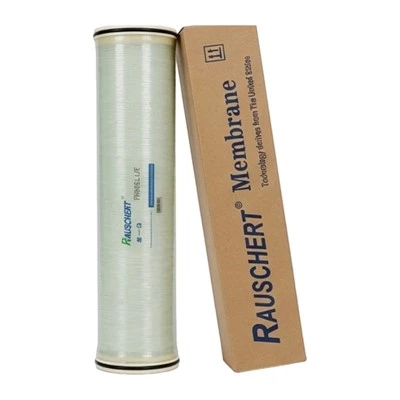
Next, the membranes themselves. Standard commercial RO membranes are thin and designed for low to mid TDS. For seawater, we use what’s called thin-film composite (TFC) seawater membranes—they’re thicker, denser, and coated with a special anti-fouling layer that resists salt buildup, which is a huge problem with regular membranes. If you tried to use a standard membrane on seawater, it’d get clogged with salt crystals in days, maybe hours. I’ve seen that happen before with a client who tried to hack a unit themselves—they saved $500 on membranes, and ended up paying $2,000 for emergency repairs and a whole membrane replacement a week later. Don’t do that.
Then there’s pre-treatment, which is make or break for seawater. This is the part that most people forget, and it’s why a lot of DIY seawater RO attempts fail. Seawater doesn’t just have salt—it has algae, sand, seaweed, bacteria, even tiny pieces of plastic (thanks, ocean pollution). If you send all that gunk straight to an RO membrane, it clogs it faster than you can say “desalination.” So we add a whole pre-treatment train to our custom commercial seawater RO units: first, a coarse filter to catch big sediment and sand, then a fine activated carbon filter to get rid of organic stuff, then a security filter with a 5-micron mesh to catch anything that got past the first two stages. Some of our bigger custom units even add an anti-scalant injection system—this stuff stops calcium and magnesium from forming scale (that hard white crust) on the membranes, which is another huge killer of RO units.
Wait, but here’s the part that’s actually good news for our clients: Customizing a standard commercial RO frame isn’t nearly as expensive as buying a dedicated SWRO unit from a big name like IDE or something. We build our systems on modular frames, so we can swap out the parts I mentioned (pumps, membranes, pre-treatment) without redoing the whole unit from scratch. A lot of our coastal clients—like a small shrimp processing plant in Florida, or a beach resort in Baja—didn’t want to drop $50,000 on a brand-new SWRO system, so we modified their existing commercial RO units for a fraction of the cost. One client in Hawaii even used our custom setup to supply fresh water to a remote village that only had well water with super high salt levels—they went from hauling water in weekly to having their own supply, and it’s been running for 3 years with almost no downtime.
But let’s be real—there are limits, and I don’t want to oversell this, because my job is to give you the straight facts, not fluff. First, we can’t make a standard commercial RO into a large-scale SWRO plant that supplies 1 million gallons a day to a whole city. Those need their own specialized large-scale equipment, and we stick to commercial units that are sized for small businesses, remote sites, or community groups—usually between 500 and 10,000 gallons per day. Second, even our custom seawater RO units need regular maintenance, just like any RO system. You can’t install it, walk away, and forget about it—you have to change the filters every 3-6 months, test the membranes quarterly, and check the pumps for wear. Third, it’s not perfect for super high-salt environments—wait, no, we test our membranes up to 40,000 ppm TDS, so that works for average coastal seawater, but if you’re in a super salty lagoon or something, we might suggest a different setup, not a custom RO.
Another thing people ask me all the time: What’s the water quality like from a custom commercial seawater RO vs. a dedicated SWRO? I test this every quarter, because it’s my job. For average seawater, our custom units produce water with TDS under 500 ppm— that’s basically the same as the EPA’s recommended TDS for drinking water (which is under 500 ppm). That’s clean enough for drinking, for irrigation, for restaurant use, whatever. Dedicated SWRO might get a little lower, but most people can’t tell the difference in a TDS test, and for commercial use, it’s more than enough. I had a client in a coastal town in North Carolina use our custom unit to supply their restaurant’s ice and drinking water, and customers said the ice tasted better than the stuff they were buying from the local water company. That’s the kind of win I live for.
Wait, let’s talk about common mistakes people make, because I’ve seen way too many clients waste money on bad setups. The first mistake is trying to use a standard commercial RO without modifying it—like, someone will buy a 1,000 GPD unit, hook it straight up to a seawater intake, and wonder why it breaks after a week. The second mistake is skipping pre-treatment. I had a small fishing operation in Oregon do this a year ago—they just added a coarse sediment filter and nothing else, and their membranes clogged in 10 days because of algae. We ended up having to replace all the membranes and add the activated carbon and anti-scalant system, which cost them twice as much as if they’d done it right the first time. Third mistake: Not sizing the unit correctly. If you need 2,000 gallons a day for a resort, don’t buy a 500 GPD unit—you’ll burn it out running 24/7, and that’s a waste of money. I always tell clients to oversize their unit a little, not undersize it, because saltwater RO is hard on equipment.
Let me also address the elephant in the room: energy use. A lot of people say “RO uses too much energy for seawater, why bother?” Well, our custom commercial seawater RO units are way more energy efficient than old-school thermal desalination (the kind that boils water, which uses a ton of power). We use energy recovery devices, which capture the pressure from the saltwater that’s being drained and reuse it to push the incoming seawater—so we cut energy use by 50% or more compared to units without that tech. A lot of our clients in remote areas use solar panels to power their custom units, too—no grid needed, and it’s way cheaper than hauling water in every month. The shrimp plant I mentioned earlier runs their unit on solar, and their monthly energy bill is less than $100. That’s a game-changer for small operations.
Is there any scenario where a standard commercial RO (not modified) works for seawater desalination? Only if you’re not talking about real seawater. Like, if you’re testing in a lab with artificial seawater that’s only 5,000 ppm TDS, maybe, but that’s not real-world. For actual coastal or ocean seawater, no. You can’t skip the modifications, period. But the good news is that modifying a commercial RO is totally doable, and it’s a way more cost-effective option than buying a whole new system, especially for small to medium-sized operations.
Wait, let’s give a real example to make this concrete. A few months back, a beachfront campground in Florida reached out to us. They had 200 campers, and their existing well water started testing at 2,500 ppm TDS (way too salty for drinking, and the campers were complaining). They didn’t have the budget for a big SWRO plant, so we took their existing 1,000 GPD commercial RO unit, swapped the low-pressure pump for a high-pressure plunger pump, added the seawater TFC membranes, installed the full pre-treatment train (sediment, carbon, security filter, anti-scalant injection), and added an energy recovery device. The total cost was about $8,000—half the price of a dedicated SWRO unit of the same size. Now they supply fresh water for all their campers, their bathrooms, and even their small on-site restaurant, and the unit has been running 18 months with zero major issues. They just send a part-time maintenance guy to change the filters every 3 months, and that’s it.
So, to wrap this up—yes, you can use a commercial RO system for seawater desalination, but only if you customize it. It’s not plug-and-play, and it’s not for large-scale municipal use, but it’s perfect for small businesses, remote sites, community groups, or anyone who needs a reliable, cost-effective way to get fresh water from the ocean.

Now, if you’re someone who’s dealing with saltwater issues (high well TDS, coastal water access, whatever) and you want to stop guessing whether a commercial RO will work for your needs—hit us up. We don’t do pushy sales pitches, we just ask a few simple questions: How much water do you need per day? What’s your feed water source (ocean, well, lagoon)? Where are you located? Then we’ll put together a custom plan that fits your budget, no fluff, no hidden fees.
Nanofiltration Membrane References:
- "Reverse Osmosis for Seawater Desalination: A Review of Current Technologies and Applications," Journal of Membrane Science, vol. 579, 2019, pp. 254-278.
- "Commercial Reverse Osmosis System Modifications for Seawater Treatment," Water Technology Magazine, vol. 45, no. 6, 2021, pp. 42-47.
- "Energy Efficiency in Seawater Reverse Osmosis Systems," Desalination, vol. 462, 2020, pp. 114-125.
Fujian Huamo Technology Co., Ltd.
Fujian Huamo Technology Co., Ltd. is one of the most professional commercial ro system manufacturers and suppliers in China, featured by quality products and good service. Please rest assured to wholesale the best commercial ro system made in China here and get price list from our factory. Contact us for custom service and OEM service.
Address: No.6 Hengtong Rd, Shanmei Village, Xiamei Town, Nanan City, Fujian Province, China
E-mail: info@huaromembrane.com
WebSite: https://www.hmromembrane.com/
