Hey there, if you’ve ever shopped for torsion springs and stared at wildly different price tags on seemingly similar parts, you’re not alone. I’m the owner of a torsion spring supply company, and I get at least three calls a week that start with, “How much does a torsion spring cost?” The short answer is, well, it’s not as simple as grabbing a random part off a shelf and checking the sticker. Let me break this down like I would for a client on our first call—no fancy jargon, straight talk. Torsion Springs
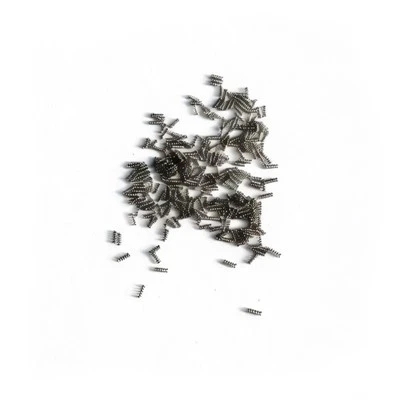
First off, what even is a torsion spring? For the uninitiated, it’s that coiled metal part that twists, right? Think of the spring in your garage door that keeps it from slamming shut, or the ones inside a laptop hinge that makes the lid stay open. They work by storing rotational energy when you twist them, so they need to be strong, reliable, and fit exactly what you’re using them for. Mess up their specs, and you’ve got a part that either doesn’t work at all or fails way sooner than it should. That’s why price isn’t just a number—it’s tied to every choice we make when making these things.
Let’s start with the basics: material. This is the biggest factor in cost, hands down. We use a few go-to materials, but each has a huge price swing. The most common is music wire—it’s affordable, works great for most general use cases, like small hinges or light-duty clips. A basic 1-inch long torsion spring made from music wire, sized for small doors or office furniture, might cost anywhere from $0.50 to $2 each, depending on how many you order. But if you need something for heavy-duty stuff—like a commercial garage door that weighs hundreds of pounds? We switch to alloy steel, usually chrome vanadium or silicon chrome. That stuff is way stronger, can handle way more twisting and stress, and it costs 2 to 3 times more than music wire. Those heavy-duty springs? They start at $5 each and go up from there.
Then there’s stainless steel. We only use this for specific applications—like parts that go in food processing equipment, medical devices, or outdoor gear that gets rained on all year. Stainless is corrosion-resistant, which is non-negotiable for those jobs, but it’s also 3 to 4 times more expensive than music wire. A stainless steel torsion spring for a medical tool, for example, might be $3 to $8 each, depending on size. And if someone needs something even more specialized—like a titanium torsion spring for aerospace or deep-sea equipment? Forget it—those can run $20 to $50 each, easy. No surprises there, right? You pay for what it has to handle.
Next, size and specs. Torsion springs aren’t one-size-fits-all, and even tiny changes in measurements change the price. Let’s say two springs are the same material, but one has a wire diameter of 0.02 inches, and the other is 0.1 inches thick. The thicker one requires way more material to make, needs bigger coiling machines, and is harder to bend consistently. So that 0.1-inch wire spring could cost twice as much as the thin one, even if they’re the same length. Then there’s the “legs”—the straight ends that stick out of the coil, that you attach to whatever the spring is working on. If you need those legs bent a certain way, not just cut straight? Like, bent at a 90-degree angle with a specific hook shape or a flat tip? That adds labor time. We have to run them through a secondary bending machine, which adds a few cents to a part, but for custom shapes, that adds up.
Then there’s the torque requirement. Torque is how much twisting force the spring can apply. A garage door spring needs a lot of torque to lift hundreds of pounds, while a hinge for a small jewelry box needs barely any. The higher the torque, the more coils you need, or the thicker the wire, as we talked about earlier. But here’s the thing: if you get a spring that’s under-torqued, it won’t do its job. Over-torqued, and it can snap mid-use, which is dangerous. So when a client says, “I need a torsion spring for this door,” I don’t just send them a price—I ask for the torque number they need, or I’ll calculate it for them if they don’t know. If they cut corners here and get a spring that’s slightly under-spec’d, it might cost less upfront, but they’ll end up replacing it way more often. That’s a trap a lot of people fall into, and I hate when they call me later because they had to buy three cheap springs instead of one good one.
Quantity plays a huge role too, obviously. If you need 100 springs, that’s a small order, and the price per unit is higher—maybe $1 to $3 for a basic music wire spring. But if you need 10,000 or 100,000? We can bulk up material orders, run our machines non-stop, and keep labor costs per unit way down. For a large order of identical torsion springs, the price per unit can drop by 50% or more. I had a client last month who needed 50,000 springs for a new line of lawn mowers—we quoted them $0.75 each, whereas a small order of 100 of that same exact spring would have been $1.20 each. That’s the power of volume, and it’s a big reason why small businesses sometimes get stung when they order too little at once.
Custom vs. off-the-shelf. Here’s another big one. We keep a stock of common torsion springs—standard sizes for garage doors, laptop hinges, drawer slides, all that. If you need a common spring, off the shelf, that’s as cheap as it gets. But if you need a custom spring, made to exact specs for a unique part? That’s where the price jumps, and for good reason. We have to design the spring from scratch, figure out the right material, size, number of coils, torque, then test it to make sure it works. Testing is a big step most people don’t think about. For critical applications—like medical devices or automotive parts—we have to do load testing, cycle testing, make sure the spring won’t break after thousands or millions of twists. That testing adds time and cost, so a custom spring can cost anywhere from $10 to $50 each, depending on how complex it is, and that’s before you even factor in the setup cost for the coiling machines. Every new custom job requires changing out tooling, calibrating the machines, so we pass that setup cost along, usually in the form of a small one-time fee, but sometimes it’s rolled into the per-unit price for small custom orders.
Wait, let’s not forget about coatings and finishes. Most basic torsion springs come plain, uncoated, for indoor use where they won’t get wet. But if you need them for outdoor use, or for something that might be exposed to chemicals or salt air? We can add a coating: zinc plating, black oxide, powder coating. Each of these adds cost, but they protect the spring from rust and wear. Zinc plating is the cheapest, adds a few cents per part, while powder coating is a bit more, and for heavy-duty industrial parts, we do hot-dip galvanizing, which is way more expensive, like 50 cents to a dollar per part, but it’s perfect for outdoor equipment that has to hold up in extreme weather.
I should also mention a common mistake I see: people asking for the cheapest spring possible, but not considering the application. Last year, a client called us panicking because their custom outdoor gates kept breaking torsion springs every 3 months. They’d been buying cheap music wire springs from a local supplier, no coating. We switched them to silicon chrome steel springs with a zinc coating, and their failure rate dropped to zero. The new springs cost them $6 each, vs. the $2 cheap ones, but they saved thousands a year in replacement and labor. That’s why I always talk about total cost of ownership, not just the upfront price.
So let’s put all this together, to give you a range that’s realistic. If you need a basic, off-the-shelf torsion spring for light indoor use, small quantity (100 or less), music wire, no coating? $0.50 to $2 each. Medium quantity (1,000 to 10,000), same specs? $0.30 to $1 each. Heavy-duty, alloy steel, coated, medium quantity? $3 to $7 each. Custom, critical application, any quantity? $10 to $50 or more. That’s the general range, but like I said, it’s all based on what you need the spring to do.
Here’s the thing—we’re not just selling a piece of coiled metal. We’re selling a part that’s supposed to work reliably for years, sometimes decades, no matter the conditions. If you get a price that seems too good to be true, it probably is—cut corners on material, specs, testing, and you’ll end up paying more later. That’s why I always tell people the best way to get an accurate price is to give us as much info as you can: what’s the spring for, what torque do you need, what environment will it be in, how many do you need, do you have any custom specs or requirements.

If you’re out there shopping for torsion springs and you’re not sure what you need, hit us up. We’ll take the time to walk you through every option, no pressure, no sales pitches, just honest answers. We’ve worked with small startups and huge corporations, and we treat every client the same—we want to make sure you get a spring that works for your needs, at a fair price. Don’t waste time guessing at price tags that don’t make sense. Reach out, tell us your project, and we’ll give you a transparent quote.
Retaining Rings References:
- Torsion Spring Design and Application Guide, Spring Manufacturers Institute, 2022
- Material Selection Guide for Industrial Springs, Association of Spring Manufacturers, 2021
- Cost Factors for Custom Metal Components, Fabricators & Manufacturers Association International, 2020
- Corrosion Resistance Properties of Spring Materials, NACE International, 2019
- Torsion Spring Torque Calculation Methods, Mechanical Engineering Magazine, 2021
Wenzhou Huajie Precision Spring Co., Ltd.
As one of the most professional torsion springs manufacturers and suppliers in China, our products have good reputation in the market. Please rest assured to wholesale bulk torsion springs in stock here and get pricelist from our factory. We also accept customized orders.
Address: No.6 Chuangsan Road, Lingang Industrial Zone, Yueqing, Wenzhou City, Zhejiang Province, China.
E-mail: ZGhuajieTH@163.com
WebSite: https://www.huajiespring.com/
