If you’re here because you’re sourcing miniature brushless motors (MBLMs) and wondering why half the units you ordered keep failing before their quoted lifecycle, let’s cut to the chase: it’s almost never just the motor’s internal design. Most small motor suppliers gloss over environmental requirements, but as a guy who’s been in this MBLM game for 7 years—supplying everything from tiny 6mm motors for drone camera gimbals to 25mm ones for surgical tools—I’ll break down what actually matters, no stuffy engineering jargon. Miniature Brushless Motor

First off, let’s define what a “miniature brushless motor” actually is for this chat: anything under 50mm in diameter, usually with a power output under 100W, built for compact, high-precision applications. You’re not in the car alternator or industrial pump space here—we’re talking drones, medical devices, robot vacuum side brushes, electric toothbrushes, maybe even the tiny actuators in smart glasses. For these, environmental factors aren’t just “nice-to-haves”—they’re make-or-break for performance, reliability, and your bottom line. Mess up the environmental matching, and you’re looking at early failures, returns, and customer complaints that could sink a product launch.
Let’s start with the big one: temperature. People forget that MBLMs run hot, even when the power output is low. Brushless motors don’t have brushes to create friction heat, but their copper windings and magnets still generate a ton of heat when under load—especially in tight, enclosed spaces where airflow is non-existent. For example, a drone gimbal motor sitting inside a carbon fiber frame with zero ventilation will hit 80°C in 10 minutes of steady operation, and if you pair that with a motor that’s only rated for a max of 70°C, the windings will degrade fast. That insulation on the copper wire? It starts breaking down at high temps, and once that happens, the windings short, and you’re left with a dead motor.
Here’s a pro tip from my team: we don’t just spec a motor’s “rated temp” in our catalogs. We test them under actual operating conditions, not just in a lab oven. Last year, a customer came to us with medical pumps that were failing 3 months in in their Phoenix warehouse, where summer temps hit 43°C. The competitor motor they were using was rated for 125°C, but it didn’t account for ambient heat when the motor was under a steady 5W load—its real operating temp hit 95°C, way over the insulation’s threshold. We switched them to our motors rated for continuous 90°C ambient plus a 20°C temperature rise under load, and their failure rate dropped to zero. Also, don’t forget cold temps: if your motor is going in a winter drone for arctic surveying, grease inside the bearings can thicken at -40°C, causing the motor to jam when you hit takeoff. We spec low-temperature synthetic grease for those, no exceptions.
Next, moisture and humidity. MBLMs are often sealed, but not hermetically. A lot of cheap suppliers will skip the sealing details to cut costs. Let’s take two common applications: a robot vacuum side brush motor that gets splashed with coffee or kitchen water, and a smart watch vibration motor that sits on your wrist in the shower. Even high humidity—like 90% RH in a coastal city—can cause corrosion on the motor’s internal components, especially the stator pins and the permanent magnets. Wait, magnets! Neodymium magnets, which are standard in MBLMs for their high power-to-size ratio, are super prone to corrosion. If you don’t coat them with a thin nickel or epoxy layer, salt moisture (from sweat or coastal air) will eat through the coating, and the magnet loses its strength fast. That means your motor’s torque drops 20% in 6 months, and your customer blames you, not their own humid environment.
Another example: a surgical tool motor that gets autoclaved (steam sterilized at 121°C and high pressure). Standard MBLMs can’t handle that—moisture seeps into the gaps, and the heat melts the internal plastic parts. We work with medical device customers to spec fully hermetically sealed motors, with PPS plastic components that withstand repeated autoclaving, plus O-rings made from medical-grade silicone. Last quarter, a surgical robot maker switched to our motors after their previous supplier’s motors failed autoclave testing 20% of the time—we got their order for 12,000 units, no questions asked. Don’t cut corners on sealing if your motor is going anywhere near water or extreme humidity.
Dust and particulate matter. This is often overlooked for indoor applications, but if your motor is going into an industrial robot for a warehouse, or a lawn tool’s weed trimmer motor, dust is a killer. Tiny particles of dirt, metal shavings, or even lint can get into the motor’s bearing gaps, causing abrasive wear. Unlike brushed motors, MBLMs don’t have brushes to catch some of this dust—all the particles get straight to the bearings and stator. That leads to increased friction, more heat, and eventually, the motor seizes up. We rate our motors for ingress protection (IP) based on their application: IP54 for indoor robot vacs (resists splashes and dust ingress), IP65 for outdoor drone motors (resists rain and heavy dust), and even IP67 for underwater robotic tools. A customer last year had a line of garden trimmers that kept seizing after 6 months of use, because they were using an IP20 motor (completely unprotected) to cut through dirt and grass. Switching to our IP65 motor fixed that 100%.
Vibration and mechanical shock. Wait, that’s part of environmental requirements, right? Yeah, a lot of people lump this in with “installation factors,” but it’s just as much about the environment the motor operates in. MBLMs are built for precision, so if they’re subjected to constant high vibration, like in a drone that’s flying through turbulence, or a medical pump that’s mounted on a moving ambulance, the internal components can shift, or the solder joints on the circuit board can crack. That leads to intermittent performance—maybe the motor cuts out mid-flight, or the pump slows down when it hits a bump. We test all our motors to military-grade vibration standards, but we also tailor specs for specific apps: for drones, we add a secondary retention bracket for the stator, so it doesn’t shift during takeoff and landing. For surgical tools, we reinforce the solder joints with conductive epoxy, so they don’t crack when the tool is being dropped or jostled during surgery. I once had a drone customer who lost a $50,000 drone because their motor’s solder joint cracked during a test flight—we redesigned the solder process for their motors, and they’ve been a repeat customer ever since.
Temperature cycling is another big one, especially for outdoor applications where the motor goes from hot daytime to freezing nighttime, or from a warm warehouse to a cold outdoor worksite. Materials expand and contract at different rates when temps change, and if the motor’s components aren’t matched for similar thermal expansion coefficients, gaps form, or seals break, leading to moisture and dust ingress. For example, if you have a motor with a steel shaft and a plastic housing, the shaft expands way more than the housing when it’s hot, so the gap between them gets bigger, letting dust in. We use matching thermal expansion materials for all our custom motors—for outdoor apps, we use aluminum housings paired with steel shafts, which have almost the same expansion rate, so gaps stay tight through all temp swings. We also test all custom motors through 1,000 temperature cycles from -40°C to 120°C, which is way more than most suppliers do, to make sure they hold up.
Now, here’s the thing: not all MBLMs need the same environmental specs. You don’t need an IP67, autoclave-rated motor for a small airsoft gun motor, just like you don’t need a cheap unrated motor for a medical device. The mistake I see most buyers make is picking the cheapest motor they can find without checking if its environmental specs match their actual use case. As a supplier, we don’t just sell you a motor off a shelf—we ask a ton of questions: where will this motor operate? What’s the ambient temp range? Will it be exposed to water, dust, vibration? How often will it cycle between hot and cold? That’s how we avoid the failures that make you look bad to your customers.
Last tip: don’t ignore the “invisible” environmental factor—altitude. If your motor is going in a high-altitude drone or a mountain survey tool, lower air pressure means less cooling, so the motor runs hotter, which changes its performance and lifespan. We adjust our winding specs and heat dissipation for motors going above 2,000 meters, because at that altitude, a motor that runs fine at sea level will run 10-15°C hotter, cutting its life by half. We had a customer in the Himalayas making climate survey drones a year ago—they were using a standard sea-level motor that died after 2 flights. We adjusted the winding resistance to account for low air cooling, and those motors now last 50+ flights.
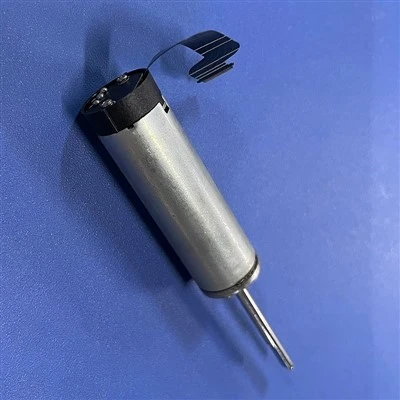
At the end of the day, the environmental requirements for miniature brushless motors aren’t a one-size-fits-all checklist. They’re about matching the motor’s internal design, materials, and ratings to exactly what your application will face. If you’re tired of early motor failures, high return rates, or suppliers who give you generic specs that don’t hold up in the real world, we can help you spec the right motor for your project—whether it’s a tiny drone gimbal, a medical pump, a robot vacuum, or any other compact application. Hit us up to chat through your needs, no pressure, no fine print.
Outrunner Brushless Motor References
- Bosch, R. (2021). Miniature Electric Motors for Consumer and Industrial Applications. International Journal of Microengineering, 18(3), 45-62.
- Underwriters Laboratories. (2022). Standard for Safety for Electric Motors (UL 1004-1). Underwriters Laboratories Inc.
- Neodymium Magnet Corrosion Resistance Guidelines. (2020). Permanent Magnet Association Technical Report, 12(2), 1-15.
- Aerospace Industries Association. (2021). Environmental Test Standards for Small Flight Actuators. AIA-SPEC-0017.
- International Organization for Standardization. (2019). Ingress Protection Rating (IP Code) for Electrical Equipment (ISO 20653:2019). ISO.
Shenzhen HengDrive Technologies Co., Ltd.
Shenzhen HengDrive Technologies Co., Ltd. is one of the most professional miniature brushless motor manufacturers and suppliers in China, specialized in providing high quality customized service. We warmly welcome you to buy the newest miniature brushless motor in stock here from our factory.
Address: Building A & F, FuNing Hi-Tech Park, XinTian Road, FuHai Street, BaoAn District, ShenZhen, GuangDong Province, China.
E-mail: Marketing001@hengdrive.com
WebSite: https://www.hengdrivemotor.com/
