Hey there, if you’re a spec engineer, facilities manager, or just someone who’s been staring at a transformer spec sheet, you’ve probably crossed this question at least once: Can a distribution transformer be installed in a humid environment? I get it—humidity feels like this sneaky, slow killer of electrical gear, right? As a distribution transformer supplier, I field this exact call at least twice a week, and it never gets old because there’s no one-size-fits-all answer, but here’s the thing: it’s absolutely possible. You just can’t slap a standard transformer down near a coastal power station, a wastewater treatment plant, or that new warehouse with the leaky HVAC and call it a day. Let’s break this down like we’re geeking out over a project, no stuffy jargon, no textbook copy-pastes, just real-world stuff I’ve seen and dealt with over the years. Distribution Transformer

First off, let’s define “humid environment” because that term gets thrown around way too loosely. I’m not talking about a dry day in Phoenix where humidity’s at 20%—that’s nothing. I’m talking about places where relative humidity (RH) hangs at 70%+ for 8+ hours a day, maybe hits 90% in monsoon season or coastal fog, or even spots with condensation from big temperature swings. Like, I had a client in Florida a couple years back who tried using the same off-the-shelf transformer they put in their Ohio warehouse, and within 6 months, it fried from internal moisture. Turned out their Florida site had an average RH of 78%, plus nighttime temps dropped 15 degrees from daytime, and that’s a recipe for condensation if the transformer isn’t built for it. That’s the key: it’s not just how humid it is, it’s how the transformer is sealed, insulated, and designed to handle moisture over time.
Let’s start with the basics: why humidity is a problem for transformers, especially the distribution kind (those are the ones on power poles, in pad-mounted enclosures, or bolted to concrete pads near neighborhoods, right? Not the big 1000kV ones in substations). Distribution transformers run low to the ground most of the time, so they’re closer to damp soil, splashback from rain, or whatever’s in the air. Moisture gets in two main ways: either it seeps through tiny gaps in the enclosure, or it forms condensation inside because of temperature changes. When that moisture hits the insulation (which is usually paper wrapped around copper windings), it breaks down the insulation’s ability to hold voltage. Over time, that leads to partial discharges, then breakdowns, and boom—you’re out of power, and now you’re dealing with a repair or replacement bill that could’ve been avoided.
But here’s where it gets good: we don’t have to let that happen. The trick is matching the transformer to the specific humidity conditions of the site. Let’s split this into two big categories: standard vs. specialized transformers, because that’s what I actually recommend day to day.
Standard transformers work fine for places with moderate humidity—like if you’re in a city where RH peaks at 65% for a month or two a year. These are the ones we stock most of, they’re cost-effective, and they’re built with basic sealing: gaskets around the lid, vented enclosures that keep dirt out but let some air circulate to prevent overheating. But for any place with consistent high humidity—coastal areas (think Texas Gulf Coast, Southeast Asia, the UK’s west coast), industrial sites with steam or chemical mist, or monsoon-heavy regions—standard’s not enough. I had another client a while back in a paper mill, where RH was 85% 24/7, plus there’s a little bit of sulfur from the pulp process. They tried a standard unit, and in 3 months, the internal moisture content hit 300 ppm, which is way above the safe threshold of 200 ppm for distribution transformers. We swapped it for our corrosion-resistant, hermetically sealed unit, and it’s still running strong 2 years later.
Wait, let’s talk about hermetic sealing because that’s the big one for super humid environments. Hermetic transformers have a fully welded tank, no vents, so air can’t get in or out. That means no moisture from outside can seep in, and the air inside is dry enough to keep insulation safe—we fill it with dry nitrogen, actually, which prevents condensation even if the tank’s heated up during operation. The tradeoff? You can’t do field repairs on a hermetic unit easily, because once it’s sealed, you have to test the entire tank’s integrity to open it. But for remote sites or places where humidity is non-negotiable (like coastal wind farms), that’s a no-brainer. Then there’s another option: sealed transformers with desiccants. These have vents, but there’s a mesh of silica gel inside that catches moisture before it gets to the windings. That’s a middle ground for places where humidity is high but not constant, or where you need to do occasional maintenance.
Oh, and insulation grade matters too, way more than people think. Standard insulation is usually Grade A, which works up to 105°C, but for humid environments, we recommend Grade F or Grade H insulation. These are made with better materials—like cross-linked polyethylene instead of plain paper—that repel moisture way better, and they can handle higher temperatures, which also helps prevent condensation (warmer air holds moisture, so if the windings run a little warmer, less moisture condenses on the insulation). I never skip mentioning insulation grade to clients in humid zones, because it’s such a cheap upgrade that makes a huge difference.
Wait, let’s not forget installation practices, because even the best transformer won’t survive if you stick it in a bad spot. For example, a pad-mounted transformer in a humid area shouldn’t be installed directly on damp concrete—you need a concrete pad that’s 6 inches above ground, with a slope to drain water away, so no standing water pools under it. If you’re putting it on a pole, don’t mount it too low to the ground where spray from sprinklers or rain can hit it. I had a client in Arizona (ironic, right?) who put a pad unit near a landscaping sprinkler that ran 10 hours a day—within a year, the base of the transformer was rusted through from constant moisture splashback. Fixed that by moving the sprinkler line and adding a stainless steel skirt around the transformer base, and it’s been fine ever since. Also, regular maintenance is non-negotiable here. Every 6 months, check the gasket seals for cracks, test the internal moisture level, change the desiccant if you have a sealed-with-desiccant unit. That’s not overkill—that’s how you avoid costly failures.
Is there a downside to using specialized transformers in humid environments? Yeah, a little—they’re more expensive upfront, like 15-20% more than standard units. But let’s do the math: a standard transformer in a high-humidity area lasts 2-3 years, while a specialized one can last 10-15 years. That’s a no-brainer for most clients. Plus, you avoid the downtime costs—like if a transformer fails at a wastewater treatment plant, that’s not just a repair bill, that’s fines from the EPA, or lost production from a factory. I’ve seen clients save tens of thousands of dollars just by picking the right transformer instead of the cheapest one.
Let me throw in a quick real-world example to make this concrete (pun intended). Last year, I worked with a construction company building a new data center in Miami. The site’s RH averages 79%, and it’s right near the coast, so salt air is a factor too. They initially went with standard transformers because they were cheaper, but we did a moisture analysis and showed them that standard units would have a 2.5-year failure rate. We proposed our hermetic, Grade F insulation units with stainless steel enclosures, and even though the upfront cost was higher, their projected ROI was less than 18 months. They pulled the trigger, and last month they hit the 1-year mark without a single moisture-related issue. That’s the kind of win I live for as a supplier—helping clients make smart, long-term decisions instead of quick, cheap ones.
Wait, should I address the “wait, what about salt air?” question, because that’s a subset of humid environments that’s extra tricky. Salt is corrosive, right? It eats through gaskets and metal. So for coastal sites, we add a ceramic coating to the enclosure, or use stainless steel for the external parts, not just the internal ones. Some of our transformers for Gulf Coast clients have lasted 12 years with no rust, which is unheard of if you use a standard painted steel unit. I always tell people: humid doesn’t just mean wet air—if there’s salt, chemicals, or even dust that holds moisture, you need to account for that in the enclosure material.
Let’s wrap this up, because I know you’re probably thinking about your own site right now. So can a distribution transformer be installed in a humid environment? Absolutely—you just can’t take a one-size-fits-all approach. The key steps are: 1) Figure out your specific conditions (how high is the RH, is there salt/chemicals, temperature swings?), 2) Pick the right transformer type (hermetic, desiccant-assisted, or standard depending on conditions), 3) Get the right insulation grade, 4) Install it correctly (away from standing water, proper drainage, etc.), and 5) Stick to a regular maintenance schedule. If you skip any of these, you’re setting yourself up for trouble, but follow them, and your transformer will run for years even in the rainiest, saltiest spot on the map.
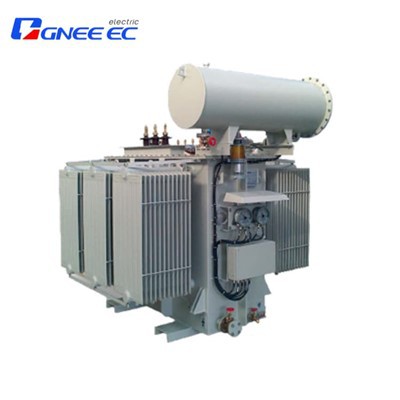
If you’re not sure what you need—whether you’re in Florida, Singapore, the Pacific Northwest, or a humid industrial zone halfway across the world—hit me up. I can walk you through the specs, run a quick moisture check, or even connect you with a local tech who can assess your site. No sales pitch, no pressure, just real advice from someone who’s dealt with this a hundred times. Let’s make sure your power doesn’t go out when you need it most.
Pole Mounted Transformer References:
- Electrical Transmission and Distribution Reference Book, Westinghouse Electric Corporation, 1993.
- NEMA Standard SG4-2018, Standards for Distribution Transformers, National Electrical Manufacturers Association, 2018.
- “Moisture Effects on Transformer Insulation,” IEEE Transactions on Power Delivery, Vol. 29, No. 3, June 2014, pp. 1284-1291.
- Coastal Corrosion Guidelines for Electrical Equipment, National Association of Corrosion Engineers (NACE), 2020.
Henan GNEE Electric Co., Ltd.
Henan GNEE Electric Co., Ltd. is well-known as one of the leading distribution transformer manufacturers and suppliers in China. Please feel free to wholesale cheap distribution transformer in stock here from our factory. Quality products and low price are available.
Address: 25th Floor, Huafu Commercial Center, Anyang, Henan Province, China
E-mail: sales@gneeelectric.com
WebSite: https://www.gneeelectric.com/
