If you’ve ever stood on the deck of a Landing Craft (LC) mid-voyage, watching it cut through choppy coastal waters or thread a narrow, rocky channel toward a beach or dock, you know mooring isn’t just a tie-up job—it’s the make-or-break step that keeps your vessel, crew, and expensive cargo safe. As someone who’s spent 12 years in the Landing Craft supply business, working with everything from small, shallow-draft landing craft for river operations to heavy-lift ocean-going models for offshore construction, I’ve seen what happens when mooring requirements get skipped: a $500k craft getting banged against a piling in a 10-knot current, cargo shifting and damaging, or even a crew injury because of a bad line setup. Today, I’m breaking down the real, practical requirements for mooring a Landing Craft—no stuffy textbook jargon, just the lessons I’ve learned from helping hundreds of operators around the world get this right. Landing Craft
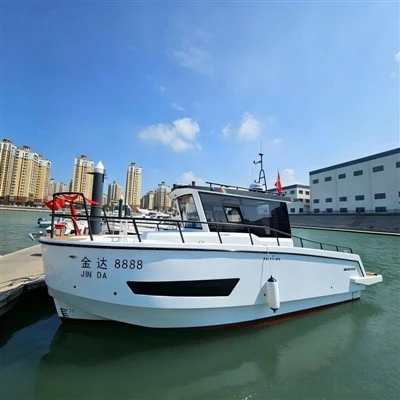
First, before you even tie a single line, you have to match your mooring setup to your LC’s unique design, because not all landing craft are built the same. Unlike a standard cargo ship or a pleasure yacht, LCs are purpose-built for speed, shallow drafts, and beaching, which means their hulls, cleats, and weight distribution work differently. Take the small, aluminum landing craft we supply to inshore fisheries and search-and-rescue teams: their hulls are flat-bottomed to glide over sandbars, and their bow cleats are reinforced to handle the shock of slamming onto a beach. Tie that craft using a yacht’s mooring setup—thin lines, generic cleats—and you’ll snap a cleat in half the first time a wake hits. On the flip side, our heavy-lift LCTs (Landing Craft, Tank) that carry bulldozers and containers across the Atlantic have a 20-foot draft when fully loaded, so their mooring setup can’t rely on just shore lines; you also have to account for deep-water currents and tidal shifts that can pull a vessel 30 feet sideways in a single tide. That’s the first non-negotiable requirement: tailor your mooring system to your LC’s type, size, and intended use, not a one-size-fits-all formula.
Next, you have to account for the environmental conditions specific to your mooring site, and this is where a lot of new operators go wrong. I once worked with a construction crew in the Gulf of Mexico who tied their heavy-lift LC to a dock in a spot with a 12-foot daily tide, and didn’t adjust their lines when the tide dropped. By mid-afternoon, the lines were so tight they strained the bow cleats, and by evening high tide, the craft was riding too high and listing because the lines had sunk too deep. For every mooring site, you need four key environmental data points: current speed and direction, tidal range, wind speed, and water depth at both high and low tide. Let’s break that down: if you’re mooring a small river LC, a 5-knot current might feel manageable, but it will pull on your bow line more than your stern line, so you need a heavier bow line and a spring line to keep the craft from rotating sideways. For coastal sites, wind is even more critical: a 20-knot crosswind can push a 30-foot LC so hard that it hits a dock piling, while a 50-knot gust (common in hurricane season) might require extra anchor lines and even temporary shore anchors to hold steady. Tidal range is make-or-break too—if you don’t account for how much the water level changes, your lines will either be too loose (causing the craft to surge and bang) or too tight (damaging hull or cleats) at different tide stages. We always tell our customers to run a 72-hour environmental check at their mooring site before they first tie up, noting peak current times, wind patterns, and tidal shifts, and adjust their setup accordingly.
Then there’s the hardware: lines, cleats, anchors, and fenders, and you can’t skimp here. We’ve seen operators use regular mooring lines meant for small boats on our heavy-lift LCs, and it never ends well. For lines, the rule is simple: the breaking strength of each line should be at least 2.5 times the maximum force the line will be exposed to. That means for a 50-foot LC operating in a 10-knot current, you need a 3-strand nylon line with a breaking strength of at least 10,000 pounds, not a 5,000-pound line you could use on a 20-foot fishing boat. Nylon is the best choice for mooring lines because it stretches—up to 40% of its length—so it absorbs shock from waves and current, unlike polyester lines which are stiffer and can snap under sudden force. Next, cleats: they have to be rated for the same breaking strength as your lines, and mounted in the right spots. For LCs, you need at least four mooring cleats: two on the bow, two on the stern, plus two spring line cleats (one forward, one aft) to prevent sideways movement. We reinforce all our LC cleats with stainless steel gussets during manufacturing, because we know operators will use them for both mooring and tying down cargo, so they don’t fail mid-voyage. Anchors are another big one: if you’re mooring in deep water or an open area, you can’t rely on shore lines alone. For small river LCs, a 20-pound fluke anchor works for calm conditions, but for coastal LCTs, you need a 150-pound plow anchor plus a secondary mushroom anchor to hold in soft seabed sediment. Finally, fenders: these are the rubber buffers that go between your LC and the dock to prevent scratches, dents, or hull punctures. For small LCs, 6-inch diameter foam fenders work, but for heavy-lift craft that carry 50-ton loads and have high sides, you need 12-inch rubber fenders mounted in pairs on both port and starboard sides—one set low to hit the dock’s bollards, one set high to handle tidal shifts.
One of the most overlooked requirements is the line setup itself, not just the hardware. Even if you have the strongest lines and cleats, a bad line arrangement will leave your LC at risk. The standard mooring setup for a stationary LC (not beaching) uses eight lines total, split into four types: bow lines, stern lines, forward spring lines, and aft spring lines. Bow lines run from the front of the LC to the dock, holding the craft in place if current or wind pushes it backward. Stern lines do the same for forward movement. Spring lines are the ones that stop sideways movement: forward spring lines run from the front of the LC backward to the dock, and aft spring lines run from the back forward. Together, they keep the craft from rotating into or away from the dock. A lot of new operators only use bow and stern lines, and that’s a mistake—without spring lines, the craft will swing around like a pendulum in rough water, hitting the dock. We also teach our customers to use mooring techniques like cleat hitch knots, not generic knots, because a cleat hitch is designed to hold under constant tension without slipping. We’ve had crews come to us after a bad mooring job, and half the time it’s because they tied a bowline that slipped in a current, not because the line was weak. Also, never tie lines too tight—leave a little slack for tide changes and wave movement, but not so much that the line drags in the water or the craft surges into the dock. For tidal areas, you have to adjust lines twice a day, at high and low tide, because the water level changes can tighten or loosen lines dramatically.
If you’re beaching your LC, rather than tying to a dock or pier, the requirements shift a little, but they’re just as important. LCs are designed to beach, but beaching incorrectly can damage the hull, especially the propellers and rudders. First, you have to choose a beach with a hard, flat surface—soft sand or mud can cause the craft to sink or list. Avoid beaches with large rocks or steep slopes, because those can scratch the hull or cause the LC to slide backward when the tide comes in. When beaching, approach at a 10 to 15-degree angle to the shore, not straight on, which helps the bow glide onto the beach without slamming. Once the bow is grounded, drop two beach anchors (one on each side of the stern) to keep the craft from drifting backward as the tide comes in. We always advise our customers to check the depth of the water under the stern before beaching—if the stern is still in deep water when the bow is grounded, you’ll have to add extra weight (like sandbags) to the stern to keep it from floating away. Also, wait for slack tide to beach if possible—moving water has more current that can pull the craft off course.
Finally, regular maintenance of your mooring system is a requirement that many operators skip, and it’s the easiest way to prevent accidents. Mooring lines get exposed to saltwater, UV rays, and abrasion from cleats and docks, so they wear out faster than you think. A 3-strand nylon line will last 2 to 3 years if properly maintained, but if it’s left in the sun year-round, exposed to sharp edges, or not rinsed with fresh water after saltwater use, it could fail in 6 months. We tell all our customers to inspect their lines every month for frayed fibers, cuts, or discoloration, and replace them immediately if they show signs of wear. Cleats should be checked for rust, loose bolts, or cracks, and anchors should be pulled and cleaned every 6 months to remove seaweed and sediment that can reduce their holding power. Fenders need to be checked for tears, air leaks (for inflatable ones), and wear on the surface that touches the dock. Even small, seemingly insignificant wear like a tiny fray in a line can lead to a catastrophic failure when you have a storm or strong current.

I’ve spent enough time on the water to know that mooring a Landing Craft isn’t just a technical task—it’s a combination of the right equipment, the right planning, and paying attention to the details that no textbook will tell you. When you get it right, your LC will stay safe, your crew will work without fear, and your cargo will arrive intact. If you’re in the market for a Landing Craft and want to make sure you get one built with mooring-ready design features (reinforced cleats, matched line rating specs, and hulls suited to your intended operating area), or if you need more advice on setting up a mooring system for your existing craft, our team is here to help. We’ve worked with operators from small fishing co-ops to large construction companies, and we can tailor recommendations to your specific needs. Don’t leave your vessel’s safety to chance—reach out to discuss your Landing Craft requirements and how we can support your mooring setup.
Patrol Boats References
- U.S. Coast Guard. (2021). Small Vessel Mooring and Anchoring Guidelines.
- International Maritime Organization (IMO). (2019). Guidelines for Mooring of Special Purpose Ships.
- Society of Naval Architects and Marine Engineers (SNAME). (2020). Landing Craft Design and Operations Manual.
- American Boat and Yacht Council (ABYC). (2022). Standard H-11: Mooring Systems for Small Craft.
Longkou Jinda Shipping Co., Ltd.
With abundant experience, we are one of the most professional landing craft manufacturers and suppliers in China. Please feel free to buy high quality landing craft made in China here from our factory. We also accept customized orders.
Address: North of Shuangyu Village, Xingjia Sub-district, Longkou City, Yantai City, Shandong Province
E-mail: Leo99999@qq.com
WebSite: https://www.jindaship.com/
