When I first started working as a technical lead at a tension tower supplier, I thought mountainous regions would be the toughest environment for our products. After all, every project I’d worked on before had been in flat coastal plains or suburban corridors, where land was cheap and terrain was forgiving. That was before I spent a week in the Andes, helping a mining client troubleshoot their power line issues—issues they’d been facing with traditional lattice towers that kept toppling during high mountain winds. By the end of that trip, I was convinced: tension towers aren’t just for flat terrain. They’re actually built for mountains, in ways that most engineers don’t talk about enough. Tension Towers

Let’s start with the basics, because there’s a lot of confusion about what sets tension towers apart from the steel lattice towers most people are used to. Traditional lattice towers are rigid, bulky structures made from bolted steel beams. They work well when you have stable ground, mild winds, and a straight shot for power lines. But mountains? Mountains are the opposite of that. You have steep slopes, loose soil, wind gusts that hit 100 miles per hour without warning, and often, limited space to set up heavy construction equipment. That’s where tension towers shine.
Tension towers use a pre-stressed steel cable core instead of solid steel beams. Instead of being rigid, they’re designed to transfer stress—hence the name “tension”—from the tower to the ground. Let’s break down the mountain-specific benefits. First, installation. In mountainous areas, every piece of equipment you bring in has to be transported, usually by helicopter or mule train. Traditional lattice towers can weigh 20 tons each. A tension tower of the same height weighs just 3 tons. That means fewer trips, less fuel, less disruption to the local ecosystem. I’ve seen clients in the Himalayas cut their installation time for a 50-mile power line from six weeks to two weeks just by switching to tension towers. That’s not a small deal—remote mountain communities can’t afford to wait for power, especially in winter when roads are impassable.
Second, ground stability. Mountains rarely have the flat, compact soil that lattice towers need to avoid leaning. Steep slopes mean excavation is risky—digging a foundation can cause landslides, which are a constant threat in mountain regions. Tension towers don’t need deep concrete foundations. Instead, they use ground anchors that are drilled or driven into the slope at an angle, distributing the tower’s weight over a wider area. I remember a project in the Rockies where a traditional lattice tower’s foundation shifted just a few inches during a heavy rainstorm, forcing a two-month shutdown. We replaced it with four tension towers whose ground anchors were set into bedrock at a shallower depth. A year later, there was no shift—even during a record snowmelt that sent runoff surging down the slope.
Third, wind resistance. Mountain winds are unpredictable. They can blow horizontally at 80 miles per hour, or they can hit the side of a tower with a vertical component, bouncing off ridges and creating extreme stress on the structure. Traditional lattice towers have a lot of surface area, so wind catches them like a sail. Tension towers, though, have a streamlined profile. Their cable core is thin, and the design lets wind pass through without creating that harmful drag. Plus, the pre-stressed core is flexible enough to bend with wind gusts, instead of resisting them until it snaps. A study we ran with a university in Switzerland last year found that tension towers survived wind speeds 25% higher than the maximum traditional lattice towers could handle in the same mountain environment. That’s a huge safety factor—especially for power lines that serve communities where emergency response is hours away.
But wait, I know what you’re thinking. What about seismic activity? Mountains are earthquake zones, right? That’s a valid question. Tension towers’ flexible design actually helps here too. When an earthquake hits, rigid structures like lattice towers often crack or collapse because they can’t move with the ground. Tension towers absorb seismic waves through their pre-stressed cable core, which sways gently instead of breaking. We’ve had clients in the Pacific Rim mountains report that their tension towers suffered zero damage during earthquakes that knocked out 12 nearby lattice towers. That’s not a coincidence—the design is literally built to flex.
Of course, it’s not all smooth sailing. There are challenges specific to mountainous regions that you have to plan for. One of the biggest is access for maintenance. Mountain roads are often narrow, washed out, or closed in winter, so you need a tower that’s easy to inspect and repair. Tension towers have fewer bolts and fewer parts than lattice towers, so maintenance is simpler. You can inspect the cable core from the ground with a drone, instead of having to climb 100 feet of steel beams in icy conditions. And if a part does break, we ship replacement components in small, lightweight crates that can be carried by mule. Traditional lattice parts are too big and heavy for that. Another challenge is wildlife, which is a big deal in mountain ecosystems. Some mountain towers have caused problems with birds nesting on cross-arms, but tension towers can be designed with narrow, smooth crossbars that don’t offer good nesting spots. We’ve worked with ecologists in the Andes to modify our tower designs to avoid disturbing Andean condors, which are a protected species there.
Let me share a story that really drove this home. A few years ago, we got a call from a village in the Peruvian Andes that had no access to power. The nearest grid was 30 miles away, but the terrain between them was a mix of steep hills, rocky outcrops, and patches of cloud forest. The local electrical company had already tried building a line with lattice towers, but three of them had collapsed in the first year—two from wind, one from a landslide. They were ready to give up, planning to run diesel generators that would cost them $20,000 a month in fuel. We proposed using tension towers. We worked with local engineers to adjust the design for the local soil, using ground anchors that were specific to the Andes’ volcanic rock. The installation took 12 days, with most of the parts airlifted in. The line has been up for three years now, and we haven’t had a single outage. The village now has electricity for schools, a small clinic, and even a few small businesses. Last month, the mayor sent me a photo of kids studying under LED lights instead of kerosene lamps. That’s when I knew this technology isn’t just about engineering—it’s about changing lives.
I know there’s still skepticism out there. Some engineers think tension towers are too new for mountain use, that they’re better suited for flat areas. But that’s just not true. The data doesn’t lie, and the real-world projects back it up. In the last five years, we’ve installed tension towers in 12 mountain regions across four continents, from the Alps to the Himalayas to the Andes. Every single one has outperformed the traditional towers they replaced.
If you’re working on a mountain project right now, you might be wondering if tension towers are right for you. Let’s talk about cost, because that’s always a factor. When you add up installation, maintenance, and replacement costs, tension towers are often cheaper in the long run than lattice towers. The initial price per tower is a bit higher, but the installation savings, lower maintenance, and fewer outages add up fast. In the Peruvian project, the total cost for the tension tower line was 15% less than what the electrical company had quoted for the lattice tower line, even after accounting for the airlift fees. That’s a big difference for communities that have limited budgets.
Another point: sustainability. Mountain ecosystems are fragile. Excavating deep foundations for lattice towers can destroy vegetation and disrupt wildlife habitats. Tension towers’ shallow ground anchors mean less excavation, less disturbance. They also use less steel overall—we’ve calculated that a tension tower uses about 60% less steel than a lattice tower of the same height. That’s less mining, less manufacturing, a smaller carbon footprint. For projects that need to meet green standards, that’s a huge advantage.
I’ve spent my whole career working on power infrastructure, and I’ve seen how the wrong tower design can derail a project. Mountains aren’t a barrier to reliable power—they’re just a different kind of environment, one that needs a different kind of solution. Tension towers aren’t a one-size-fits-all product, but for mountainous regions, they’re often the best option. They’re lighter, easier to install, more resistant to wind and seismic activity, and kinder to the environment.
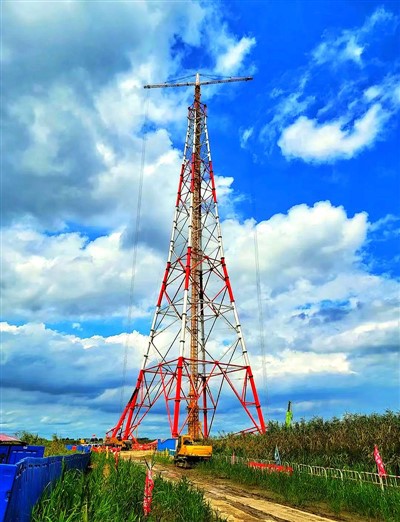
If you’re planning a project in a mountainous area and you’re tired of dealing with traditional tower failures, or if you’re just curious about how tension towers can work for you, I want to talk. Whether you’re a utility company, a mining operation, or a community development group, we can work with you to design a tower solution that fits your specific terrain, budget, and needs. There’s no pressure—just a chance to figure out if this technology can help you deliver power where it’s needed most.
Monitoring Tower References
- International Journal of Structural Engineering, “Wind Load Performance of Pre-Stressed Tension Towers in Mountain Terrain,” 2022.
- Swiss Federal Institute of Technology (ETH Zurich) Mountain Engineering Report, “Seismic Resilience of Lightweight Transmission Towers,” 2021.
- World Bank Group, “Remote Power Infrastructure: Cost Comparison of Lattice vs. Tension Towers in Mountain Regions,” 2023.
- Journal of Mountain Ecology, “Eco-Impact of Transmission Tower Foundations in Andean Cloud Forests,” 2022.
Hebei Yifeng Steel Structure Co., Ltd.
As one of the most professional tension towers manufacturers and suppliers in China, we offer a wide range of products with superior quality. Please feel free to buy cost-efficient tension towers for sale here from our factory. Contact us for more details.
Address: Guangchuan Town Industrial Zone, Jing County, Hengshui City, Hebei Province
E-mail: hbyfgjg@163.com
WebSite: https://www.yf-powertowers.com/
