When I started working as a blow room machine supplier ten years ago, I thought my biggest challenge would be selling equipment to textile mills racing to keep up with global demand. But over the years, I’ve sat through countless factory tours where plant managers leaned against old, clanking machinery and told me, “This blow room has served us well for 12 years, but I don’t know how much longer it will hold.” That’s when I realized most operators focus on the benefits of blow rooms—opening bales, cleaning raw cotton, blending fibers—without stopping to talk about the quiet, costly disadvantages that creep in with every shift the machine runs. Today, I want to pull back the curtain on those downsides, not to scare potential buyers, but to give them the real, unfiltered info only a supplier who’s installed, serviced, and troubleshooted these machines for decades can offer. Blow Room Machine
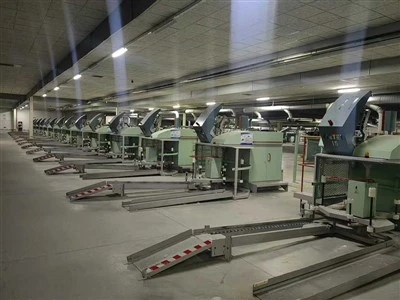
Let’s start with the most persistent headache for mill owners: high energy consumption. I’ve seen two nearly identical blow rooms side-by-side in the same mill, one using 12 kWh per hour and the other 18 kWh, all because of how operators set the machine’s fan speed and beater frequency. The core of the blow room’s job is moving heavy bales of cotton, and that takes consistent, powerful airflow. Unlike newer, variable-speed models that adjust airflow based on real-time fiber load, older blow rooms run at maximum capacity 24/7, even when processing small batches or low-density fibers. I remember a case from three years ago, a small mill in Tamil Nadu that was running a 1998 model blow room; their energy bills were 22% of their total production costs, nearly 8% higher than the industry average for similar mills. What’s worse, the excess energy isn’t just wasted—it generates unnecessary heat inside the blow room enclosure, which can damage delicate synthetic fibers and increase the risk of overheating motors. For mills operating on thin margins, that’s not a trivial issue; it’s the difference between turning a profit and losing money on a large order.
Next, there’s the problem of fiber damage and inconsistent blending, two flaws that directly ruin yarn quality. The blow room’s beaters—those metal rotating blades inside the machine that break apart bales—are designed to separate clumps of fiber, but over time, their sharp edges wear down, and operators often crank up the machine’s speed to compensate for reduced efficiency. That leads to something called fiber neps: tiny, tangled knots of fiber that don’t untangle during spinning. I’ve seen yarn rejected at the weaving stage because it had 15 neps per gram, when the client’s requirement was 8 or lower. The worst part? That damage isn’t always obvious during the blow room process. A mill might test a sample of blow room output and think it’s fine, only to find out the neps multiply when the yarn is spun, leading to costly reworks and delayed shipments. Blending is another weak point. Blow rooms rely on a process called “lap forming,” where cleaned fibers are rolled into a dense sheet called a lap for the next stage. If the machine’s feed mechanism is misaligned—something that happens with regular wear and tear—the lap will have uneven fiber distribution: too much cotton on one side, too little on the other. That leads to lopsided yarn, breakages during spinning, and even uneven dyeing later on. I once helped a mill fix this issue after they spent three months re-dying 5,000 meters of cloth that had blotchy color from inconsistent blow room blending.
Then there’s the issue of high maintenance and unplanned downtime, a problem that plagues every blow room, regardless of brand. These machines have hundreds of moving parts: gears, bearings, belts, beaters, and filter screens, all exposed to cotton lint and dust. Over time, lint builds up in hard-to-reach places—inside the beater housing, around the motor vents, in the filter bags—and causes friction, overheating, and part failure. What many new operators don’t realize is that blow room maintenance isn’t just a once-a-month check; it’s a daily task. For example, the machine’s dust extraction filters need to be cleaned every shift, or pressure builds up inside the blow room, reducing airflow and cleaning efficiency. I’ve had to send service technicians to a mill at 2 a.m. because a worn drive belt snapped mid-shift, stopping the entire production line. Unplanned downtime like that costs mills an average of $1,500 per hour, according to recent industry data, and blow room failures are among the top causes. Even scheduled maintenance eats into production time: full overhauls every six months can take 8 to 12 hours, and that’s time the mill isn’t making yarn. What’s more, replacement parts for older blow rooms are often hard to source. We still get calls weekly from mills with 10+ year-old machines asking for custom beater blades or gear parts, because the original manufacturer stopped producing them a few years prior.
Another disadvantage that’s often overlooked is poor dust management, which isn’t just a cleanliness issue—it’s a safety hazard and a hidden operational cost. Blow rooms generate massive amounts of lint and airborne dust, especially when processing raw cotton. If the machine’s dust extraction system is outdated or poorly maintained, that lint builds up on every surface inside and outside the machine. Not only does it cause the maintenance issues I mentioned earlier, but it also poses a major fire and explosion risk. Cotton dust is highly combustible, and a single spark from an overheating motor or a loose wire can trigger a devastating blaze. I’ve seen photos of a mill in Vietnam that lost half its production floor in a 2021 blow room fire, all because they skipped cleaning the dust extraction system for three months. Beyond safety, poor dust management means a lot of good fiber is wasted. Modern blow rooms recover up to 95% of process dust, which can be recycled back into the production line, but older models often only recover 80% or less. That’s hundreds of kilograms of lost fiber every month, adding to material costs. I calculated for one of my clients last year that their 12-year-old blow room was wasting $2,300 worth of cotton every month in unrecovered dust—money they could have used for better raw materials or worker wages.
Finally, there’s the issue of inflexibility when it comes to handling different fiber types. Textile mills today don’t just process raw cotton; they blend cotton with polyester, viscose, hemp, and even recycled fibers to make lower-cost, sustainable products. Many traditional blow rooms are built to work best with 100% cotton, and they struggle with shorter, finer fibers or rough, coarse fibers like hemp. For example, short synthetic fibers tend to get lost in the blow room’s dust extraction system, leading to inconsistent blending and higher waste. Coarse fibers, on the other hand, don’t break apart easily on standard beaters, leading to uneven cleaning and high neps. I had a client last year that wanted to switch to a 50% cotton / 50% recycled polyester blend for a fast-fashion brand, but their 2008 blow room couldn’t handle the recycled fibers—they were clogging the feed mechanism, and the blending was so bad that 20% of the yarn was being rejected. They ended up having to pause production for three weeks while we adjusted their blow room and trained their operators, costing them over $100,000 in lost revenue. That kind of inflexibility is a big problem in an industry where consumers are demanding more sustainable, varied products, and mills need equipment that can adapt quickly.
Now, I want to be clear: I’m a blow room machine supplier, so I’m not here to bash the equipment I sell. Blow rooms are essential to textile production—they turn raw bales of fiber into a clean, consistent feed for spinning, and no modern mill can operate efficiently without one. But the truth is, these disadvantages aren’t unavoidable. Many of the issues I’ve talked about—energy waste, fiber damage, maintenance costs—can be fixed with regular upgrades, operator training, and investing in newer, better blow room models. Over the ten years I’ve worked in this industry, I’ve helped dozens of mills upgrade their blow rooms and cut their operational costs by 15 to 20% while improving yarn quality. The key is understanding what’s wrong with your current machine, and making decisions that align with your mill’s specific needs, not just the lowest upfront cost.

If you’re a mill owner or production manager dealing with high energy bills, frequent unplanned downtime, or yarn quality issues tied to your blow room, I’d be happy to sit down with you and walk through your specific challenges. As someone who’s worked with blow rooms in dozens of mills across different regions, I can provide honest, practical advice—no sales pitch, no overhyped promises. We can discuss upgrades, maintenance schedules, or even new blow room models that fit your production goals and budget. The textile industry is tough, and every small improvement adds up, but you can’t fix a problem you don’t fully understand. Reach out, let’s talk about your blow room, and find a solution that works for you.
Drawing Frame Machine References
Textile Institute. (2022). Energy Efficiency in Textile Processing. Textile Institute Press.
International Labour Organization. (2021). Occupational Safety in Textile Manufacturing. ILO Publishing.
Journal of Textile Engineering and Technology. (2020). Fiber Damage and Nep Formation in Blow Room Operations. Science Publishing Group.
Shandong Hongye Machinery Co., Ltd.
Shandong Hongye Machinery Co., Ltd. is one of the most professional blow room machine manufacturers and suppliers in China, featured by quality products and low price. Please rest assured to buy advanced blow room machine in stock here and get quotation from our factory. Also, 1 year warranty is available.
Address: Room 1104, Building No. 2, Haier Yunjie, No. 99 Chongqing South Road, Qingdao, China
E-mail: sales@seavincn.com
WebSite: https://www.sdhymachinery.com/
