As a supplier in the field of by machining, I’ve witnessed firsthand the remarkable capabilities and widespread applications of this manufacturing process. By machining encompasses a variety of techniques such as turning, milling, drilling, and grinding, which are used to shape raw materials into precise components with high accuracy. However, like any manufacturing method, by machining has its own set of limitations that we need to be aware of when considering its use. By Machining

Material Constraints
One of the primary limitations of by machining lies in the materials it can effectively process. While by machining can handle a wide range of materials, including metals, plastics, and composites, certain materials pose significant challenges. For instance, extremely hard materials like tungsten carbide or ceramics are difficult to machine due to their high hardness and abrasiveness. These materials can cause rapid tool wear, leading to increased production costs and reduced machining accuracy.
In addition, some materials with poor machinability, such as titanium alloys, can generate high temperatures during machining. This can result in the formation of heat – affected zones, which may compromise the material’s mechanical properties. The high reactivity of titanium with cutting tools also requires the use of specialized cutting fluids and tool coatings, further increasing the complexity and cost of the machining process.
Another aspect is the brittleness of some materials. When machining brittle materials like glass or certain types of ceramics, there is a high risk of cracking or chipping. The cutting forces applied during machining can easily exceed the material’s fracture strength, leading to defective parts. This requires careful control of the machining parameters, such as cutting speed, feed rate, and depth of cut, to minimize the risk of damage.
Geometric Complexity
The ability to create complex geometries is a key consideration in modern manufacturing. However, by machining has limitations when it comes to producing highly intricate shapes. Traditional machining processes are typically limited to creating features that are accessible to the cutting tool. For example, in turning operations, the geometry is generally rotational and limited to features that can be generated by rotating the workpiece against a cutting tool.
Milling operations can create more complex shapes, but there are still restrictions. Internal features with undercuts or complex curved surfaces can be extremely difficult to machine using conventional milling techniques. The size and shape of the cutting tool also limit the minimum radius and clearance angles that can be achieved. This means that parts with very small or sharp internal corners may not be feasible to produce using standard by machining methods.
Moreover, the need for multiple setups and tool changes when machining complex parts can increase production time and cost. Each setup introduces the potential for alignment errors, which can affect the overall dimensional accuracy of the part. In some cases, machining complex parts may require the use of multi – axis machining centers, which are more expensive and require highly skilled operators.
Surface Finish and Tolerance Requirements
Achieving high – quality surface finishes and tight tolerances is often crucial in many applications, such as aerospace and medical devices. While by machining can produce excellent surface finishes and high – precision parts, there are limitations to the achievable levels.
The surface finish of a machined part is influenced by several factors, including the cutting tool geometry, cutting parameters, and the material being machined. In some cases, it may be difficult to obtain a smooth surface finish on certain materials due to their microstructure or the formation of built – up edge on the cutting tool. Built – up edge can cause surface roughness and dimensional inaccuracies, especially when machining soft materials like aluminum.
Tolerance control is another challenge in by machining. The accuracy of a machined part is affected by factors such as machine tool accuracy, tool wear, thermal expansion, and vibration. As the machining process progresses, tool wear can cause changes in the cutting edge geometry, leading to dimensional variations in the part. Thermal expansion of the workpiece and the machine tool during machining can also introduce errors, especially when machining large parts or when tight tolerances are required.
Production Volume
The cost – effectiveness of by machining is highly dependent on the production volume. For low – volume production runs, the setup time and cost associated with by machining can be relatively high. Each machining operation requires the design and fabrication of specialized tooling, fixtures, and programming of the machine tool. These upfront costs can be a significant barrier for small – scale production.
In addition, the labor – intensive nature of by machining can also contribute to higher costs for low – volume production. Skilled operators are required to set up and operate the machine tools, and the time spent on each part can be relatively long. As the production volume increases, the cost per part can decrease due to the spreading of the setup costs over a larger number of parts. However, for very high – volume production, other manufacturing processes such as injection molding or die – casting may be more cost – effective.
Environmental Impact
By machining also has some environmental limitations. The use of cutting fluids is common in machining operations to reduce friction, cool the cutting tool, and flush away chips. However, many cutting fluids are petroleum – based and can be harmful to the environment. They can contaminate soil and water sources if not properly disposed of, and their production and use also contribute to energy consumption and greenhouse gas emissions.
The machining process itself also generates a significant amount of waste in the form of chips and scrap material. Recycling these materials can be challenging, especially for complex alloys or composite materials. In addition, the energy consumption of machine tools, particularly large – scale machining centers, can be substantial. This not only increases the cost of production but also has a negative impact on the environment.
Conclusion
In conclusion, while by machining is a versatile and widely used manufacturing process, it has several limitations that need to be carefully considered. Material constraints, geometric complexity, surface finish and tolerance requirements, production volume, and environmental impact are all factors that can affect the feasibility and cost – effectiveness of using by machining.
However, it’s important to note that these limitations do not mean that by machining is no longer a viable option. In fact, with advancements in technology, many of these limitations are being addressed. For example, the development of new cutting tool materials and coatings has improved the machinability of hard materials. Multi – axis machining centers and advanced CNC programming techniques are enabling the production of more complex geometries.
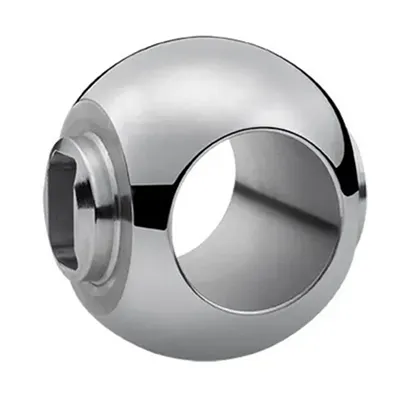
As a by machining supplier, we are constantly working to overcome these limitations and provide our customers with high – quality, cost – effective solutions. If you are in the market for precision machined parts and want to discuss how we can meet your specific requirements, we encourage you to reach out and start a conversation with us. We look forward to collaborating with you on your next project.
By Seal Type References
- Kalpakjian, S., & Schmid, S. R. (2006). Manufacturing Engineering and Technology (4th ed.). Pearson Prentice Hall.
- Trent, E. M., & Wright, P. K. (2000). Metal Cutting (4th ed.). Butterworth – Heinemann.
- DeGarmo, E. P., Black, J. T., & Kohser, R. A. (2003). Materials and Processes in Manufacturing (9th ed.). Wiley.
Zhejiang Jigong Valve Co., Ltd.
Address: Dongou Industrial Park, Oubei Subdistrict, Yongjia County, Wenzhou City, Zhejiang Province (within Zhejiang Yinhe Machinery Manufacturing Co., Ltd.)
E-mail: Sales@cnzjsk.com.cn
WebSite: https://www.ball-china.com/
