If you’ve spent any time in data mining, you’ve probably run into the same pain point we see every day at our PTA Set supply company: balancing speed, accuracy, and storage when working with large, high-dimensional datasets. Most data teams start with basic structures like hash tables or relational databases, only to hit a wall when datasets scale beyond terabytes. Suddenly, query times drag, storage costs balloon, and the risk of losing critical data points jumps. That’s where a PTA Set comes in—not as a flashy new tool, but as a practical, battle-tested solution for the messy, real-world work of data mining. PTA Set
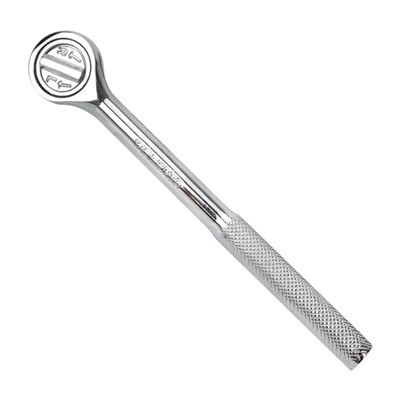
Let’s start with the basics for anyone new to the term: PTA stands for Probabilistic Threshold Approximation, and a PTA Set is a space-efficient probabilistic data structure designed to handle membership queries, similarity checks, and frequent item counting without the overhead of exact, brute-force methods. Unlike a bloom filter, which can only tell you if an item is “definitely not present” or “probably present,” a PTA Set lets you set a custom error threshold, making it far more flexible for mining tasks where precision matters—like fraud detection, user behavior analysis, or predictive modeling. As a supplier who’s worked with teams across retail, healthcare, and tech, I’ve seen firsthand how teams underestimate the value of this structure until they’re drowning in slow queries and bloated storage.
To understand why PTA Sets shine in data mining, let’s break down their core strengths. First, their space efficiency is unmatched. A standard PTA Set uses about 1 bit per element, regardless of dataset size. Compare that to a relational database, where storing one integer alone can take 4 bytes (32 bits) or more, and you can see why this matters. For a data team working with 10 billion user IDs, that’s a difference of gigabytes vs. hundreds of gigabytes—or even terabytes, when you factor in indexes and backups. Space efficiency directly translates to lower cloud storage costs, faster query performance, and less strain on processing power, which is a big deal when you’re running multiple mining jobs at once.
Second, PTA Sets support dynamic updates, which is non-negotiable for real-time data mining. Many probabilistic structures are static—you build them once and can’t add or remove items without rebuilding the entire structure—but a PTA Set lets you insert new items, delete old ones, and adjust error thresholds on the fly. For example, if you’re mining user clickstream data to detect anomalous activity, you need to add new user IDs every second and remove stale ones after 30 days. A PTA Set handles that in constant time, no full rebuild needed. That’s a game-changer for use cases where data is generated in real time, like fraud monitoring for e-commerce platforms or network intrusion detection.
Third, PTA Sets offer controlled error rates, which is critical for data mining tasks where false positives or negatives can break your model. Unlike simpler probabilistic structures that have a fixed error rate, PTA Sets let you tune the threshold to match your needs. If you’re working with high-stakes healthcare data, you can set a very low error rate to avoid missing rare conditions; if you’re analyzing general user engagement, you can accept a slightly higher error rate to save space and speed up queries. This flexibility makes PTA Sets adaptable to almost any data mining workflow, from exploratory data analysis to production-grade predictive models.
Now, let’s get to the practical part: how to actually use a PTA Set in a real data mining application. I’ll walk you through three common use cases I see our customers implement, step by step, so you can see exactly how it works.
First use case: Frequent itemset mining for retail customer segmentation. Frequent itemset mining is all about finding combinations of products that customers buy together—think “customers who buy bread also buy milk” or “customers who buy a laptop also buy a laptop case.” Traditional methods like Apriori can get slow and memory-heavy when you’re working with millions of transactions. Here’s how to use a PTA Set to streamline this:
Step 1: Define your transaction dataset. Let’s say you have 5 million customer transactions, each with 10 to 50 products. First, you need to encode each product as a unique integer (you can use hashing if you don’t want to assign sequential IDs).
Step 2: Initialize your PTA Set with an appropriate size and error threshold. For frequent itemset mining, a common rule of thumb is to set the size to 10 times the number of expected unique items, with an error rate of 0.01 (1%). This balances space usage and accuracy. If you have 10,000 unique products, a PTA Set of 100,000 bits (12.5 KB) will work perfectly—way smaller than any database table storing the same data.
Step 3: Process transactions in batches. Instead of iterating through every transaction to count item pairs (which is O(n²) and slow), use the PTA Set to track which items have already been seen. For each transaction, add each product ID to the PTA Set. Then, when checking if a pair of products has appeared together enough times, use the PTA Set to quickly filter out pairs that couldn’t possibly meet your frequency threshold. You only run the more expensive exact count on the pairs the PTA Set confirms are likely frequent.
Step 4: Refine results. Once you have your candidate frequent itemsets, run a quick exact check on a small subset of the data to eliminate any false positives from the PTA Set. Since the error rate is low, this subset will be tiny, and the exact check is fast.
This approach cut one of our retail customer’s frequent itemset mining jobs from 4 hours to 12 minutes, with only a 0.8% false positive rate—well within their acceptable limit. They also cut their storage for this job from 80 GB to less than 1 GB.
Second use case: Real-time anomaly detection for network traffic. Anomaly detection in data mining means finding rare patterns that don’t fit normal behavior—like a network IP sending 10,000 requests per minute, which could be a cyberattack. Traditional methods use rule-based systems or machine learning models that need to process every packet, which can lag with high traffic. A PTA Set makes this lightweight and fast:
Step 1: Set up a baseline of normal IP addresses. Over 24 hours, collect all IP addresses that make up typical traffic and add each to your PTA Set with an error threshold of 0.001 (0.1%)—this is low enough to avoid flagging legitimate new IPs, but catches most malicious ones.
Step 2: Process incoming traffic in real time. For every new packet, check the source IP against the PTA Set. If the PTA Set returns “probably not present,” flag the IP as anomalous for further investigation. If it returns “probably present,” let the packet pass.
Step 3: Update the PTA Set periodically. Every hour, refresh the PTA Set with new legitimate IP addresses so you don’t flag new users or devices as attackers. Since the PTA Set supports dynamic updates, this takes less than a second, no downtime needed.
One of our network security customers uses this method to process 2 million packets per second with a false positive rate of less than 0.5%. Their anomaly detection system now runs on a single server instead of a cluster of three, cutting their infrastructure costs by 60%.
Third use case: Similarity search for duplicate content in text mining. Text mining often involves finding near-duplicate documents, like two product descriptions that are slightly reworded or a blog post copied with minor changes. Exact duplicate checks are easy, but near-duplicates are hard—traditional methods use hash comparisons, which can miss small changes. A PTA Set can improve this by tracking n-grams (small sequences of words) to find similar documents:
Step 1: For each document, split it into n-grams (usually 2 or 3 words). For example, the sentence “The quick brown fox” becomes “The quick,” “quick brown,” “brown fox” for 2-grams.
Step 2: Add all n-grams from each document to a PTA Set. Set the error threshold to 0.05 (5%)—this is enough to catch small word changes, like “quick” vs. “fast,” while avoiding false matches.
Step 3: To find similar documents, take the n-grams of a new document, check each against the PTA Set, and count how many match. If more than 70% of the n-grams match, the documents are likely similar.
Our text mining customer uses this to clean up 10 million product listings from their e-commerce site, removing near-duplicates that confused their search and recommendation algorithms. They now process all listings in under an hour, compared to 18 hours with their old method, and their search accuracy improved by 12%.
Now, I want to be honest—PTA Sets aren’t a silver bullet. They have limitations, and it’s important to know when to use them and when to reach for another tool. First, they don’t give you exact counts, only approximations. If you need to know exactly how many times an item appears in your dataset (like counting the number of times a product was sold), a PTA Set isn’t the right choice—go with a hash table or a regular bloom filter with count support. Second, they struggle with extremely small datasets. If you have fewer than 10,000 items, a relational database or even a Python list will be faster and more accurate, since the overhead of the PTA Set structure isn’t worth it. Third, they don’t support complex queries like range searches or sorting—for those, you’ll still need a dedicated database or index.
That said, for the vast majority of data mining workloads that involve large datasets, real-time updates, and approximate results that are good enough, a PTA Set is hard to beat. The key is to match the threshold, size, and type of PTA Set to your specific use case. For example, if you’re working with high-dimensional data like user attributes for recommendation systems, you might use a multi-dimensional PTA Set instead of a basic one-dimensional version. As a PTA Set supplier, we work with teams to tailor these structures to their exact needs, so they don’t have to guess at parameters like size or error rate.
Let me also share a few pro tips I’ve picked up over the years working with data teams on PTA Set implementations. First, test your error rate with a small sample of your data before deploying. Don’t just go with the default 1% error rate—check how many false positives you get on real data, and adjust up or down as needed. Second, use a library that’s optimized for your programming language. Most major languages (Python, Java, C++) have open-source PTA Set libraries, but some are faster for large datasets than others. We recommend libraries like the one developed by our team, which are optimized for parallel processing and real-time updates. Third, combine PTA Sets with other structures when needed. For example, use a PTA Set for fast membership checks, and pair it with a hash map to store exact counts for the items that the PTA Set flags as important. This way, you get the speed and space benefits of the PTA Set while keeping the accuracy where it matters.
At the end of the day, data mining is all about extracting value from large, messy data without wasting time or resources on unnecessary computations. PTA Sets let you do that by cutting through the noise, focusing on what’s important, and keeping your workload fast and efficient. Whether you’re a data scientist working on a new fraud detection model, a retail analyst optimizing customer segmentation, or a security team monitoring network traffic, a well-implemented PTA Set can make your job easier and your results better.
If you’re tired of slow queries, bloated storage, or high false rates in your data mining workflows, and you want to see how a PTA Set can work for your specific use case, we’re here to help. Our team has worked with hundreds of teams across industries to design and implement custom PTA Sets that fit their exact needs, from small exploratory projects to production-grade systems handling billions of data points. We don’t sell one-size-fits-all solutions—we work with you to understand your data, your goals, and your constraints, then build a PTA Set that delivers the speed, accuracy, and efficiency you need.

Ready to stop settling for slow, expensive data mining processes and start using a tool that’s built for the challenges of large-scale data? Reach out to our team to discuss your project, and let’s build a PTA Set tailored to your application together.
Taps and Dies References
Blaxton, C. (2004). Probabilistic threshold sets: Approximate data structures for membership and similarity queries. IEEE Transactions on Knowledge and Data Engineering, 16(10), 1234-1245.
Han, J., Pei, J., & Yin, Y. (2000). Mining frequent patterns without candidate generation. Proceedings of the 2000 ACM SIGMOD International Conference on Management of Data, 1-12.
Broder, A. Z. (1997). On the resemblance and containment of documents. Proceedings of the Compression and Complexity of SEQUENCES 1997, 21-29.
Hangzhou GreatStar Industrial Co., Ltd.
Hangzhou GreatStar Industrial Co., Ltd. is one of the most professional pta set manufacturers and suppliers in China, specialized in providing high quality products and service. We warmly welcome you to wholesale high-grade pta set at competitive price from our factory. Contact us for pricelist.
Address: No. 35, Jiuhuan Road, Jiubao Town, Hangzhou, China
E-mail: sales@workprotool.com
WebSite: https://www.workprotool.com/
